Govt. Section

Commissioners OK Greenbelt Strategic Plan

Ann Arbor greenbelt advisory commission meeting (April 4, 2013): An updated strategic plan for the city’s greenbelt program received unanimous approval at this month’s GAC meeting. The plan included only minor changes since the draft was reviewed in September of 2012.

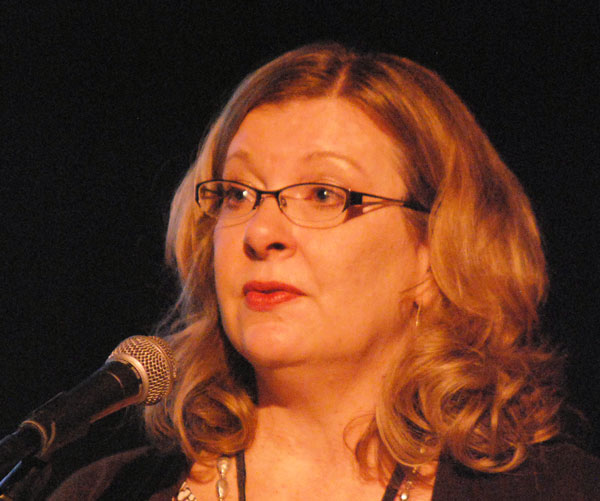
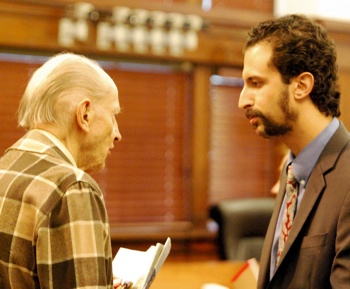
Jennifer Fike, Huron River Watershed Council, Ann Arbor greenbelt advisory commission, The Ann Arbor Chronicle

Jennifer Fike, finance director of the Huron River Watershed Council, is interested in joining the greenbelt advisory commission. If nominated and confirmed by the city council, she would replace Laura Rubin, HRWC’s executive director, whose term on the commission ends in June. (Photos by the writer.)

The plan lays out a broad range of goals for the preservation of farmland and open space within the greenbelt boundaries. There are no significant changes from the last version approved in 2009, although the plan does include a new section on education and outreach.

The plan also includes the goal of establishing a greenbelt registry program, to formalize relationships with landowners who aren’t yet part of the greenbelt program, but who are committed to the program’s principles of land preservation. “It’s creating a pipeline of projects for the future,” said Dan Ezekiel, GAC’s chair. Three commissioners – Peter Allen, Shannon Brines and Archer Christian – agreed to work with Ginny Trocchio, who manages the greenbelt program, to develop a proposal for the full commission to consider.

Also at the April 4 meeting, Jennifer Fike – finance director for the Huron River Watershed Council – was introduced as a possible replacement on the commission for Laura Rubin. Rubin, who serves as HRWC’s executive director, fills a position on GAC that’s designated for an environmental organization. Her term ends on June 30. Because she is term-limited, she can’t be re-appointed.

Ezekiel noted that there are other vacancies as well, and that anyone who’s interested in applying should contact their city council representative. [.pdf of application form for city boards and commissions] Meetings for the commission are scheduled monthly, although the April meeting was only GAC’s second one in 2013. Both the January and March meetings were canceled. [Full Story]

South State Retail Project Moves to Council

Ann Arbor planning commission meeting (April 2, 2013): A new retail project – with plans for a Jimmy John’s restaurant – will now move to the city council for approval, following a recommendation from planning commissioners this week.

Wendy Woods, Ken Clein, Sabra Briere, Ann Arbor planning commission, The Ann Arbor Chronicle

From left: Ann Arbor planning commissioners Wendy Woods, Ken Clein and Sabra Briere, who also represents Ward 1 on the Ann Arbor city council. (Photos by the writer.)

Called the State Street Center, the project will be located on a thin strip of land off of South State, just north of Ellsworth and adjacent to a relatively new Tim Hortons. Commissioners recommended approval of the site plan and for rezoning the parcel to C3 (fringe commercial). The Jimmy John’s will face South State. A separate one-story retail building will be located behind the restaurant.

Some commissioners expressed concern that the businesses in the retail building won’t be very visible from South State. Jim Cernuto, the owner’s project manager, noted that the State and Ellsworth corridor is “coming alive” after the opening of Costco, and that there’s strong interest from potential tenants. The proposed C3 zoning is the most inclusive type of non-residential zoning, allowing for a wide range of businesses, including convenience stores, dry cleaners, wholesalers and warehousing.

Also during the meeting, several commissioners brought up items for future discussion. Bonnie Bona noted that the city’s energy commission plans to develop recommendations for the city council regarding future development of the former YMCA site, on William between Fourth and Fifth avenues. She suggested that planning commissioners should discuss whether they also want to make recommendations, laying out what councilmembers should consider in deciding the site’s future. At its March 4, 2013 meeting, the council voted to direct the city administrator to prepare an RFP (request for proposals) for brokerage services to sell the lot.

Sabra Briere raised the issue of a whether the city should develop a “solar blocking” policy. If someone puts solar panels on the roof of their house, she noted, there is no ordinance to protect the home from other buildings that might be constructed nearby and block the sun – even though the city is encouraging this kind of solar energy use. Although she didn’t explicitly mention it, the issue of shading has been an argument against the proposed development at 413 E. Huron. In that case the issue has concerned the impact of building shade on trees, not solar panels. Briere also serves on the city council representing Ward 1. Councilmembers voted on April 1 to postpone action on that project.

Related to the 413 E. Huron project is a recent council directive to the planning commission to review the city’s downtown core (D1) zoning. Also on April 1, councilmembers provided specific guidance for that review, along with an Oct. 1 deadline for the completion of the work. Briere communicated the council’s direction to commissioners at their April 2 meeting, but there was no further discussion about it.

The commission’s regular meeting on April 2 was relatively brief, lasting about an hour. It was followed by a working session, where commissioners got an update from Nathan Voght, project manager for Reimagine Washtenaw. The effort is aimed at improving the Washtenaw Avenue corridor between Ann Arbor and Ypsilanti. Voght works for Washtenaw County’s office of community & economic development, which is overseeing the project. [Full Story]

Parks Agenda: Downtown, Dogs, Dams, DTE

Ann Arbor park advisory commission meeting (March 19, 2013): A packed agenda for this month’s PAC meeting included several items related to downtown parks and the Huron River.

Amy Kuras, Andrew Walton, Doug Kelly, Stewart Gordon, Ann Arbor park advisory commission, Library Green Conservancy, The Ann Arbor Chronicle

Park planner Amy Kuras, left, talks with Stewart Gordon, an advocate for putting an ice-skating rink atop the Library Lane site. In the background are Andrew Walton, left, and Doug Kelly, the city’s director of golf. Walton supervises the Huron Hills golf course. (Photos by the writer.)

Commissioners discussed a proposal to build an ice-skating rink atop a portion of the city-owned Library Lane underground parking structure. They took no action on the item, but were briefed on the proposal by two advocates of the effort: Alan Haber and Stewart Gordon. The two men also attended a subsequent March 26 meeting of a PAC downtown park subcommittee. This report includes a summary of that session as well.

River-related items on PAC’s March 19 agenda included a resolution to recommend awarding a $295,530 contract to Gerace Construction Co. for repair work and repainting at Argo and Geddes dams, as well as site improvements around Argo Dam. Brian Steglitz, an engineer with the city, told commissioners that the work is being done in response to the most recent inspection by state regulators.

Commissioners also recommended awarding a $512,180 contract for improvements at the Gallup Park canoe livery to Construction Solutions Inc., which will be funded in part by a $300,000 state grant. Cheryl Saam, facility supervisor for the Argo and Gallup canoe liveries, gave commissioners a presentation on those operations, in preparation for budget recommendations that PAC is expected to consider at its April 16 meeting.

As part of her report, Saam noted that the city plans to issue another request for proposals (RFP) to design a whitewater section along the Huron River, downstream from the Argo Dam near the Argo Cascades. Parks and recreation manager Colin Smith reminded commissioners that the first attempt at this project wasn’t successful. The Michigan Dept. of Environmental Quality did not approve the initial design, and would not issue the necessary permit for the project. The staff is working with the state to address MDEQ’s concerns, he said. Smith also reported that DTE Energy still intends to pay for the project, which is located adjacent to property that the utility company is cleaning up.

DTE representatives were on hand at the meeting because of a different project: To request an easement on city-owned land in Riverside Park, where utility poles are located. The easement is needed as part of an $8 million new electrical substation that DTE is building on land adjacent to the park. Commissioners unanimously recommended that the city council approve the easement.

In another presentation to set the stage for next month’s budget discussion, PAC heard from Doug Kelly, the city’s director of golf, and Andrew Walton, recreational facility supervisor at Huron Hills. They reviewed the status of the city’s two golf courses – at Huron Hills and Leslie Park – and noted that both courses have seen significant revenue gains over the past five years.

The issue that drew the most public commentary during the meeting wasn’t on the March 19 agenda: a possible dog park on a knoll in West Park. Residents in that area aren’t happy about the prospect of barking dogs in their neighborhood. [Full Story]

AADL To Hire Communications Consultant

Ann Arbor District Library board meeting (March 18, 2013): Several items during the AADL board’s most recent meeting related to the issue of communications.

Eli Neiburger, Prue Rosenthal, Ann Arbor District Library, The Ann Arbor Chronicle

Eli Neiburger, AADL’s associate director of IT and production, talks with AADL board president Prue Rosenthal in the small room off of the fourth-floor boardroom. The former closet is used as a studio for podcasting. (Photos by the writer.)

Nancy Kaplan, chair of the board’s new communications committee, announced that AADL will hire Allerton-Hill Consulting to do a communications audit and plan for the library, to be completed this year. The decision was made in consultation with AADL director Josie Parker, Kaplan said. It didn’t require a board vote because the amount of the contract is the maximum for not triggering board approval: $28,000. Contracts for purchases over that amount must be authorized by the board.

Board president Prue Rosental, in supporting the decision, noted that during the campaign to pass a bond for a new downtown library – which voters rejected on Nov. 6, 2012 – library advocates learned that “people in the community didn’t know what we do and how well we do it.”

Some of those “what we do” activities were highlighted during two presentations at the meeting: (1) an overview of AADL podcasts produced by staff and patrons; and (2) a report from Eli Neiburger, AADL’s associate director of IT and production, about his recent trip to Germany as a guest of the U.S. State Department and Zukunftswerkstatt (“Future Workshop”), visiting libraries in several cities. The head of the Zukunftswerkstatt was interested in using AADL’s efforts as a model to get German libraries more involved with younger communities, using gaming and other activities. As a result of the partnership with AADL, a dozen libraries in Germany have started running events through the GT System, which AADL staff developed. A league tournament is being held, and three winners will come to Ann Arbor for the May 19 German-American Gaming League Championships, held at the AADL.

Communications was also a topic during public commentary. Libby Hunter, a member of the Protect Our Libraries political action committee, urged the board to be more open and transparent, asking them to allow the public to attend committee meetings, to videotape their meetings for broadcast on Community Television Network, and to explain their use of closed sessions in relation to the Michigan Open Meetings Act. And Don Salberg asked for more information related to the condition of the downtown library, and for details on the board’s rationale for wanting a larger building on that same site.

Also during public commentary, Stewart Gordon spoke briefly about an effort to put a skating rink on the city-owned Library Lane site, adjacent to the downtown library on South Fifth Avenue. He hoped the topic could be put on the board’s agenda at some point.

The one resolution that was on the board’s agenda was unanimously approved: A one-year contract extension with Pace Mechanical Services for $83,865. The contract, which will run through June 30, 2014, covers HVAC equipment and maintenance.

The board also talked briefly about its budget preparations for fiscal 2013-14, which begins July 1. The budget and finance committee will bring a draft budget to the board’s April 15 meeting, with a vote on the budget scheduled for May 20. For the current fiscal year, the AADL has a budget of about $12 million, with a millage rate set at 1.55 mills. [Full Story]

413 E. Huron, Zoning Review: They’re Back

Ann Arbor city council meeting (March 18, 2013) Part 2: In a session that lasted until nearly 2 a.m., lengthy public commentary and council deliberations focused on two related items at the council’s last regular meeting: (1) a possible moratorium on D1 (downtown core) site plans; and (2) the site plan for 413 E. Huron, located in a D1 district. Both items resulted in some unfinished business that will need to be addressed at the council’s April 1 meeting.

413 E. Huron project. Left is the original rendering considered by the planning commission. Right is an updated version presented to the city council on March 18, 2013

Images for the proposed 413 E. Huron project, at the northeast corner of Huron and Division. On the left is the original rendering considered by the planning commission. On the right is an updated version presented to the city council on March 18, 2013. Even more revisions could be presented at the April 1 council meeting.

The council decided to conduct a review of D1 zoning, without imposing a moratorium. But councilmembers left some work on that issue until April 1, when the review’s clear scope of work and timeline are expected to be set.

The lack of any moratorium cleared the way to consider the 413 E. Huron project. Even though councilmembers deliberated in a fair amount of detail on the project, they still had a number of questions they wanted to pursue with the developer. So the council decided to postpone the item until April 1.

The council’s discussion of the 413 E. Huron project included a fine-grained examination of the project’s compliance with zoning code regarding the disturbance of natural features – trees in particular. It was punctuated by a resident shouting “You lie!” as the developer’s representative – Conor McNally of Atlanta-based Carter – responded to questions from councilmembers.

According to a letter sent by the developer to the council on March 29, councilmembers continued to submit additional questions in writing through March 28. That led to a request from the developer to remove the item from the April 1 agenda in favor of April 15, to allow for time to respond to questions. The developer is also hoping to revise 3D renderings to show changes in the building that have been made since March 18.

The developer’s request to pull the item from the agenda can’t be accommodated – because the council voted to postpone until a date certain, which means the item will need to appear on that April 1 agenda. To remove it would require a decision of the council, and that can’t be done administratively at the direction of the planning staff or on the initiative of the city clerk.

So the item will appear on the agenda, although the council may be inclined to make their deliberations brief, if their intent is to postpone it until April 15 – which would be consistent with the developer’s expressed preference. The public hearing on the site plan appears on the April 1 agenda as well, although it was declared closed by mayor John Hieftje on March 18.

This report includes a summary of public commentary and council deliberations on the moratorium and the 413 E. Huron site plan from March 18. A write-up of other agenda items is included in Part 1 of the March 18, 2013 meeting report. [Full Story]

New Labor Contracts Key to County Budget

Washtenaw County board of commissioners meeting (March 20, 2013): In its main action, the county board approved new long-term contracts with 15 of Washtenaw County government’s 17 bargaining units – including annual wage increases, a cap on employee healthcare contributions, and the elimination of “banked leave” days. The precedent-setting move aimed to protect unions before Michigan’s right-to-work law takes effect on March 28, and cut legacy costs for the county.

Conan Smith, Dan Smith, Washtenaw County board of commissioners, The Ann Arbor Chronicle

From left: Conan Smith (D-District 9) and Dan Smith (R-District 2) at the Washtenaw County board of commissioners meeting on March 20. Dan Smith cast the lone vote against new contracts with labor unions representing county employees, citing concerns over the length of the agreements. Most of the contracts run through Dec. 31, 2023. (Photos by the writer.)

About 85% of the nearly 1,300 county workers belong to a union. The board also approved similar wage and benefit changes for the county’s non-union employees.

The right-to-work law will make it illegal to require employees to support unions financially as a condition of their employment, but labor agreements in place prior to March 28 will not be affected until they expire. Most of the previous contracts with the county’s labor unions were set to expire on Dec. 31, 2013. All but one of the new deals will run for more than 10 years – through Dec. 31, 2023.

Dan Smith (R-District 2) cited the length of those contracts as a reason for casting his no vote – he was the only commissioner to vote against the union contracts, though he supported the agreement for non-union employees. The duration eliminates the flexibility to deal with different conditions that might face the county in the future, he said. There is no “re-opener” clause that would allow either side to renegotiate before 2023.

Despite his no vote, Smith praised the most significant changes that will impact employees hired after Jan. 1, 2014. Those employees will participate in a defined contribution retirement plan, instead of the current defined benefit plan – the Washtenaw County Employees’ Retirement System (WCERS). In defined benefit plans, retirees receive a set amount per month during their retirement. In defined contribution plans, employers pay a set amount into the retirement plan while a person is employed. The most common defined contribution plan is the 401(k). Similar changes in retiree healthcare plans will also affect new employees.

The shift in the county’s approach to retirement plans and retiree healthcare was a major concern for several other commissioners. While acknowledging the benefits of eliminating the county’s legacy costs, Conan Smith (D-District 9) cautioned that retirees could be put at risk without the predictable stability of a defined benefit plan. However, he also noted that the board can’t continue to put the institution at risk by “guaranteeing something that we don’t know we’re going to be able to afford in the long run.”

Those legacy costs were a factor alluded to during the March 20 discussion, linking to another major decision that is expected to come before the board: bonding to cover the county’s unfunded liabilities for employee pensions and retiree healthcare. The issue hasn’t been discussed directly at any of the board’s regular meetings, but commissioners have been informed that a proposal likely will be brought forward by administration.

Based on actuarial valuations at the end of 2011, the county had $101.27 million in unfunded liabilities for its defined benefit pension, and $148.46 million in unfunded liabilities for its retiree healthcare. Those amounts will be higher when the 2012 actuarial valuations are completed later this year. The new accounting standards of GASB 68 require that unfunded liabilities must be included in an organization’s financial statements for fiscal years beginning after June 15, 2014.

Commissioners also got a year-end 2012 financial update during the March 20 meeting – the final 2012 audit will be brought to the board in April. Total revenues exceeded total expenditures by $2.26 million. The county had planned for a surplus of $1.889 million to carry into 2013 – so the year ended with an excess of $327,607 above that targeted amount.

In other action items, the board voted to form a committee that will explore the feasibility of creating a land bank, and appointed three people to the committee: Commissioner Ronnie Peterson (D-District 6), county treasurer Catherine McClary, and Mary Jo Callan, director of the county’s office of community & economic development. The committee is directed to report back to the board by Aug. 7, 2013.

During communications from the board, Conan Smith reported that the southeast Michigan Regional Transit Authority board has now been fully appointed, and will convene on March 28 for an orientation meeting. He suggested that the two Washtenaw County representatives – Richard “Murph” Murphy and Liz Gerber – come talk to commissioners about what the county’s interests and priorities are. “The earlier we weigh in, the more systemic the impact of our comments are going to be,” he said. “If we don’t talk to them until they’ve already made decisions, then it’s going to be too late.” [Full Story]

Planning, DDA: City Council to Set Course?

Ann Arbor city council meeting (March 18, 2013) Part 1: The two main events of the council’s meeting centered around planning in the downtown area: (1) consideration of a possible moratorium on D1 (downtown core) site plans; and (2) consideration of the site plan for 413 E. Huron, located in a D1 district.

The March 18, 2013 city council meeting did not adjourn until nearly 2 a.m. From left: Sabra Briere (Ward 1), Margie Teall (Ward 4) and city administrator Steve Powers.

The March 18, 2013 city council meeting did not adjourn until nearly 2 a.m. From left: Sabra Briere (Ward 1), Margie Teall (Ward 4) and city administrator Steve Powers. (Photos by the writer.)

The council decided to conduct a review of D1 zoning, without imposing a moratorium. That cleared the way to consider the 413 E. Huron project, which the council eventually voted to postpone – at roughly 1:30 a.m. Because of the amount of time spent on just those items, they’ll be included in a separate Chronicle report.

Apart from those two items, the council’s agenda still included a planning and land use focus, as well as a downtown theme. An additional theme was the city council’s relationship to two other public bodies – the city planning commission and the board of the Ann Arbor Downtown Development Authority.

In the case of the planning commission, the council for a second time balked at the commission’s recommendation of R3 (townhouse) zoning for a recently annexed parcel on Ellsworth near Stone School Road – planned as the site of Summit Townhomes, which would be a 24-unit development. The council postponed consideration of the Summit Townhomes site plan and the zoning, having previously postponed the zoning. The council also had previously referred the zoning recommendation back to the planning commission for re-review. The council’s second postponement on March 18 came after the commission’s re-affirmation of its original recommended R3 zoning. The council sent no explicit communication to the planning commission requesting action, beyond the implicit message of postponing the vote.

In the case of the DDA board, the council is weighing changes to the city ordinance governing the composition of that body, but postponed those changes for a second time at its March 18 meeting. The more significant of the ordinance changes involves clarifying how the Ann Arbor DDA’s tax increment finance capture is calculated, which has implications for millions of dollars for the DDA, the city of Ann Arbor, Washtenaw County, Washtenaw Community College and the Ann Arbor District Library.

Also related to the DDA, early in the council’s meeting an oral report was given on a session of the council’s audit committee – held the previous week to review the DDA’s FY 2012 audit. In the middle portion of the council meeting, councilmembers postponed the ordinance changes. And in the early morning hours of March 19, after the voting agenda was concluded, a member of the audit committee – Sally Petersen (Ward 2) – announced her intention to propose a task force on the DDA.

Related to other boards and commissions, the council confirmed the appointment of a chair for the zoning board of appeals (ZBA): Alex Milshteyn. He replaces Carol Kuhnke, who resigned in December 2012 after being elected judge of the 22nd Circuit Court.

In other business, the council gave approval for the zoning and site plan of The Shoppes at 3600, a proposed retail development on Plymouth Road.

The council also voted to object to the renewal of a liquor license for The Arena, a downtown bar located at Division and Washington streets. The basis for the objection – which will be forwarded to the Michigan Liquor Control Commission for final action – was non-payment of taxes.

The council also gave initial approval to a revision to the city’s sign ordinance. It would essentially maintain current conditions, but provide for certain limited digital signs with a restricted range of changeable elements.

Council communications included a briefing on upcoming changes the council will be asked to consider for the city’s public art ordinance. In other communications, the council will be giving a fire station reconfiguration plan some additional explicit discussion at a future working session – although it appears that the idea has insufficient traction to move forward.

Public commentary at the meeting covered a range of topics, including a call for the council to waive privilege on legal advice that councilmembers had received on the D1 moratorium issue – because they’ve now voted not to enact the moratorium. [Full Story]
New Residential Project Moves to Council

Ann Arbor planning commission meeting (March 19, 2013): Planning commissioners reviewed two projects at their most recent meeting: a commercial project near South State and Ellsworth; and a residential development off Traver Road near the Leslie Park golf course.

Eleanore Adenekan, Tony Derezinski, Ann Arbor planning commission, The Ann Arbor Chronicle

Ann Arbor planning commissioners Eleanore Adenekan and Tony Derezinski at the commission’s March 19, 2013 meeting. (Photos by the writer.)

The commission discussed, but then postponed action on a proposed site plan for State Street Center, just north of Ellsworth near the new Tim Hortons. The project calls for a drive-thru restaurant and separate retail building, with an entrance off of South State.

The planning staff had recommended postponement after discovering that the city’s official zoning map had been incorrectly labeled. It showed the site as zoned C3 (fringe commercial), and the developer had made plans based on that erroneous labeling. But during background research for this proposal, planning staff discovered that the site actually had been zoned as O (office) in 2003. The postponement is intended to allow the developer to submit a rezoning request.

A project that had previously been postponed by commissioners – called Hideaway Lane – was discussed and ultimately recommended for approval on March 19. The proposal is a residential development of 19 single-family houses on a 4.6-acre site off Traver Road, near the city’s Leslie Park golf course and on the edge of Traver Creek. Much of the discussion focused on issues related to the project’s impact on natural features, and how the developer plans to mitigate that impact.

The commission also authorized the reimbursement of expenses for Kirk Westphal – the commission’s chair – to attend the American Planning Association’s National Planning Conference in Chicago from April 13-17. He’ll appear on a panel with city staff to talk about Ann Arbor’s recently adopted sustainability framework. Westphal, a Democrat, recently announced his intent to run for Ann Arbor city council in Ward 2, for the seat currently held by Jane Lumm. [Full Story]

AATA Receives Audit, Preps for Urban Core

Ann Arbor Transportation Authority board meeting (March 21, 2013): The board’s main business of the evening was a presentation from the audit firm Plante Moran on the result of AATA’s fiscal year 2012 audit.

David Helisek, at the podium, presented highlights of the audit report to the AATA board.

David Helisek, at the podium, presented highlights of the audit report to the AATA board on March 21, 2013. (Photo by the writer.)

About the audit report, Plante Moran’s David Helisek told the board: “Hopefully, you found it somewhat boring.” By that he meant there were no material weaknesses or significant deficiencies to report. And his firm had struggled even to find suggestions for improvement in controls and processes. In the category of a suggestion was a recommendation to formalize a policy on user access to IT systems. And one question was left over from the previous year’s audit – on the legal basis of the AATA’s investment in heating oil futures as a hedge against possible price increases in diesel fuel. The AATA has inquired with the state of Michigan on that issue, but has not received an answer.

At the meeting, the board also rescinded a $119,980 contract it had authorized with PM Environmental – because of a failure on the AATA’s side to go through the standard procedure for bidding out the contract. The contract is for remediation of contaminated soil at the AATA’s headwaters on 2700 S. Industrial Highway. That contract will now be re-bid, and PM Environmental will have an opportunity to participate in that process.

In a final voting item on its agenda, the board authorized a four-month extension to the current pricing agreement the AATA has with Michigan Flyer – to provide AirRide service between downtown Ann Arbor and Detroit Metro airport. The extension will allow negotiations to take place on a new arrangement, which is being considered in the context of at least two factors. Ridership on the service, launched last year in April, has exceeded projections. And Michigan Flyer may be eligible for a federal grant that could increase the number of trips per day. The current service is hourly.

The board also heard a range of updates from its committees and CEO Michael Ford. Among the most significant was about a meeting scheduled for March 28 among representatives of Washtenaw County’s “urban core” communities that have, for the last few months, been engaged in discussions with AATA about expanded transit in a much smaller geographic footprint than the entire county. [Full Story]

New Washtenaw County Labor Deals Approved

Groundbreaking contracts with 15 of Washtenaw County’s 17 bargaining units were authorized by the county board of commissioners at its March 20, 2013 meeting. The deals, which take effect March 21, come a week before Michigan’s right-to-work law takes effect, and guarantee that employees will not be subject to the law until the contracts expire. The board also voted to approve comparable compensation and benefits for its non-union workers.

Caryette Fenner, AFSCME 2733, Washtenaw County board of commissioners, The Ann Arbor Chronicle

Caryette Fenner, president of AFSCME 2733, the county’s largest bargaining unit, at the Washtenaw County board’s March 7, 2013 budget retreat. Her union had reached a tentative agreement with administration earlier that day, which was ratified by union members on March 13 and approved by the county board on March 20.

The majority of contracts run through Dec. 31, 2023 and are the longest-term labor agreements ever authorized by the Washtenaw County government, which employs about 1,300 workers. One of the unions agreed to a shorter-term contract: The contract for AFSCME 3052 lasts five years, through Dec. 31, 2017.

Typically, such agreements last two to five years. About 85% of county workers belong to a union.

In broad strokes, the agreements provide for annual wage increases, a cap on employee healthcare contributions, and the elimination of “banked leave” days. Banked leave days have been used in recent years to help balance the budget by cutting labor costs. The days are unpaid, but don’t affect retirement calculations.

Some of the major changes relate to benefits for employees hired after Jan. 1, 2014. Those employees will participate in a defined contribution retirement plan, compared to the current defined benefit plan – the Washtenaw County Employees’ Retirement System (WCERS). In defined benefit plans, retirees receive a set amount per month during their retirement. In defined contribution plans, employers pay a set amount into the retirement plan while a person is employed. The most common of these defined contribution plans is the 401(k). [Full Story]

County Gets Info on Flooding, Shares Options

A meeting last week at Lawton Elementary School, in southwest Ann Arbor, fell the day before the one-year anniversary of significant overland flooding in the neighborhood. The flooding resulted from heavy rains last year on March 15, 2012. Last week’s meeting followed an earlier one held on Jan. 29, 2013.

Ann Arbor city storm drain in action. (Chronicle file photo)

Ann Arbor city storm drain in action. (Chronicle file photo)

The meetings are part of a study of the Upper Malletts Creek watershed, being conducted by the office of the Washtenaw County water resources commissioner under an agreement with the city of Ann Arbor. The year-long study is supposed to culminate in a final report due to the Ann Arbor city council in February 2014. Water resources commissioner Evan Pratt was on hand at the meeting, along with other members of the project team.

In response to direction from a citizens advisory group that’s been formed for the project, the team used the March 14 meeting to introduce residents to the basic toolkit for stormwater management techniques. The general stormwater management practices described at the meeting – without trying to analyze which solutions might be appropriate for specific locations in the area – ranged from increasing the number of catch basins in streets to the construction of underground detention facilities.

At least 60 residents attended the meeting, and seemed generally receptive to the idea that some money might actually be spent on infrastructure projects to reduce flooding in their neighborhood: “If you want me to sign up for you breaking up my street and putting [stormwater management infrastructure] in there, just give me a consent form and I will sign it tonight!”

The project team is also still in a phase of gathering information about specific experiences that residents have had with past flooding problems. And the same technology platform – an online mapping tool – can be used by residents for logging future flooding events. For help in using a smart-phone app, one attendee volunteered her grandson “for rent” to other residents. Members of the project team also indicated they welcomed information submitted in any format – including letters, face-to-face conversation and phone calls.

But it was a missing follow-up phone call – expected from one resident who’d attended the first meeting on Jan. 29 – that indicated some continuing frustration about the city’s footing drain disconnection (FDD) program. The frustrated resident’s experience had been that after an FDD program sump pump was installed in his basement, he’d started having problems with a wet basement – problems he hadn’t experienced before. Project manager Harry Sheehan, with the county water resources commissioner’s office, extended an apology for the missed communication and an offer to arrange a site visit.

The FDD program removes a building’s footing drain connection to the sanitary sewer system and redirects that stormwater flow to the system designed to handle it – the stormwater system. The FDD program, which has been somewhat controversial, is not the focus of the Upper Malletts Creek study. But residents got an assurance that the additional volume of rainwater that goes into the stormwater system – as a result of the FDD program – would be accounted for in all the modeling that’s done as part of this study. [Full Story]
County Awards Trail-Building Grants

Washtenaw County parks and recreation commission meeting (March 12, 2013): Several actions at WCPARC’s most recent meeting related to grants and partnerships – including the allocation of $600,000 in Connecting Communities funding.

721 N. Main, Washtenaw County parks & recreation commission, Ann Arbor, The Ann Arbor Chronicle

A view of the 721 N. Main site in Ann Arbor, looking south from Summit Street. The Washtenaw County parks & recreation commission awarded the city a $150,000 grant to develop trails in the property, but only if the city gets matching funds from the state. (Photos by the writer.)

Four communities received grants from WCPARC under that trail-building program: the village of Dexter ($225,000); Ypsilanti Township ($75,000); Pittsfield Township ($150,000); and the city of Ann Arbor ($150,000). Funding for Ann Arbor – only half of the $300,000 that the city had applied for – is to fund a trail at 721 N. Main, a city-owned site that’s being redeveloped. The award is contingent on the city receiving a matching grant from the Michigan Dept. of Natural Resources Trust Fund (MDNRTF).

WCPARC is also applying for an MDNRTF grant, hoping to get $300,000 to help develop a master plan for the Staebler Farm County Park. The 98-acre property, which straddles Plymouth Road in Superior Township, had been a family farm for nearly a century. The commission held a public hearing on this issue, and heard from four nearby property owners who raised concerns about trespassing. The proposal calls for WCPARC to contribute $450,000 in county funds to the project.

Moving forward on another major project, commissioners approved three actions related to the proposed recreation center on Ypsilanti’s Water Street redevelopment site, located along Michigan Avenue. WCPARC agreed to share equally with the Ann Arbor YMCA in a $28,000 market study to help determine whether there’s enough community interest to support the proposed center. Commissioners also authorized staff to move forward with the acquisition, for $31,500, of an easement from the Huron Fischer Honda Leasing Co. for a section of the Border-to-Border (B2B) trail that would connect Riverside Park to the Water Street site. The third action was a resolution acknowledging a partnership between WCPARC and the city of Ypsilanti to design, build and operate the rec center.

And WCPARC also authorized staff to apply for $1.4 million from the federal Transportation Alternative Program (TAP) to extend the B2B River Terrace Trail from Dexter-Huron Metropark east 1.1 miles to Zeeb Road. TAP is administered through SEMCOG (Southeast Michigan Council of Governments). The application would be in partnership with Scio Township and the Washtenaw County Road Commission. [Full Story]

Public Art Projects Move Forward

Ann Arbor public art commission special meeting (March 7, 2013): Because attendance was low at AAPAC’s regular meeting in late February, commissioners held a special meeting the following week to wrap up items that hadn’t been addressed.

Deb Polich, Bob Miller, Ann Arbor public art commission, Arts Alliance, The Ann Arbor Chronicle

Bob Miller, right, is the new chair of the Ann Arbor public art commission. To the left is Deb Polich, executive director of the nonprofit Arts Alliance. They were attending the March 15 meeting of the city council’s public art committee, which is developing revisions to the city’s public art ordinance. (Photos by the writer.)

Commissioners voted to accept a memorial for Coleman Jewett as an official AAPAC project and to approve Sarah Gay as a volunteer project manager. Her duties would be to lead efforts for city council approval, donor relations and fundraising. John Kotarski advocated for less involvement from AAPAC, saying he hoped to streamline the project.

However, other commissioners felt it should be handled like other projects, with oversight by AAPAC. The proposal is for a bronze Adirondack chair at the Ann Arbor farmers market. The city’s market manager, Sarah DeWitt, attended the March 7 meeting and will help coordinate the project.

Commissioners also voted to increase the honorariums for artists who have been selected as finalists for a $400,000 project at the East Stadium bridge. The overall project amount remains unchanged, but honorariums were raised from $2,000 to $3,000 for each of the four finalists: Volkan Alkanoglu, based in Atlanta, Georgia; Sheila Klein of Bow, Washington; Rebar Group of San Francisco; and Catherine Widgery of Cambridge, Mass. They will be in town on April 1 for a site visit and public open house.

Another effort that’s in the early phases got a vote of support from commissioners, but no financial commitment at this point. The project will use old aluminum canoes from the city of Ann Arbor’s Argo canoe livery, which artists and community groups will turn into artwork that will be displayed throughout the downtown in 2014. Partners in the project include the Ann Arbor Area Convention & Visitors Bureau (CVB), the Main Street Area Association (MSAA), the Arts Alliance, and the Huron River Watershed Council. AAPAC is involved only in a supportive role, to help with public engagement.

The role of public engagement was part of a discussion regarding AAPAC’s annual public art plan, which is due to the city council on April 1. Some commissioners expressed frustration at the process, given the uncertainty of the public art program’s future. Ultimately, they gave guidance to Aaron Seagraves, the city’s public art administrator, to draft a plan that includes projects in highly-visible, highly-used locations, currently underserved in terms of public art.

The March 7 meeting also included the election of officers. Bob Miller was elected the new chair, replacing Marsha Chamberlin. Kotarski abstained from voting. He noted that the commission will soon be at only 40% capacity – a reference to the fact that there are three vacancies on the nine-member commission, with an additional resignation expected by Wiltrud Simbuerger in the near future.

Two of those vacancies will likely be filled shortly. Nominations are on the city council’s March 18 agenda for confirmation: Nick Zagar, an artist and commercial real estate agent who serves on the Ann Arbor Art Center board; and Ashlee Arder, programs coordinator at ArtServe Michigan.

All of these actions come in the context of the city council’s ongoing review of the city’s public art program, which began in early December of 2012. This article begins with a report on the most recent meeting of the council’s public art committee on Friday, March 15. An update of their work will be attached to the council’s March 18 agenda as an item of communication. Their next committee meeting is scheduled for March 28. [Full Story]
Rounds 4, 5 FY 2014: Priorities, Reality

Over the last month, the Ann Arbor city council has been using a series of working sessions to deliberate toward a final budget decision in late May. That’s when the council will need to adopt the city administrator’s proposed fiscal year 2014 budget, or make adjustments and adopt an amended budget. The city administrator’s proposed budget is due by April 15 – the council’s second meeting in April.

City of Ann Arbor Two Year Outlook

Chart 1: City of Ann Arbor two-year outlook for the general fund. The black bar represents recurring revenue. The stacked bars represent expenses. From the bottom up, those expenses are: existing recurring expenses (light red), requests for new recurring expenses (dark red), one-time requests (light blue), and capital improvement plan needs (dark blue). There also could be additional expenses needed to meet the city council’s priority goals.

The most recent of those work sessions took place on March 11, 2013. The agenda focused on the city council’s top priorities, as identified at its planning retreat late last year: (1) city budget and fiscal discipline; (2) public safety; and (3) infrastructure. Two additional areas were drawn from a raft of other possible issues as those to which the council wanted to devote time and energy over the next two years: (4) economic development; and (5) affordable housing. The retreat had resulted in a consensus on “problem” and “success” statements in these areas – answering the questions: (1) What is the problem we are solving? and (2) What does success look like?

The priority-focused March 11 work session followed one held on Feb. 25, which mapped out the financial picture for the next two years fund-by-fund – not just the general fund, but also the various utility funds (water, sanitary sewer, stormwater, and streets) and internal service funds (fleet, and IT). But on March 11, the council’s focus was primarily on the general fund – as deliberations centered on the first two priority items: fiscal discipline and public safety.

The Feb. 25 session had provided the council with a sketch of the basic general fund picture for the next two years, which is better than it has been for the last several years. Based on current levels for all services, recurring revenues for the two years are projected to exceed recurring expenses by a total of $1.44 million in a general fund budget of about $82 million each year.

That doesn’t factor in requests from various departments that would result in additional recurring expenses, totaling $1.17 million for the two years – which would leave a surplus of just $265,000. When further requests from departments are considered that would result in one-time expenses, that two-year surplus would flip to a deficit of about $252,00. And if all as-yet-unfunded capital improvement expenses are added in for the two years, the city would be looking at a two-year general fund deficit of $4.41 million.

The general fund’s uncommitted balance could cover that deficit – but it would leave the uncommitted balance at $9.69 million at the end of FY 2015, or 11.5% of operating expenses. Under city policy, the uncommitted general fund balance should be between 8% and 12%. However, Tom Crawford, the city’s chief financial officer, has recommended that the city strive for 15-20%.

None of those numbers factor in any additional resources that could be required to achieve success measured in terms of the city council’s priority goals.

At the March 11 session, discussion by councilmembers of the first two priority items – fiscal discipline and public safety – revealed some unsurprising philosophical differences in approach. The majority of councilmembers seemed to accept city administrator Steve Powers’ inclination to take FY 2014 as a “breather” year, not asking departments to meet reduction targets this year, after several years of cuts. But Jane Lumm (Ward 2) – who previously served as a Republican on the council in the mid 1990s, and was elected as an independent in 2011 – expressed disappointed with this approach. She wants reduction targets every year.

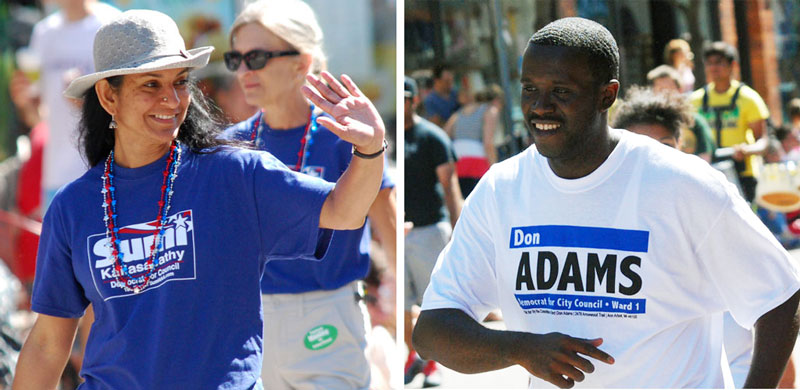
And Sumi Kailasapathy (Ward 1), who was elected in November 2012, challenged the idea that it’s only new councilmembers who need to learn during the budget process. She pointed out that city staff members also have a learning curve – as they shift the organization’s priorities to the new council’s priorities.

For public safety, a consensus seemed to emerge that the council’s planning retreat success statements about policing might need further refinement – in light of the current department’s configuration. Police chief John Seto characterized that configuration as set up to be reactive, not proactive. Current staffing levels don’t allow for a proactive configuration, he indicated.

But the council did not appear to have a complete consensus about the importance of that proactive capability – unless that capability could be linked to success in making the community be safe and feel safe. Measuring perceptions of safety through the National Citizens Survey – for the first time since 2008 – was an idea that seemed to have some traction on the council. Some sentiment was expressed that the number of police officers should be increased – whether or not that increase could be tied to better safety as defined in adopted city council goals.

For the fire protection side of public safety, councilmembers effectively made a decision – without voting – to give clear direction to fire chief Chuck Hubbard that they didn’t want to see his three-station plan implemented. He had first presented the plan about a year ago. The proposal would close three stations but re-open one, for a net reduction from five to three stations.

Some dissent was offered, but mayor John Hieftje indicated that in his view the three-station plan was dead. Still, councilmembers seemed unenthusiastic about an alternative – which would entail hiring an additional 23 firefighters to staff existing stations. They seemed more inclined toward incremental improvements in fire safety. Those improvements might be gained through community education. Another possibility is deployment of some light rescue vehicles, which would require a crew of just two, instead of water-carrying trucks that need a crew of three.

This report focuses exclusively on the top council priorities of budget discipline and public safety. Also discussed at the working session, but not included in this report, were draft work plans for the other three priority areas: infrastructure, economic development and affordable housing.

The council may schedule an additional work session on March 25 to give city administrator Steve Powers more direction as he shapes the final budget that he’ll submit to the council in April. [Full Story]

County Board Priorities Emerge at Retreat

Washtenaw County board of commissioners budget retreat (March 7, 2013): County commissioners continued their work to lay a foundation for the 2014-2015 budget, in a three-hour retreat that covered a wide range of issues – including the possibility of a new millage, bonding or other revenue sources.

Conan Smith, Ronnie Peterson, Washtenaw County board of commissioners, The Ann Arbor Chronicle

From left: Washtenaw County commissioners Conan Smith (D-District 9, Ann Arbor) and Ronnie Peterson (D-District 6, Ypsilanti). (Photos by the writer.)

The retreat comes in the context of a projected $24.64 million general fund deficit over a four-year period from 2014 through 2017. A much smaller general fund deficit of $3.93 million is projected for 2014, but county administrator Verna McDaniel hopes to identify $6.88 million in structural changes for that year – a combination of new revenues and cuts in expenditures. If that happens, the larger projected deficit would be addressed, because those cuts and revenue increases would compound and carry over into future years.

The retreat didn’t aim to identify dollar amounts or even specific programs to be cut or supported. Rather, the conversation – which included small-group work – was designed to elicit broader priorities of the board. Commissioners did not explicitly reference priorities that had been developed for the previous 2012-2013 budget cycle, though some common themes emerged. [.pdf of 2012-2013 budget priorities]

Several commissioners stressed the importance of strategic investment to create an environment that supports the local economy. Transportation, education, and housing – particularly on the county’s east side, in the Ypsilanti area – were all cited as critical to economic development efforts. Funding strategies were floated, including the possibility of a human services millage, road tax, or “social impact” bond. Also discussed was the possibility of absorbing the road commission into county government operations.

The retreat follows a budget briefing that McDaniel and her financial staff had given to commissioners at their Jan. 16, 2013 meeting. The board has also discussed the budget process at two working sessions earlier in the year, and will follow up the retreat with a working session in April. McDaniel is expected to deliver a budget proposal to the board in September. The board must adopt the budget by the end of 2013. [Full Story]

“Connecting William” To Be Resource Plan

Ann Arbor planning commission meeting (March 5, 2013): Despite protests by members of the Library Green Conservancy and hesitation by some commissioners, the city planning commission voted unanimously to add the Connecting William Street plan to its list of resource documents that support the city’s master plan. After the vote, Wendy Woods tried to reopen the item for reconsideration, but she was unsuccessful in garnering support from the majority of commissioners, so the initial decision stands.

Sabra Briere, Jack Eaton, Ann Arbor planning commission, The Ann Arbor Chronicle

Jack Eaton talks with Sabra Briere before the start of the Ann Arbor planning commission’s March 5, 2013 meeting. Briere serves on the commission as the representative from city council. Eaton spoke during a public hearing on the Connecting William Street plan.

The Connecting William Street project was undertaken by the Ann Arbor Downtown Development Authority at the behest of the city council. It focuses on recommendations for coordinated development of five city-own sites in the William Street area, on the south side of downtown. By becoming a resource document, the CWS plan carries less weight than it would if it were part of the city’s master plan.

Amber Miller of the DDA gave a presentation during the March 5 commission meeting, similar to those previously given to the council and the DDA board.

Much of the discussion among commissioners focused on the issue of open space. Miller noted that recommendations on that issue have been deferred to a committee of the city’s park advisory commission. That downtown parks committee is in the early stages of its work – it was scheduled to meet earlier in the day on March 5, but that meeting was canceled.

Commentary during a public hearing on the CWS plan also focused on open space, with several members of the Library Green Conservancy advocating for a centrally located park atop the Library Lane underground parking structure. They criticized the DDA’s process for developing the plan, and felt the planning commission had not adequately publicized the fact that a public hearing on Connecting William Street would be held that evening.

Additional public commentary came after the commission’s vote. Woods said her decision to ask for reconsideration of the item was prompted by concerns raised during this final public commentary. She felt it wouldn’t hurt to wait two weeks until the commission’s next meeting, so that more people could have the chance to weigh in, if they wanted.

Sabra Briere, who had expressed strong reservations before casting her original yes vote, said she supported Woods in her effort to reconsider the item, suggesting that postponement would be appropriate. She expressed concern that the commission was deciding to use the CWS plan as a future planning document – which would be referenced when the planning staff and commission make their recommendations to the city council on site plans and other planning and development actions. Given that importance, Briere – who also serves on city council – wanted to be absolutely certain before accepting it.

Other commissioners disagreed. Kirk Westphal, the planning commission’s chair, also served on a DDA leadership outreach committee (LOC) that helped craft the Connecting William Street plan. He said he felt extremely comfortable with the public process that had led to these recommendations. Eric Mahler also argued against reopening the item for another vote, saying the commission needed to bring closure to this long process. He was satisfied that sufficient public notice had been provided.

It’s unclear whether the city council will take any action on the Connecting William Street plan. As to what happens next, Susan Pollay, the DDA’s executive director, told planning commissioners that the DDA will be following the council’s guidance. Councilmembers have already taken a first step related to one of the five parcels – the former YMCA lot. At their meeting on March 4, 2013, councilmembers voted to direct the city administrator to prepare an RFP (request for proposals) for brokerage services to sell the lot. A $3.5 million balloon payment on the property is due at the end of 2013. [Full Story]

Council’s Meeting Dominated by Downtown

Ann Arbor city council meeting (March 4, 2013): The council had five items on its agenda related geographically to downtown Ann Arbor – but delayed voting on two of them.

Architect Brad Moore (left) talks with resident Ray Detter. Moore is architect for two projects that were on the council's March 4 agenda – Blue Heron Pond and 624 Church St. The councils approval of both site plans indicates the council is not contemplating imposing a Moore-atorium on site plans.

Architect Brad Moore (left) talks with resident Ray Detter. Moore is architect for two projects that were on the council’s March 4 agenda – Blue Heron Pond and 624 Church St. The council’s approval of both projects indicates the governing body is not contemplating a Moore-atorium on site plans. (Photos by the writer.)

On one of those items, the council voted to postpone its initial consideration of changes to Chapter 7 of the city code, which governs the way the tax increment finance (TIF) capture is calculated for Ann Arbor’s downtown development authority. The revisions to Chapter 7 would also affect the composition of the DDA board, excluding elected officials from service.

The council also postponed until its next meeting, on March 18, a possible moratorium on site plan review for projects in the downtown. The possible moratorium previously had been postponed from the council’s Feb. 19 meeting. After hearing extensive public commentary on the topic on March 4 – from residents and representatives of the developer of a proposed 14-story residential project at 413 E. Huron – the council went into closed session.

On emerging from the closed session, the council voted, without deliberation, to postpone the item. The wording in the resolution provides an exemption from the moratorium for site plans that already have a recommendation for approval from the city planning commission. If enacted, the moratorium as worded would still apply to the 413 E. Huron project, because the planning commission’s 5-3 vote for approval fell short of the six it needed for a positive recommendation. The 413 E. Huron site plan is now expected to be on the same March 18 meeting agenda when the moratorium will be re-visited.

Eluding the impact of the proposed moratorium’s wording was another downtown project, which appeared on the March 4 meeting agenda. The site plan for a 14-story apartment building at 624 Church St. was approved at the council’s meeting – but that project would not have been impacted by the moratorium as it’s currently proposed. That’s because it had received a recommendation of approval from the city planning commission.

The council also voted to reconstitute a task force to re-evaluate the downtown design guidelines, which supplement the city’s zoning regulations.

In the final downtown-related item, the council voted to direct the city administrator to issue a request for proposals for brokerage services to possibly sell the city-owned parcel at Fifth and William streets – the location of the former Y building. It’s currently used as a surface parking lot in the city’s public parking system.

While the city is contemplating the sale of that site, which it purchased for $3.5 million, the council voted to buy a much less expensive parcel outside the downtown, near the Bluffs Nature Area. The council approved a purchase price of $115,000 for the parcel, which is located off Orkney Street.

The council also approved two other site plans for projects not in the downtown – although the four-unit project at 515 N. Fifth is near the downtown. The council also approved the Blue Heron Pond development, a 64-unit project on the western side of town, located at Liberty and Maple.

In other business, the council approved receipt of a federal grant to demolish two of the buildings on the city-owned property at 721 N. Main. The buildings are in the floodway. A third building, in the flood fringe, is being studied by the city for possible reuse.

The property at 721 N. Main is a former maintenance yard. So none of the 44 vehicles authorized for purchase by the council at the March 4 meeting will be maintained there. Total cost of the vehicles was $928,499.

None of the vehicles authorized for purchase was a plug-in electric vehicle. However, the council passed a resolution in support of preparing city infrastructure for plug-in vehicles. Two-other energy-related agenda items included one supporting the city’s participation in Earth Hour, and another one supporting use of the city’s energy fund for energy improvements in connection with community projects.

An item that drew considerable discussion before approval related to street closings associated with the June 9, 2013 Ann Arbor marathon. [Full Story]

Column: Making Sunshine with FOIA

National Sunshine Week started yesterday. That’s not a celebration of daylight saving time, which started the same day. But the two could be connected. Yesterday’s annual conversion to daylight saving time is supposed to give everyone some extra literal sunshine toward the end of the day. Sunshine Week is an occasion to remind ourselves of the extra figurative sunshine in our governance – ensured in many states through legislation enacted in the 1970s.

FOIA Sunshine Law

Assertion of the attorney-client privilege can, on occasion, inappropriately shield public records from view. This column shines a light on the subject by considering such a case.

Sunshine Week is an occasion to remind ourselves that open government is good government.

Michigan has two laws that are key to open government: the Open Meetings Act (OMA) and the Freedom of Information Act (FOIA). Both of these laws rely crucially on good faith. For example, the FOIA allows a public body to deny access to certain public records – like those that are protected by the attorney-client privilege.

If a record is requested and then denied based on the attorney-client privilege, a requester has no way of judging whether the assertion of privilege is appropriate. A requester relies on the good faith of government officials that privilege is not inappropriately extended to records that are not in fact protected by privilege. A requester can resort to a lawsuit, which under Michigan case law can result in the review of the records by a judge to confirm – or refute – the public body’s assertion of privilege. But few requesters have the wherewithal to file a lawsuit over a FOIA denial.

Here at The Ann Arbor Chronicle, we’re celebrating Sunshine Week by laying out a recent occasion when we requested records under the FOIA, were denied the records, appealed to the city administrator, were denied under the appeal, but then were able to obtain some of the records by other means. The record in question is an email written by Ann Arbor city attorney Stephen Postema. This provides an opportunity to evaluate independently, without filing a lawsuit, whether the city inappropriately asserted attorney-client privilege in denying access to a record.

We consulted on the matter with an attorney, Marcia Proctor, who agreed to analyze the relevant factors in a hypothetical scenario. Proctor is former general counsel of the Michigan Bar Association, a specialist in legal ethics, whose practice specializes in professional responsibility for lawyers and judges.

We first present the hypothetical scenario, followed by a brief discussion of the relevant factors in the scenario identified by Proctor. We then present the text of the email and apply the various tests outlined by Proctor. We reach the conclusion that the city inappropriately asserted attorney-privilege to the document.

We then evaluate whether a different exemption provided by the FOIA might apply. That exemption allows a public body to withhold communications internal to the body – to the extent that they are non-factual and preliminary to a final decision by the body. In the balancing test prescribed by the state statute, we reach a different conclusion than the city did: We think the public interest in disclosure outweighed any interest the city had in shielding this frank internal communication from public view.

Finally, we urge the city council to weigh in on the city’s administrative policy on FOIA response, which is currently being revised. It’s important for councilmembers to set the overarching principle that guides the city’s FOIA responses. And we think that guidance should be biased in favor of disclosure. [Full Story]

Ann Arbor DDA: We’ve Been Good Stewards

Ann Arbor Downtown Development Authority board meeting (March 6, 2013): In a main agenda item, the DDA board authorized a $300,000 grant to the Ann Arbor Housing Commission – for renovations to the 64-unit Baker Commons public housing facility. It added to the $280,000 grant made late last year for the replacement of the Baker Commons roof.

DDA board member Keith Orr delivered extended remarks in response to a proposal currently being weighed by the Ann Arbor city council that would make amendments to the city ordinance governing the downtown development authority.

Ann Arbor Downtown Development Authority board member Keith Orr delivered extended remarks in response to a proposal currently being weighed by the Ann Arbor city council that would amend the city’s ordinance governing the DDA. (Photos by the writer.)

The grant award had come at the request of AAHC executive director Jennifer L. Hall, who’s proposing a major change to the way the 360 units of public housing are administered. The approach involves privatization and project-based vouchers.

The DDA’s support for public housing also surfaced at the meeting as a talking point for board members in the context of a proposal being considered by the Ann Arbor city council – which would amend the city ordinance regulating how the DDA’s tax increment finance (TIF) capture works. The amendments would clarify existing language in the city ordinance in a way that would favor the other taxing authorities, whose taxes are captured as a part of the DDA’s TIF. The council postponed action on that proposal at its March 4, 2013 meeting. In that context, at the DDA’s March 6 meeting, board member Sandi Smith raised the specter that the DDA would in the future not be able to support affordable housing in the same way it has done in the past.

In addition to clarifying the question of how TIF is calculated, the amendments would prevent elected officials from serving on the board and would impose term limits for board service. Board members took turns at the start of the meeting arguing that the DDA had been a good steward of public dollars and that the amendments to the ordinance are not warranted. Board members indicated that they didn’t think their service as volunteer members of a board was being afforded adequate respect by the city council.

The board comments followed a turn at public commentary at the start of the meeting from Brendan Cavendar of Colliers International, a commercial real estate services firm. His commentary departed from the typical pattern of someone signing up to address the board for up to four minutes. Instead, Cavendar had been invited to appear, and responded to prompts from board members to deliver a range of positive responses, including: future tenancy of the former Borders location; rising rents in the downtown area; and affirmation of the importance of the downtown public parking system.

The city’s public parking system is managed by the Ann Arbor DDA under a contract with the city of Ann Arbor. The monthly parking usage report is featured at every board meeting. But the March 6 meeting featured the parking system in an additional way. The board decided to award the full $50,000 of a discretionary management incentive to the DDA’s subcontractor – Republic Parking – for operation of the public parking system. It’s an annual decision, but it’s the first time in the last five years that the full amount has been awarded. The decision was based on good performance on metrics tracked by the DDA, according to the board.

In a third voting item, the board authorized $610,662 in support of getDowntown’s go!pass program, which provides a subsidy to cover the cost of rides taken on Ann Arbor Transportation Authority buses by employees of participating downtown businesses. To participate, a business must purchase a go!pass for all employees, at an annual cost of $10 per employee. Roughly 6,500 downtown employees are provided with go!passes through the program. [Full Story]

County Moves Closer to New Labor Deal

Washtenaw County board of commissioners meeting (March 6, 2013): Following a brief public portion of their meeting, commissioners held a two-hour closed session to discuss a new contract with the county’s labor unions, which has been negotiated over the past few weeks.

Ronnie Peterson, Yousef Rabhi, Washtenaw County board of commissioners, The Ann Arbor Chronicle

Washtenaw County commissioners Ronnie Peterson (D-District 6) and Yousef Rabhi (D-District 8), who serves as board chair, talk before the board’s March 6, 2013 meeting. (Photos by the writer.)

This was the third consecutive meeting that’s included a lengthy closed session on this topic, as the administration has been conducting accelerated negotiations with its union to reach a new contract before March 27. That’s the date when Michigan’s right-to-work legislation – enacted late last year – takes effect. At the board’s Feb. 20, 2013 meeting, commissioners gave final approval to a resolution opposing the legislation, with a clause that directed the county administration to renegotiate union contracts.

Several union leaders attended the March 6 meeting. However, they did not formally address the board, and left before commissioners ended the closed session.

The board took no action after emerging from the closed session. The new long-term agreements are expected to be brought forward for a vote at the board’s March 20 meeting, and would also need to be ratified by union membership.

A new union contract is likely to have a significant impact on the county’s budget, which will be the focus of a board retreat on Thursday, March 7. Board chair Yousef Rabhi briefed commissioners on the agenda for that retreat. The discussion will focus on six key areas: (1) labor force sustainability/internal equity; (2) environmental impact and mobility in Washtenaw County; (3) economic development; (4) human services/safety net; (5) mandated service provision/resources; and (6) long-term fiscal stability.

Also impacting county operations are automatic sequestration-related federal budget cuts that were activated on March 1. Rabhi read aloud a letter from the U.S. Dept. of Housing & Urban Development, which alerted the county to an anticipated 5% reduction in HUD funding during the current fiscal year for programs supporting low-income housing and emergency assistance to the homeless, among others. The full impact of federal cuts across all county departments – including public health and the office of community & economic development – is not yet known, according to the county’s finance director.

The light agenda on March 6 included three items related to public health: (1) a move toward setting a $75 fee for the county’s training course to certify drinking water operators; (2) giving initial approval to the county public health department’s plan of organization, as mandated by the state of Michigan; and (3) making two appointments to the Washtenaw Community Health Organization (WCHO) board.

Rabhi also reported that the county’s new food policy council, on which he serves, might make a funding request soon to hire a staff member, who would help carry out the council’s work. The council was formed in 2012 to support the local food economy. [Full Story]

Art Commission Updated on Program Revamp

Ann Arbor public art commission meeting (Feb. 27, 2013): Much of this month’s public art commission meeting was spent discussing the work of a city council committee that’s developing recommendations for changes to Ann Arbor’s public art program.

Marsha Chamberlin, Deb Gosselin, Ann Arbor public art commission, The Ann Arbor Chronicle

From left: Marsha Chamberlin, chair of the Ann Arbor public art commission, and Deb Gosselin, who handles the city’s capital improvements plan (CIP). Gosselin attended AAPAC’s Feb. 27 meeting to talk about the CIP process, which the commission is using as a planning tool for future public art projects. (Photos by the writer.)

Sabra Briere, who’s one of five city councilmembers on the committee, updated AAPAC on possible revisions to the city’s public art ordinance, as well as more general recommendations that are being prepared for the full council. Those proposed changes are likely to include eliminating the Percent for Art funding mechanism, creating a structure to solicit private donations and grants to support public art, directing staff to “bake in” artwork and architectural enhancements as part of overall city capital projects, and providing more administrative support – perhaps by contracting out those services.

AAPAC members had questions about the possible new approach, including questions about the commission’s own role. Briere advised them to continue working on existing projects that are funded through the Percent for Art approach, but noted that they should focus on future opportunities that don’t rely on Percent for Art funds.

The council committee continues to meet, and will eventually deliver recommendations and draft ordinance changes to the full council. This Chronicle report includes highlights from the committee’s most recent meeting on March 1. The committee next meets on March 15, before the council’s March 18 meeting. A moratorium on spending unallocated Percent for Art dollars expires on April 1.

In other action at AAPAC’s February meeting, commissioners heard from Jason Frenzel, stewardship coordinator for the Huron River Watershed Council, about a project that would raise awareness of how the city’s stormdrain system connects to the river. The project is proposed in two stages, starting with a chalk art contest at the June 14 Green Fair, during which artists would draw images and messaging around stormdrains on Main Street.

Commissioners also discussed how to move forward with a proposed memorial to Coleman Jewett – a bronze Adirondack chair at the Ann Arbor farmers market. A private donor has already committed $5,000 to the memorial, but details are still being worked out about how to manage the project. AAPAC chair Marsha Chamberlin indicated that she might call a special meeting in early March for commissioners to act on the proposal, which hasn’t formally been accepted by AAPAC. Update: The special meeting has been scheduled for Thursday, March 7 at 4:30 p.m. in the fifth-floor conference room at city hall, 301 E. Huron.

Other project updates were made via a written report from Aaron Seagraves, the city’s public art administrator. The report stated that a task force has selected four artists as finalists for artwork on the East Stadium bridges, and they have been invited to an April 1 site visit/open house. The finalists are: Volkan Alkanoglu, based in Atlanta, Georgia; Sheila Klein of Bow, Washington; Rebar Group of San Francisco; and Catherine Widgery of Cambridge, Mass. The project has a budget of $400,000.

Only four commissioners attended the Feb. 27 meeting, and when one commissioner left early, the meeting was adjourned for lack of a quorum – before all agenda items were addressed. In part because of attendance issues, officer elections – which AAPAC bylaws state should happen in January – have not yet occurred. Ballots were mailed to commissioners last week, and results will be announced at AAPAC’s March 27 meeting. It’s expected that vice chair Malverne Winborne will be elected chair.

And although it was not discussed at the meeting, Cathy Gendron resigned from AAPAC in late February. She had been reappointed to AAPAC at the city council’s Jan. 7, 2013 meeting for a term through Jan. 20, 2016, but had not attended the commission’s January or February meetings.

Responding to a Chronicle query, Gendron stated in an email that she had agreed to stay on the commission through March, but would be unable to attend AAPAC meetings and decided to resign. ”It’s time for someone else to take my place.” There are now three vacancies on the nine-member commission. [Full Story]

Column: Let’s Get DDA Tax Capture Right

The Ann Arbor city council’s March 4, 2013 agenda includes a proposed change to the city ordinance (Chapter 7) governing the Ann Arbor Downtown Development Authority. I think most of those ordinance amendments have considerable merit, and warrant the council’s consideration. But it’s possible that the amendments themselves won’t receive their due consideration, because they’ll be dismissed as politically motivated.

Ann Arbor DDA TIF capture: Actual valuation (green line) of the increment compared to projected valuation in the TIF plan (blue bars corresponding to one of three estimates – pessimistic, realistic, optimistic.

Ann Arbor DDA tax increment finance (TIF) capture: Actual valuation (green line) of the increment compared to projected valuation in the DDA TIF plan (blue bars correspond to one of three estimates – pessimistic, realistic, and optimistic).

The Chapter 7 amendments are being proposed by Stephen Kunselman (Ward 3), who’s been joined by Sumi Kailasapathy (Ward 1) in sponsoring them. Kailasapathy’s co-sponsorship might help only incrementally to buffer the proposal against criticism that they’re motivated by Kunselman’s personal political aspirations.

On that theory, Kunselman is proposing revisions to Chapter 7 in an effort to raise his profile – in anticipation of a possible mayoral candidacy in 2014, and to shore up support for his Ward 3 re-election campaign his year. Given that he took out petitions for the 2013 Democratic primary on Nov. 3, 2012 – before the Nov. 6 general election – and collected signatures outside the polls, it’s pretty clear that he’s eager to seek re-election to his council seat. And last time around, in 2011, he campaigned as much against the DDA as he did against either of his two opponents. Kunselman is quoted in the February 2013 issue of the Ann Arbor Observer saying that if mayor John Hieftje runs for re-election next year, he’ll run against Hieftje.

However, on the theory that these proposed amendments are all about Stephen Kunselman and not about good public policy, I figure it’s also reasonable to toss in another possibility. Perhaps Kunselman is trying to raise his profile enough to win local blog Damn Arbor’s current poll as “most attractive councilmember.” The poll includes Kunselman as one of just four nominated councilmembers. It’s not clear to me if the voting is meant to include sartorial choices, but if it does, Kunselman could objectively be considered a natty dresser.

All kidding aside, it would be easy and convenient to dismiss the Chapter 7 amendments as a political ploy, and save the work of understanding some gnarly tax calculations. [You'll have a head start on this if you've read my previous column on the issue: "Tax Capture is a Varsity Sport."]

But I think at least some of the proposed changes to Chapter 7 have considerable merit, independent of Kunselman’s political ambitions. Millions of dollars are at stake. As councilmembers give this proposal initial consideration on March 4, I hope they focus on the tax-related amendments. [Full Story]

Parks Group Explores New Dog Park Site

Ann Arbor park advisory commission meeting (Feb. 26, 2013): An item generating the most discussion at this month’s PAC meeting related to two potential locations for a new fenced-in dog park: about 2 acres in and near South Maple Park, on the city’s west side off of West Liberty; and a roughly 1-acre section of West Park, on a knoll in the south-central area.

West Park, dog park, Ann Arbor park advisory commission, The Ann Arbor Chronicle

Aerial map showing a possible location – the purple trapezoid outline – for a dog park in West Park. The image is oriented with south at the top. North Seventh Street runs on the right side of this image, on the west side of the park. (Map by city staff, included in the park advisory commission’s meeting packet.)

No action was taken, and a PAC committee will continue to evaluate these options with parks staff before making a formal recommendation to the full commission. The previously recommended site – at a different location within West Park, near the parking lot off Chapin Street – was ultimately not presented to the city council, following protests from the nearby New Hope Baptist Church.

Another PAC committee, focused on developing recommendations for a possible downtown park, gave only a brief update. Its next meeting is scheduled for Tuesday, March 5. However, commissioners heard from four people during public commentary who advocated for a new park atop the city’s Library Lane underground parking structure on South Fifth Avenue. Part of the commentary covered a proposal to build a temporary ice-skating rink on that site.

Commissioners also recommended approval of several contracts totaling over $180,000. The contracts cover landscaping work at multiple locations, golf cart leases, custodial work at Cobblestone Farm, renovations at Esch Park, and rental of an overflow parking lot for the Argo canoe livery. The landscaping work is being funded through a donation from the Henrietta Feldman Trust.

And in his monthly report, parks and recreation manager Colin Smith informed commissioners about a strategy the city is pursuing to deal with invasive aquatic plants – primarily Eurasian watermilfoil – at Geddes Pond. [Full Story]

Round 3 FY 2014: Housing Commission

After a Feb. 11, 2013 budget work session that included separate presentations on the city’s capital improvements plan (CIP) and the Ann Arbor Housing Commission (AAHC), both of these topics came up again briefly at the city council’s most recent regular meeting.

During communications time for the council’s meeting on Feb. 19, 2013, Stephen Kunselman (Ward 3) expressed his view that the CIP should start including the 360 units of public housing managed by the AAHC.

Ann Arbor Housing Commission Properties

Ann Arbor Housing Commission properties. The size of the dot is proportional to the number of units in the location. (Map by The Chronicle. Image links to interactive map.)

Kunselman’s argument for future inclusion of AAHC properties in the city’s CIP is based in part on the fact that the city of Ann Arbor currently holds the deeds to those properties. But his broader point is that he’s opposed to the city relinquishing title to the properties – as part of a proposal made to the council by AAHC executive director Jennifer L. Hall. Hall has served in that capacity for about a year, and began her Feb. 11 presentation at the council work session with an overview of improvements that AAHC has achieved since she took the post.

Hall’s proposal stems from a need to cover an estimated $500,000 per year funding gap for needed capital investments, coupled with a perceived shift in priorities by the U.S. Dept. of Housing and Urban Development (HUD) in its funding strategy. That shift is somewhat away from subsidized public housing, where rent is subsidized in units owned by a housing commission. [Ann Arbor's situation is apparently unique – because the city, not the AAHC, holds the deeds.] While HUD still allocates several billion dollars nationally for public housing, it subsidizes even more in programs that are based on vouchers. And based on the last three years, the trend is toward more funding on the federal level for vouchers than for public housing.

Some HUD vouchers are tied to a tenant – a person. A potential tenant can take that voucher to a private landlord – and it’s the tenant who receives the rent subsidy, wherever that tenant is able to rent a place to live. Other HUD vouchers are tied instead to privately-owned property, and whoever lives in that private project receives the rent subsidy.

The strategy that Hall will be asking the council to authorize is one that converts AAHC properties to part private ownership, in order to take advantage of project-based HUD vouchers. The private ownership of the AAHC properties will also allow the possible use of tax credit financing to pay for needed capital investments – roofs, boilers, plumbing and the like.

The conversion to project-based vouchers would take place under HUD’s Rental Assistance Demonstration (RAD) program. To set the stage for that, the board of the AAHC selected a co-developer at its Jan. 10, 2013 meeting: Norstar Development USA.

The council would need to take two specific steps in order to proceed with the RAD: (1) approve the contingent transfer of the city-owned AAHC properties to the AAHC; and (2) approve a payment in lieu of taxes (PILOT) for the properties so that they’d owe just $1/unit in property tax per year. As city-owned properties, no property tax is currently owed. Without the PILOT provision, taxes would be owed. Requests to take those steps are expected to come to the council in March. March will also be a period during which public hearings will take place on this issue.

Although Kunselman expressed clear opposition to the idea of transferring the deeds, and Mike Anglin (Ward 5) joined him in expressing significant skepticism, other councilmembers were more positive. They still had several questions about the complexities and the risks associated with the RAD program. [For more background on the AAHC’s efforts to prepare for the RAD program, see Chronicle coverage: “Housing Commission Eyes Major Transition.”]

The Feb. 11 budget work session included the 15th District Court and the capital improvements plan (CIP). A session held on Feb. 25 covered the fund-by-fund budget picture for the next two years. Presentations on those topics are covered in separate Chronicle reports. The council’s discussion of its budget priorities – identified at a planning retreat late last year – is expected to begin at a March 11 work session. [Full Story]

Planners: Same Answer on Ellsworth Zoning

Ann Arbor planning commission meeting (Feb. 21, 2013): Acting under the direction of the city council, Ann Arbor planning commissioners reconsidered the zoning they had previously recommended for a parcel on Ellsworth Road, east of Stone School. Commissioners came to the same conclusion – that it should be zoned R3 (townhouse district).

University of Michigan, Beyond the Diag, Ann Arbor planning commission, The Ann Arbor Chronicle

University of Michigan students with Beyond the Diag, a neighborhood outreach program. They attended the Feb. 21, 2013 meeting of the Ann Arbor planning commission, which included a brief presentation about the program. (Photos by the writer.)

The vacant lot at 2081 E. Ellsworth Road is the location for the proposed Summit Townhomes project, where the developer wants to build 24 attached residential units in four separate buildings. Because it’s being annexed into the city from Pittsfield Township, the parcel needs to be given a zoning designation. Planning commissioners had recommended R3 zoning (townhouse district) at their Nov. 20, 2012 meeting.

The zoning request was on the council’s Feb. 4, 2013 agenda for final approval, but during a public hearing on the item, several people raised concerns related to increased density in that part of town. So councilmembers voted unanimously to refer the zoning issue back to planning commissioners for another look.

At the commission’s Feb. 21 meeting, planning staff reviewed two other zoning options that would fit with the city’s master plan for that area. But even those options with lower density – for single-family homes – would result in more driveways accessing Ellsworth, causing more traffic concerns. Nor would stormwater management be improved with the other options. So planning staff again recommended the R3 zoning.

Three people spoke to commissioners during a public hearing on the zoning reconsideration, including two residents who live at the nearby Forest Hills Cooperative. They expressed concern about broader issues with the area – including crime and a lack of recreational facilities – as well as the specific proposed zoning and project for that site. Planning manager Wendy Rampson indicated that based on the council’s discussion, city administrator Steve Powers is asking the city’s parks and police staff to look into concerns raised about that area. There is also the opportunity for input on the city’s master plan, she said, when the planning commission holds a public hearing on that topic each May.

In other action at the Feb. 21 meeting, commissioners recommended that the city council approve a site plan for an expansion of the Theta Delta Chi house at 700 S. State St. The historic structure, built in 1922, is located at the southwest corner of State and Monroe, across from the University of Michigan law school. The building had been leased to another fraternity after the Theta Delta Chi chapter at UM became inactive in 1997. The chapter “recolonized” a few years ago, then took possession of the building again in May of 2012. The local architecture firm HopkinsBurns Design Studio has been hired to handle the expansion. It includes making a rear addition to the building, although there are no plans to increase the current occupancy of 33 residents.

The Feb. 21 meeting included another UM connection. Commissioners heard a presentation about Beyond the Diag, a relatively new neighborhood outreach program. It’s a student-initiated effort to build community among students and non-students, and to raise safety awareness on campus and near-campus neighborhoods. One of the program assistants – Matt Lonnerstater, a graduate student in urban and regional planning – also works as an intern with the city’s planning staff. [Full Story]

Site Plan Moratorium: Commentary, No Action

Ann Arbor city council meeting (Feb. 19, 2013): Land use was the predominant theme of the meeting, linking several different agenda items – but the council chambers were filled mostly with people interested in just one of them.

Orange Almonds

The architecture of councilmember snacks at the Feb. 19, 2013 meeting provided a nutritional buffer against zoning out during the meeting: a stacked configuration of units for fruit and nuts. (Photos by the writer.)

The item drawing that interest was a proposed six-month moratorium on site plan review by the city for projects in the D1 (downtown core) zoning district. After holding a nearly one-hour closed session to review written legal advice from the city attorney’s office, the council decided to postpone the issue until March 4, its next regular meeting.

Exceptions to the proposed moratorium are provided for projects that have already received a recommendation of approval from the city’s planning commission. While that exception applies to a large residential project at 624 Church St., it does not exempt a larger project at 413 E. Huron. Planning staff had concluded that the East Huron project meets all the zoning requirements. But the planning commission’s vote on 413 E. Huron was only 5-3 in favor of recommending approval – one vote short of the six it needed. Ordinarily developers can, on their own initiative, bring a site plan to the city council for action, even without the planning commission’s recommendation.

If the resolution is enacted, then during the period of the moratorium, the planning commission would be directed to review the D1 zoning standards against site plans submitted since 2009, when new zoning regulations were established. The commission would be asked to make recommendations by June 4, its first meeting in June. The postponed resolution states that the council is supposed to take any action by Aug. 19, its second meeting in August.

Legal counsel for the 413 E. Huron developer addressed the council, intimating that if a moratorium were enacted, then a lawsuit would be filed against the city. Attorney Susan Friedlaender expressed skepticism about a provision in the postponed resolution that provided a way for an aggrieved party to have a hearing before the council. The council will take up the moratorium again on March 4.

Also postponed was a related resolution to reconvene the design guidelines task force, which would be asked to recommend improvements in the design review process. That resolution also will be taken up on March 4.

In another item related to downtown land development, the council completed an accounting step – establishing a project budget – in connection with roughly $9 million of bonds recently sold by the city. Those bonds are funding the public parking deck portion of the private City Apartments project now under construction at First and Washington. The Ann Arbor Downtown Development Authority will be making the bond payments.

Another land use issue postponed by the council was the proposed purchase of a parcel immediately adjacent to the Bluffs Nature Area. The postponement was based on council questions about the need for additional access from the west side of the nature area, and the price to be paid out of the city’s open space and parkland preservation millage. Related to that same millage, the council approved applying to the USDA Farm and Ranch Land Protection Program (FRPP) for matching funds to acquire development rights on two farms as part of the city’s greenbelt program.

In other land zoning issues, the council gave final approval to the owner-requested rezoning of some residential properties in the Arbor Hills neighborhood. The council also gave initial approval to a rezoning that would allow a retail project called The Shoppes to be built near the junction of Plymouth and US-23.

The council took action related to city-owned land at 721 N. Main, approving a $30,000 physical study of the main building on that former maintenance yard, to see if it can be re-used. At least part of that site is slated to become part of an Allen Creek greenway.

Across the street from 721 N. Main stands a collection of vacant houses that were supposed to be demolished to make way for the Near North affordable housing project. With that project now defunct, the city is moving to demolish the houses as nuisances. The council’s action on Feb. 19 was to accept about $96,000 in additional federal funds through a community development block grant, which can be used only for demolition of houses on the former Near North site.

In other action, the council formally adopted a sustainability framework that now will be part of the city’s master plan. And related to sustainability, the city council authorized the issuance of up to $1 million in bonds for the property assessed clean energy program (PACE). The PACE program provides low-interest loans for owners of commercial properties to invest in energy saving improvements.

Changes to the city’s living wage ordinance also were on the Feb. 19 agenda. The council had previously contemplated but ultimately postponed those changes. This time around, they were tabled. That means the issue will not come back, unless the council proactively decides to take up the proposal again in the next six months.

Also as a result of council action on Feb. 19, the municipal airport will get new fencing. [Full Story]

Snyder’s Transit Funding: AATA Nods Yes

Ann Arbor Transportation Authority board meeting (Feb. 21, 2013): The board’s meeting was relatively uneventful, but included a routine application for state funding – which this year contains a message of measured support for transit funding in Gov. Rick Snyder’s proposed budget.

Before the Feb. 21, 2013 meeting of the AATA board, Terry Black (manager of maintenance) and Eli Cooper (AATA board member) inspect the construction site of the new Blake Transit Center on Fifth Avenue in downtown Ann Arbor.

From right: Before the Feb. 21, 2013 meeting of the AATA board, Terry Black (manager of maintenance) and Eli Cooper (AATA board member) inspect the construction site of the new Blake Transit Center on Fifth Avenue in downtown Ann Arbor. It’s using an earth retention system similar to that used for the construction of the underground Library Lane parking garage located across the street – but on a much smaller scale. (Photos by the writer.)

The resolution approved by the board includes the AATA’s view that “an increased level of state transit funding such as has been proposed by Governor Snyder would assist AATA in maintaining existing service and operating expanded transit service to satisfy the expressed public demand …” To increase funding for transportation as a general category by $1.2 billion – including roads, bridges and public transportation – Snyder’s budget would rely on proposed increases to the state’s gasoline tax and to vehicle registration fees.

The Michigan state constitution requires that 90% of all fuel taxes be used to fund the maintenance of streets, roads and bridges designed for motor vehicles that use tires. Part of the remaining 10% can be used to fund public transportation operating expenses. Partly as a function of the overall increase, Snyder’s budget would increase the amount of local operating assistance for transit agencies statewide from around $166 million for each of the past two years to about $181 million.

The AATA’s estimated budget for the next fiscal year (2014) is being reported to the state of Michigan as totaling $33,653,000. Those total expenses would be covered by the following breakdown of revenue estimates: federal funds ($4,276,104); state funds ($9,939,035); local funds ($12,088,861); fare revenue ($7,258,000); and other funds ($91,000). The AATA’s current year’s budget – for FY 2013, which ends on Sept. 30 – calls for $32,700,181 in expenditures.

The AATA’s portion of the $166 million in state operating assistance last fall took an unexpected roughly $800,000 dip around the time the AATA set its budget for the current fiscal year. The reduction in funding relates to the way the state’s formula applies when spending is reduced by other transit agencies in the AATA’s category. AATA CEO Michael Ford told the board at its Feb. 21 meeting that he’d been to Lansing and had received assurance that an additional appropriations bill – which is currently the “placeholder” bill SB 126 – is likely to be passed, and would restore the $800,000.

Meanwhile, the most recent financial update through the first four months of the 2013 fiscal year – which started in October – shows the AATA with a slight positive variance. But the AATA is operating with a level of cash reserves that equates to about 2.88 months of operating expenses. Board policy is to keep a minimum of 3 months’ worth reserves on hand. Notes to the treasurer’s report indicate that for the year, the AATA now expects about $160,000 less in fare revenues that it had budgeted – based on fewer rides being taken by University of Michigan affiliates than the AATA had projected.

Besides authorizing the application to the state of Michigan for state operating assistance, the board authorized two contracts in connection with construction on the new downtown Ann Arbor Blake Transit Center – one for the elevator and the other for millwork. Both contracts were under the project’s budgeted amount for those items.

The board also approved a contract for the printing of its RideGuide, a printed version of its schedules. Also authorized was a contract to perform environmental cleanup from a gas line that had been seeping at the AATA’s facility on South Industrial Highway.

Updates at the meeting included notes on the board’s upcoming retreat, which is to include a discussion of AATA customer needs. That led to comments from the public asking the board to think about who the AATA’s customers actually are.

During the meeting, the board also held a closed session to conduct a performance review for CEO Michael Ford. [Full Story]

County Board Continues Labor Strategy Talks

Washtenaw County board of commissioners meeting (Feb. 20, 2013): In a meeting with few new action items, the board gave final approval to a resolution protesting the state’s right-to-work law, and spent more than an hour in executive closed session to discuss collective bargaining strategies.

Diane Heidt, Greg Dill, Washtenaw County board of commissioners, The Ann Arbor Chronicle

Diane Heidt, the county’s human resources and labor relations director, talks with Greg Dill, director of infrastructure management. (Photos by the writer.)

The resolution taking a stance against the state law was approved on a 6-2 vote, with dissent from the board’s two Republican commissioners – Dan Smith (District 2) and Alicia Ping (District 3). Felicia Brabec (D-District 4) was absent. Though Smith had stated his objections on Feb. 6, when an initial vote had been taken, there was no discussion on the item at the Feb. 20 meeting.

The resolution directed the administration to negotiate new four-year contracts “to protect and extend each bargaining unit’s union security provisions.” Current contracts with most of the 17 unions representing county employees expire at the end of 2013. New contracts, if completed before the right-to-work law takes effect in March, would not be required to comply with the new law, which makes it illegal to require employees to support unions financially as a condition of their employment.

Negotiations with the unions began earlier this month.

In other action at the Feb. 20 meeting, the board appointed Dan Smith to the Washtenaw County parks & recreation commission – the third county commissioner to be appointed to that 10-member board. Ronnie Peterson (D-District 6) raised concerns about having too many commissioners serve on that entity, noting that Smith was filling a slot designated for the general public.

Yousef Rabhi, who as board chair made the nomination, responded to Peterson’s comments, saying that he and Smith had discussed this issue – because Smith had the same concerns as Peterson. Rabhi assured Peterson that the commission will continue to provide opportunities for citizens to serve, and that the slot filled by Smith would remain designated as one for the general public for future appointments. Five members of the general public currently serve on the parks & rec commission.

In communications to the board, Rabhi noted that he planned to form a task force to explore establishing a county land bank. A land bank is a mechanism for the county to take temporary ownership of tax- or mortgage-foreclosed land while working to put it back into productive use. The board had previously voted to establish a land bank at its Sept. 1, 2010 meeting, but never took the next step of funding it or getting approval from the state. Only three commissioners from that period – Ronnie Peterson, Rolland Sizemore Jr. and Conan Smith – still currently serve on the board.

Among the other items handled at the Feb. 20 meeting included: Resolutions of appreciation for two Chelsea organizations – Purple Rose Theatre and Chelsea Lanes; a final vote to authorize borrowing up to $40 million against the amount of delinquent property taxes in all Washtenaw County jurisdictions; and final approval to add the Detroit Region Aerotropolis board to the list of boards, committees and commissions that are eligible for commissioners to receive stipend payments.

The Feb. 20 meeting was attended by several students, including nursing students from the University of Michigan who were observing the proceedings as part of a psychiatric nursing course. [Full Story]

AADL Highlights UM Partnerships

Ann Arbor District Library board meeting (Feb. 18, 2013): Communications was a common theme throughout this month’s AADL board meeting.

Barbara Murphy, Ann Arbor District Library, The Ann Arbor Chronicle

Barbara Murphy, a trustee of the Ann Arbor District Library, reviews a brochure for AADL’s upcoming “America’s Music” series. The materials were shared at the board’s Feb. 18, 2013 meeting. (Photos by the writer.)

The meeting’s main presentation focused on AADL’s partnerships with the University of Michigan, primarily with the Proyecto Avance: Latino Mentoring Association (PALMA), a UM student group. The program, which meets on Tuesday and Thursday evenings in AADL’s downtown building, includes 100 participants of all ages who work with about 75 tutors to improve their English language communication skills.

Terry Soave, AADL’s manager of outreach and neighborhood services, encouraged board members to drop by the library when the tutoring is in session, saying, “it’s a pretty spectacular thing to see.”

The Feb. 18 meeting also included a report from the board’s new communications committee, chaired by Nancy Kaplan, which recommended adding a second opportunity for public commentary at the end of each monthly meeting. There was no formal vote on this recommendation, but board members indicated agreement. In fact, a second slot for public commentary had already been included on the agenda when it was posted the previous week.

Speaking at the first opportunity for public commentary on Monday, Kathy Griswold – an organizer of the Protect Our Libraries group – urged the board to allow its committee meetings to be open to the public. She noted that committee meetings are open for most other local governing entities – including the Ann Arbor city council, Ann Arbor Public Schools board, the Ann Arbor Downtown Development Authority board, and the Ann Arbor Transportation Authority board. There was no subsequent discussion of this suggestion among board members during the meeting. [Full Story]

County to Protect More Farmland, Nature Areas

Washtenaw County parks and recreation commission meeting (Feb. 12, 2013): The first meeting of WCPARC in 2013 kicked off when each member received a copy of a half-hour video history of the county park system, in honor of WCPARC’s 40th anniversary.

Miller Creek, Washtenaw County parks and recreation, The Ann Arbor Chronicle

A section of Miller Creek runs through a property off of Geddes Road that the Washtenaw County parks and recreation commission might help preserve, in partnership with the city of Ann Arbor. The land is located in Ann Arbor Township. (Photos by the writer.)

Commissioners were then briefed on what WCPARC director Bob Tetens called a record monthly expenditure for his time with the commission: $3.9 million in January 2013, including $2.9 million for parks and recreation – primarily for capital improvements at Rolling Hills, Independence Lake and Sharon Mills parks – and $1 million for natural areas preservation.

Expenditures in January for the natural areas preservation program included acquiring land from the Ford Road Property LLC on the east side of Berry Road in Superior Township; for improvements at Trinkle Marsh, Spike, Hornback, and Nagle preserves; and for phase 1 due diligence on the proposed purchase of the Trolz property in Manchester Township.

The commission also approved taking the next steps on several additional natural areas preservation proposals. Those steps include applying for (1) federal funds to help cover the purchase of development rights on farmland in Superior and Lima townships, and (2) a state grant to help develop the Staebler Farm, located in Superior Township, into an active park. Commissioners also approved the purchase of a conservation easement on 82 additional acres from the Ford Road Property LLC in Superior Township.

Also discussed was a proposal to help the city of Ann Arbor buy the 8-acre Taylor property on Geddes Road, east of Huron Parkway. The land is immediately east of the city’s Ruthven nature area, and is seen as a priority because a section of Miller Creek runs through it. The creek is subject to flash flooding during heavy rains, and has been the focus of stormwater management efforts by the city and the county water resources commissioner. Conan Smith, a county commissioner who also serves on WCPARC, questioned whether this is an appropriate project for the county’s natural areas preservation program. He indicated that it might be better for the city to partner with the water resources commissioner on this project instead.

In other action, commissioners voted to increase fees at WCPARC facilities, including the Meri Lou Murray Recreation Center, and Independence Lake and Rolling Hills parks. A staff report indicated that the fees would still be lower than comparable public recreation facilities in this region. [.pdf of fee schedule]

WCPARC members were briefed about applications to fund eight projects through the Connecting Communities initiative, under which WCPARC helps pay for non-motorized transportation trails throughout the county. The city of Ann Arbor is among those applicants, asking for $300,000 to fund development of trails along the Allen Creek greenway, including at the city-owned 721 N. Main site. Final decisions will be made at WCPARC’s March meeting.

WCPARC members also re-elected their officers, set the 2013 meeting calendar, and got updates on two months’ worth of activities at the county’s parks and recreation facilities – including a report on flooding at the Meri Lou Murray Recreation Center in January, and steps toward developing a new recreation center in Ypsilanti.

The meeting was attended by six of the current nine-member commission. One vacancy remains to be filled on WCPARC by the Washtenaw County board of commissioners, which appoints all WCPARC members. A vote on that position is expected at the county board’s Feb. 20 meeting. [Full Story]