Neighborhoods Section

In the Archives: As the Coffee Grinder Turns

Editor’s note: In Laura Bien’s first local history column written for The Chronicle, she told the tale of a cigar maker’s son, who invented a combination device that would roast coffee and heat irons for pressing clothes. This week, she returns to the subject of coffee roasting … and grinding.

cassius-2-small

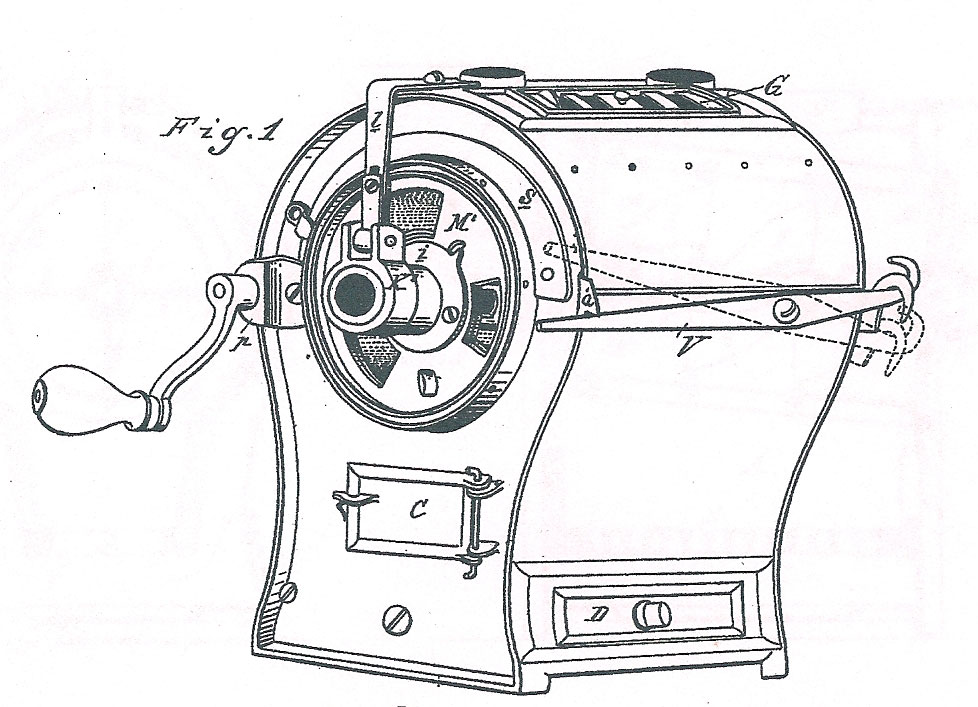
Cassius Hall invented increasingly sophisticated coffee roasters, culminating in this model in 1880.

At a recent antique show at the Washtenaw Farm Council Grounds, my husband and I bought a cute wood and copper coffee grinder. “Cool – I can do it like they did it in the 19th century!” I thought.

At home, I poured store-bought roasted beans into the grinder’s cup and turned the handle. Fifteen minutes later, I was still turning.

The following morning I tried to Huck-Finn the kitchen chore onto my husband. “Try it! It’s pretty fun!” I enthused, while sidling back to the still-toasty bed. Within a week, the grinder was occupying a space in my collection of copper kettles atop the fridge, and we’d returned to using the good old can of ground coffee from Meijer. We gave up on the related idea of attempting to home-roast the beans. Phew.

Yet between 1867 and 1882, 13 different home coffee-roasters were patented in Michigan, seven of them in Ypsilanti. One Ypsilanti manufactory shipped several different models nationwide, and employed a traveling salesman to sniff out new markets.

The popularity of coffee roasters around the 1870s could be attributed to the coffee providers’ greed, ingenuity, and deceit. [Full Story]

In the Archives: Edward Israel’s Polar Sky

Editor’s note: Now that we’ve settled into our season of cold, it’s fitting to remember that Michigan played a role in the polar exploration of the late 1800s.

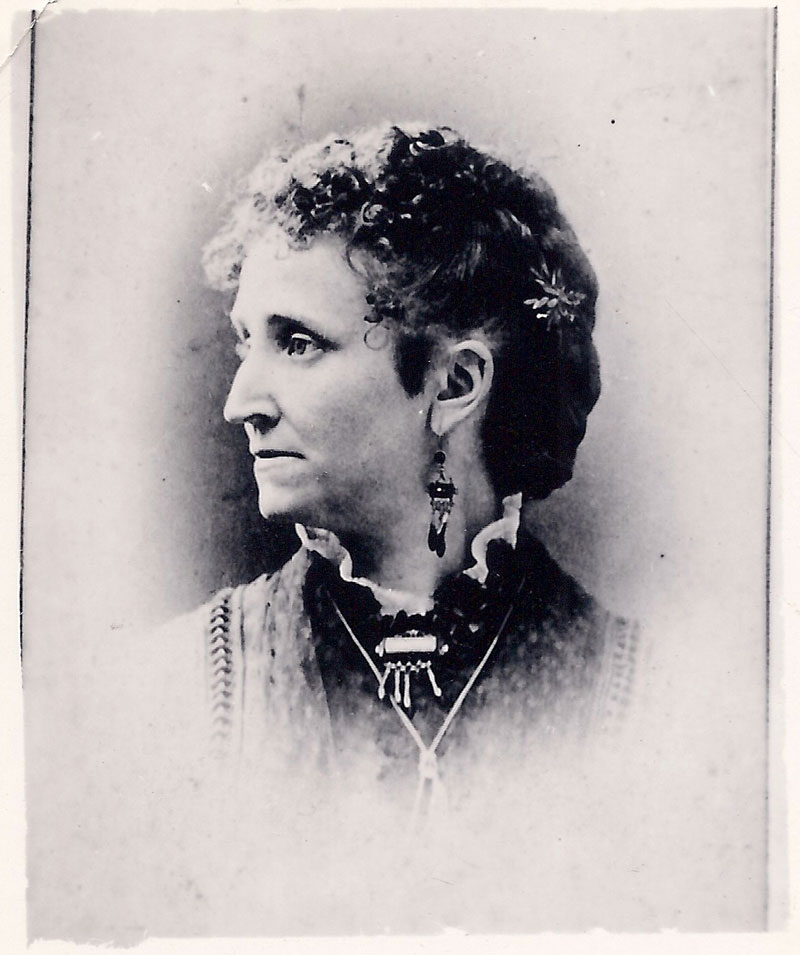
edward-israel

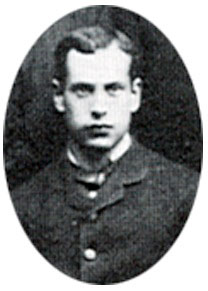
Edward in college years

In this week’s edition of her biweekly local history column, Laura Bien offers what could be considered a beautiful, if belated, obituary of Edward Israel, a University of Michigan student who perished on a polar expedition.

It was no surprise in the spring of 1881 when a University of Michigan senior was offered the prestigious post of astronomer on a federally-backed polar expedition.

Edward Israel was one of the brightest students in his class, and one of the youngest. He accepted. “The expedition will be absent two years,” reported the April 30, 1881 University of Michigan Chronicle, “so that Mr. Israel hopes to be present at the reunion of his class in ’84.”

He wasn’t. [Full Story]

In the Archives: A Michigan Football Memory

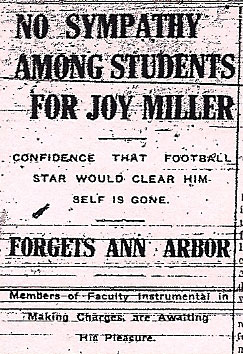
joy miller football scandal michigan

Ypsilanti Daily Press of Dec. 29, 1909

Editor’s note: The game of football is a big deal at the University of Michigan. Recent media interest in the departure of UM head coach Rich Rodriguez is proof of that. And as local history columnist Laura Bien illustrates this week, it’s been that way for at least a hundred years.

The teenager turned up on a Walla Walla fruit farm, his memory gone.

The cheers of the football crowds had faded away. The jokes and camaraderie of the frat brothers were forgotten. When James Joy Miller’s father traveled across the country in the spring of 1910 to claim his vanished son, his son did not recognize him.

A news story from Washington state, printed in the March 24, 1910 Ypsilanti Press, said “James G. Miller of Detroit, father of James Joy Miller, ex-Michigan football captain and star player of last season, arrived here but failed to be recognized by his son. The meeting was most affecting, and Miller senior was unable to account for the strange situation which has overtaken his son.”

Miller had been a ranch hand on a nearby fruit farm for two months, said the story, migrating there from Montreal after fleeing Michigan. “He has no recollection,” said the paper, “of his former surroundings, declares he has never seen a game of football and says he cannot remember what his father or his sweetheart look like, though his father sat before him.”

Perhaps the scandal had been too big a shock. It had broken in late December of 1909. [Full Story]

Ann Arbor Task Force Consults Panhandlers

Editor’s note: At its Sept. 20, 2010 meeting, the Ann Arbor city council reappointed a downtown street outreach task force – aka the “panhandling task force” – which had existed in the early 2000s. The current group’s charge is to work for no longer than six months to identify cost-effective ways to achieve better enforcement of the city’s ordinance against panhandling, and to provide help to panhandlers who are addicted to drugs.

Panhandler's cup of coins

The sum of one panhandler's afternoon collection on Dec. 31, 2010 on the sidewalk next to Border's Bookstore on East Liberty Street in downtown Ann Arbor. (Photo by Dave Askins.)

Now that the task force is roughly halfway through that six-month period, The Chronicle attended its December meeting to check in on the group’s work.

You buy local, think global, pay it forward, recycle. You’re a good person.

So how do you respond to a panhandler? Is opening your wallet helping someone in need? Or is it enabling an addiction? Can you look the other way and still consider yourself compassionate?

At the Dec. 15 meeting of the city’s panhandling task force, three paid consultants gave their perspective on the issue – as panhandlers. Geoffrey Scott said he enjoys talking to the people almost as much as he appreciates the money they give him.

But one member of the city’s panhandling task force says people don’t realize the damage they do in the name of kindness. [Full Story]
In the Archives: A Path Less Traveled By

Editor’s note: We live in a time where women, and men, can easily and safely navigate any woods filled with dangerous wild animals, say in a helicopter, armed with a hunting rifle. Think Sarah Palin. In simpler times, people walked through the woods. And they just hoped not to stray from the path, to find themselves in the company of a literal or figurative grizzly bear, or – as Laura Bien describes in this installment of her local history column – wolves.

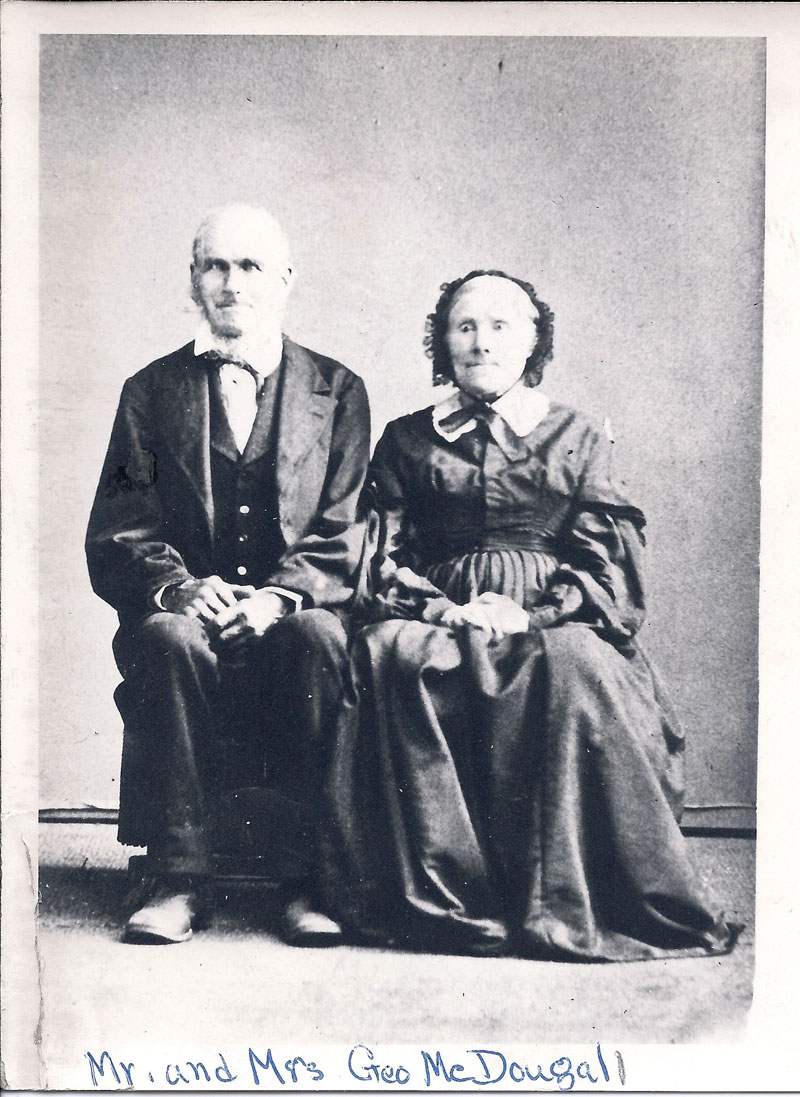
Mary McDougall's grandchildren often begged her to retell her story of her walk among the wolves.

In the early 1800s, thick forest covered much of the land south of Ypsilanti.

The virgin forest nourished huge flocks of passenger pigeons on migratory routes passing north. Often they passed low enough to be knocked from the air with sticks. After one such harvest, according to one Ypsilanti city history, “at dinner that day, there was a tremendous pigeon pot pie, sufficient to satisfy everybody, although there were twenty at the table.”

But the forest also held danger. One large swamp in Augusta Township was named Big Bear Swamp, and wolves and panthers roamed in our county.

Into this wilderness in 1828 came Andrew Muir with his family. They had fled an economic recession and spiking farm rents in Scotland and immigrated with other relatives to America. Members of the McDougall family also made the trip.

After the weeks-long Atlantic crossing, 26-year-old Mary Muir and 29-year-old George McDougall married in Rochester, New York on Halloween in 1828.

The families traveled by boat and overland to Michigan. Andrew Muir bought a small farm near the intersection of modern-day Stony Creek and Bemis roads, about 6 miles south of Ypsilanti. He invited his daughter Mary and son-in-law George to share the property. However George, who had worked as a miller back home in Ayrshire, chose to settle just south of the small Ypsi settlement and work at its flour mill there.

Mary often walked down to her father’s farm late in the week to see her parents and stay overnight. On Sundays, George would travel down to visit and he and Mary would return to their home.

One winter day, Mary prepared to visit her parents. She set the table for her husband and made sure his dinner was ready for his return from the flour mill. Mary adjusted her pretty new calfskin shoes, tied her plaid wool scarf over her dress, and left the house. [Full Story]

Sunday Swim Raises ALS Research Funds

On Sunday morning, the traffic roundabouts leading to Skyline High School off North Maple Road were littered with piles of slush, as the snow and freezing rain that began the previous day continued to fall. Undeterred were around 40 masters swimmers, who navigated to Skyline’s natatorium to participate in a new event on the swimming schedule: Ann Arbor Active Against ALS Holiday Relays.

Skyline Pool Ann Arbor Active Against ALS

Swimmers just after the starting beep for one of the A2A3 Holiday Relays. (Photos by the writer.)

Meet director Amanda Mercer told The Chronicle that the A2A3 Holiday Relays, which were sanctioned by Michigan Masters for U.S. Masters Swimming, will be an annual fixture on the swimming calendar. The inaugural edition featured standard swimming relays, which took full advantage of the electronic timing pads at Skyline’s pool: A new pool record of 53.23 was established for the 100-yard backstroke.

But the  relays also included some non-standard races, including one where the relay “baton” was a T-shirt that had to be peeled off one swimmer, then donned by the next one in sequence.

Participants included a former Ann Arbor planning commissioner, and a former Olympic swimmer.

The Holiday Relays are one of several activity-based fundraising efforts by A2A3, which is a nonprofit that was formed in 2008 by friends and neighbors of Bob Schoeni, who has been diagnosed with ALS, a fatal neuro-degenerative disorder. A2A3 raises funds specifically for research to find a cure for what’s commonly known as Lou Gehrig’s disease. Schoeni was on hand Sunday morning to cheer on the swimmers.

The relays were sponsored by several local businesses, including: Probility, Health and Fitness Center at Washtenaw Community College, Jolly Pumpkin, Grizzly Peak, Blue Tractor, Barry’s Bagels, and Pizza House. [Full Story]

In the Archives: Papered-Over Money Issues

Editor’s note: As municipalities in the state of Michigan start to look ahead to their next budget year, we will likely hear often about the difficult economic times in which we live – and the importance of squeezing every last dime out of the budget. It’s fair to guess, however, that wrangling over Michigan municipal budgets will not include a discussion of who should pay for toilet paper. There was a time, however, when the topic of toilet paper was fair game.

It is wise to choose one’s battles. For one hard-headed 1920 Ypsilanti alderman, the hill he chose to die on was a hill of toilet paper.

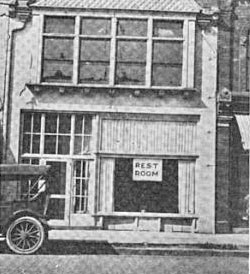
rest-room-original

In 1919 the original Rest Room opened on the west side of Huron just north of Michigan Avenue.

In that time, the city was halfway between old-timey days and the modern age. Fewer than a third of its 7,400 residents had telephones. The Ypsi phone directory was nine pages long. Due to a limited supply of electricity, many city factories deferred working hours to the night time. And an ongoing “sanitary sewer” project, viewed as a progressive upgrade from noisome urban septic tanks and privies, emptied directly into the Huron River.

Issues before the city council reflected this time of transition. At its Oct. 4, 1920 meeting, the council weighed the street commissioner’s bill for oats for his horse. The bill had been carried over from a previous council meeting when aldermen had struggled but failed to resolve the issue of a horse’s feed.

One alderman was fed up. “Alderman Worden said he had bought oats about the same time for 85 cents a bushel, while the charge for oats in this bill was $1.35,” reported the Oct. 5, 1920 Daily Ypsilanti-Press.

“Profound silence on the part of the other aldermen.

“Finally it was moved that the bill be paid, and the vote was 9 to 1 in favor.” [Full Story]

In the Archives: “United States” Spoken Here

Editor’s note: Many who live in the U.S. are distrustful of other citizens because they speak a different language, dress in a markedly different way, or have other attributes that cause them to be perceived as “not from here.” One such group is Muslims. And anti-Muslim rhetoric reached a point recently that prompted the Ann Arbor city council to pass a resoluton calling for tolerance. In 2010 it may be anti-Muslim talk that predominates among the range of “anti” rhetoric. But around 90 years ago, it was anti-German.

“It must have dawned upon any impartial observer that German is a mighty unpopular language in this country just at present and getting no better fast,” read the June 13, 1918 Ypsilanti Record.

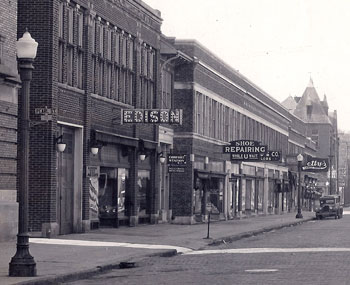
fritz-metzger's-early-restaurant

Fritz Metzger's restaurant at 32 North Huron in Ypsilanti (near the center of this photo) was across the street from Shaefer Hardware and the Great A&P Tea Company.

The article described a Ypsilanti-area farmer who stopped in at a downtown Ann Arbor restaurant and overheard two other customers conversing in German.

“He arose and went over to the men and suggested that they make their remarks in plain United States,” continued the article. An ensuing argument turned into a fistfight in the restaurant, and police were called. “When the officer arrived, the farmer walked up to them and said, ‘I guess I’m the man you want,’ and proceeded to explain the circumstances. Whereupon the officers decided that they were not looking for anyone and left.” [Full Story]
Found Footage, Teeter Tottered

By

[Editor's Note: HD, a.k.a. Dave Askins, editor of The Ann Arbor Chronicle, is also publisher of an online series of interviews on a teeter totter. Introductions to new Teeter Talks appear on The Chronicle.]

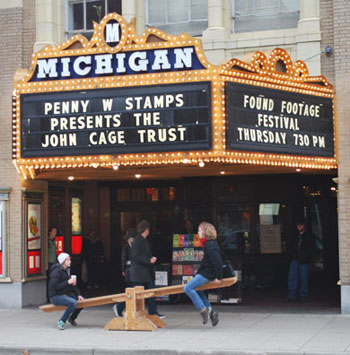
Last Thursday afternoon, I wheeled the mobile teeter totter down Liberty Street to the Michigan Theater, to the exact spot where John Roos [proprietor of Roos Roast Coffee] and I had tottered back in the spring of 2008.

Found Footage Festival Michigan Theater

I have no idea who these people are. What they're proving is that if you set up a teeter totter in front of a crowded theater, passers-by will just hop on and start teeter tottering. (Photos by the writer.)

The occasion was a ride with Nick Prueher, who together with Joe Pickett co-founded the Found Footage Festival. The festival is a celebration of old, found VHS tapes. It has toured the country for the last six years – each year Prueher and Pickett curate a new show. The 2010 edition passed through Ann Arbor last Thursday.

Imagine an exercise video featuring Angela Lansbury in a bath towel giving herself a massage. Or imagine a sexual harassment training video – how to recognize and avoid it, not how to perpetrate it – featuring a guy in a lunchroom holding up a piece of fruit and asking, “What do you think of my banana?”

These are the sorts of videotapes that Prueher and Pickett have sifted through by the thousands. They culled out the very best to make a part of their show, which they host and comment on live in theaters across the land.

On the totter, Prueher discussed with me the requirement that the videos they collect be “found.” The story of how the tapes were found – in many cases in thrift stores – are as important as what’s on the tape, he said. They’ve been producing the Found Footage Festival for long enough that people now send in videos they’ve found – and the story of how they’re found is archived along with the contents of the tape.

But Prueher described on the totter how there could be a kind of “taint” attached to a collection, if someone just sent in, say for example, a bunch of training videos that they themselves produced and directed back in the early 1990s. He also talked about his internship on Mystery Science Theater.

It was the notion of an authentic “find” that I found most intriguing. So I’d like to tie that into a short reflection about The Chronicle’s Stopped.Watched. section and The Muehlig Funeral Chapel at Fourth and William Street in downtown Ann Arbor. [Full Story]

In The Archives: The Farmer and the Poet

Editor’s note: In today’s world of Facebook Friends, we befriend folks with a click of a button. We can be “friends” with just about anyone: Ashton Kutcher or Bruce Springsteen or Barack Obama. These are, of course, at best “friendships at a distance.” This week, local history columnist Laura Bien takes a look at the way similar friendships were claimed in a past era. It was a time when a farmer – who was also a poet – could write a letter to his favorite poet and hope to receive a hand-written reply. Even if it was a “friendship at a distance,” the imprint of a human hand seems more authentic than the click of a mouse.

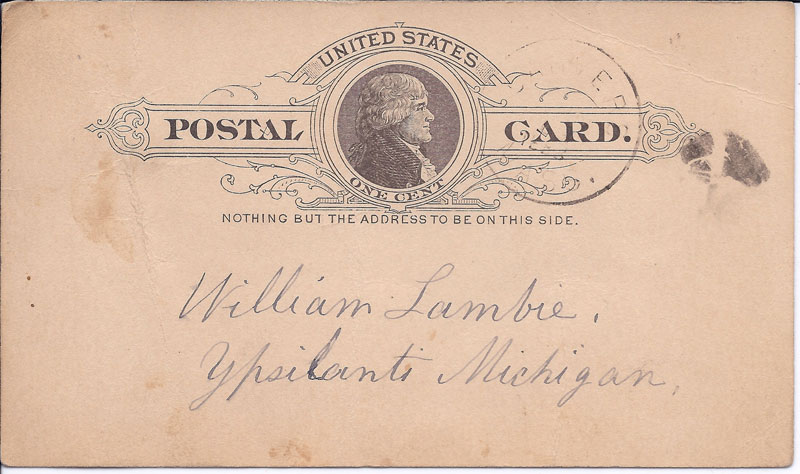
lambie-postcardsmall

Lambie self-addressed a prepaid postcard to send to his favorite poet.

Well-remembered are Robert Frost’s three sojourns to the University of Michigan in the 1920s, and his house on Pontiac Trail, now at the Henry Ford Museum. Forgotten are the works of Ypsilanti poet-farmer William Lambie.

Lambie belonged to a generation earlier than Frost, but like Frost, Lambie had Scottish blood and took as his subject the natural world. Unlike Frost, he never left the occupation of farming or made much money. Lambie never won anything more for his verses than friends’ approval, with one exception – a penny postcard that Lambie valued as priceless.

The postcard came from another poet whom Lambie admired. [Full Story]

Photo Essay: Halloween 2010 on Main Street

Editor’s note: This is the third year that Myra Klarman, a professional photographer based in Ann Arbor, has graced The Chronicle with her charming photographs of the annual Main Street Halloween Treat Parade, when merchants pass out goodies to pint-sized princesses and puppies, ghouls and goblins. [Take a look at her images from 2009 and 2008 Halloween parades as well.] After seeing Myra’s photographs last year, one of our readers commented: “This makes me like our town.” We agree. Happy Halloween!

Blue Ghoul Princess with face painted white, out along Main Street causing a fright.

[Full Story]

Column: A Broadside for Barn Preservation

Editor’s note: The Chronicle’s regular coverage of civic affairs includes many meetings of Ann Arbor’s greenbelt advisory commission (GAC) as well as the city’s historic district commission (HDC). The GAC oversees the spending of revenues from a millage dedicated to the preservation of open space – much of it in the countryside around Ann Arbor. Inside the city, the HDC is charged with reviewing requests for modifications to structures that are preserved in Ann Arbor’s 14 historic districts.

In following The Chronicle’s coverage of these issues, local architect Chuck Bultman has been wrestling with the notion of where old barns fit into this preservation picture.

Every architect remembers that first time they went into a barn – the vastness of the space, the hewn beams, the light streaming through all of those gaps. For me it was in southwest Virginia, in the country going to college. I was captivated by the light and space. Outside, the farmyard also made its statement. The large red barn, along with the out-buildings made a room with a silo in it, not so much unlike a piazza with a campanile.

Barns have an interesting place in the built world. They are icons in the landscape, and as such it is easy for us all to assume a familiarity, bordering on ownership. After all, they have been there for as long as you can remember and you expect them to be there long after you are gone. We think of barns not as in the landscape. Instead, like rivers or mountains, they seem part of it – an inseparable part of the countryside that surrounds towns and cities across the country, coloring the landscape with distinct personalities. They are variously described as timeless, strong, permanent, and historic.

But barns are not part of the landscape, nor are they timeless, permanent, or historic – at least as we might commonly apply the word “historic” to an achievement, for example. [Full Story]

Column: Benefits of The Local Call

Due to some unpleasantness in my gastro-intestinal tract, I spent this past Friday night in the University of Michigan Hospital.

The author's iPhone, clad in its new case: "I do have an iPhone, a wonderful gadget that can tell me what drug stores are near my house ..."

Happily, I was not sick enough to stay very long, so I was kicked to the curb on Saturday afternoon, clutching a prescription for oxycodone. [No, that’s not a typo – it’s the generic version of OxyContin.]

I need the stuff for my stomach pain, which – for reasons the UM docs could not quite explain – has lingered past any sign of inflammation that can be detected by a CT scan or in my bloodstream.

I asked the nurse who checked me out whether I could get the meds at any pharmacy, thinking that perhaps high-octane opiates are reserved for hospital dispensaries. “Well,” she said, “that’s why you have a prescription.”

Yes, but filling a prescription on a Saturday night is not so easy. There are no fewer than four stand-alone pharmacies within a mile radius of my house on the West Side – five if you count the one inside Kroger’s. I struck out at three of them. [Full Story]

In the Archives: Ale and Beef

Editor’s note: The last half of the 19th century was a golden age of patent medicines – elixirs that were generally not actually patented. The professional medical establishment was on guard against these concoctions. This is the tale of an Ann Arbor physician who spent part of his career debunking the patent medicines of others, but then went on to earn a living developing actual patents for products that began to show a resemblance to good, healthy food.

From one of Preston Rose's advertisements, in the October, 1892 issue of the magazine "Alienist and Neurologist."

Year-old aged beef bouillon blended with Canadian beer was the health remedy peddled by onetime University of Michigan urinalysist Preston B. Rose – after he was kicked out of the university.

A graduate with the class of 1862, Preston entered UM as an assistant chemistry instructor in the 1860s. He married Cornelia Esther Robinson in 1863. Preston departed from his wife and the university to serve in the Civil War with Michigan’s 5th Infantry Regiment. He worked as assistant surgeon, and was discharged due to his wounds, mustering out in 1865.

Back in Ann Arbor, part of Preston’s work involved exposing worthless patent medicines. That work was undertaken with the Washtenaw County Medical Society, which was founded in 1866. The society was mentioned in a 1906 book, “Past and Present of Washtenaw County,” written by Samuel Beakes, who served as mayor of Ann Arbor from 1888-1890. According to Beakes, the society analyzed many patent medicines, “and exposed their worthlessness.”

The Beakes volume goes on to name the man who would ultimately become Rose’s nemesis: “In this creditable work Dr. Silas H. Douglass, Dr. Albert B. Prescott and Dr. Preston B. Rose were chiefly active.”

It was Silas Douglass – Preston’s boss in the new chemistry department at UM – who would cause him no end of trouble. [Full Story]

In the Archives: Earth Closets

Editor’s note: Michigan’s economy in 2010 is in the crapper. So the theme of jobs growth and economic development is a part of political campaigns statewide – from city council contests on up to the gubernatorial race. Yet no candidate has identified indoor non-flushable toilets as a growth industry in Michigan – perhaps with good reason. We tried that before and it didn’t work out.  Local history author Laura Bien deftly treats this delicate topic with her trademark deadpan prose.

heap-closet-small

Description of William Heap's earth closet. (Image links to higher resolution file.)

In the late 19th century two University of Michigan professors of medicine and an Ypsilanti doctor championed a new sanitation technology. Despite their efforts spanning nearly 20 years, the earth closet turned out to be arguably the least enthusiastically adopted invention in Michigan history.

It was an era of primitive indoor toilets connected to odoriferous privy vaults – if you were lucky. Even elegant urban houses had backyard outhouses – such as Ann Arbor’s historic Kempf House.

Patented in England in 1873 by Henry Moule, the earth closet resembled a wooden box with a rear metal hopper. The hopper was filled with clean dry dirt. After using this commode, the user turned a small handle that dropped a small portion of dirt into the pail, covering its contents and rendering them allegedly odor-free. In time, the pail was removed and emptied, often on one’s garden. Lower-tech earth closets without a hopper had a nearby bucket of dirt on the floor.

It was a 19th-century composting toilet. [Full Story]

In The Archives: Accidental Photographer

The sitting woman smoothed a tiny wrinkle in her lap. She glanced up at the large skylight partially screened with gauzy curtains. It was a May day in 1872. Large fluffy clouds sailed silently behind the glass. The photographer was taking a while adjusting something on the camera. Finally it was ready. “Look at me, please,” said the photographer. Click.

A portrait of Mary from circa 1880, photographer unknown.

“That was very good, thank you,” said Mary Parsons, Ypsilanti’s only 19th-century female studio photographer.

Born in Vermont in January of 1838, Mary Elizabeth married John Harrison Parsons when she was 21 and he 25. The couple followed other western-bound migrants, and during the Civil War both taught in Ohio. By war’s end the couple had two sons, Dayton W. and Frank John.

The conflict had decimated the student-aged population of young men. In 1865, John and Mary came north to Ypsilanti. John bought the equipment of retiring photographer J. A. Crane and created his own studio. It occupied part of the top floor of Ypsilanti’s post office building, then on the west side of North Huron next to Pearl Street. It was a good location near the bustling downtown on Michigan Avenue. Mary helped run the business and kept house in the family’s apartment, next to the studio. [Full Story]

In the Archives: Fluffy Sparrow Heads

In the late 19th century, an interloper was committing thievery across Michigan.

Glimpsed now here, now there, the miscreant evaded capture, flitting away. Finally in the late 1880s the state responded to residents’ outrage and levied a bounty on the culprit’s head.

Its tiny, fluffy head: the offender was the English or house sparrow.

flobert-small

The feeble Flobert rifle was dissed by the catalog house selling it.

“This detestable bird is an imported resident,” said Charles Chapman in his 1881 “History of Washtenaw County.” The English sparrow had been introduced in Brooklyn in 1852 in the hope that it would eat harmful insects. It quickly spread across the continent. Wikipedia notes that today it is the world’s most widely distributed wild bird.

Chapman continued: “A few pair first made their appearance here in 1873; the streets of Ann Arbor are now overrun with them, and they are gradually making their way to the country. Wherever they locate they drive out the martin, blue-bird, swallows … They are a seed-eating bird, and in portions of Europe do great damage to the crops of the farmer.” [Full Story]

Authorship in News, Science, Totter Riding

By

[Editor's Note: HD, a.k.a. Dave Askins, editor of The Ann Arbor Chronicle, is also publisher of an online series of interviews on a teeter totter. Introductions to new Teeter Talks appear on The Chronicle.]

Gareth Morgan on a teeter totter.

Gareth Morgan is a scientist working on problems of protein folding and stability.

The Dec. 11, 2009 edition of the scientific journal Molecular Cell includes an article called “Optimizing Protein Stability In Vivo.” It’s a paper co-authored by nine people. The first two names on the list of nine authors are Linda Foit and Gareth Morgan. The paper combines expertise in genetics and chemistry, reflected in the specific strengths of Foit and Morgan, who are two young scientists working in James Bardwell’s lab at the Howard Hughes Medical Institute at the University of Michigan.

Foit’s name might already be familiar to Ann Arbor Chronicle readers in connection with what might be called a “unsuccessful physics experiment” near downtown Ann Arbor – an attempt to achieve greater residential density with a project called The Moravian. Foit addressed the city council in support of the project.

Morgan’s name is certainly familiar to our readers, but he’s no relation to the publisher of The Chronicle, Mary Morgan. Gareth Morgan was visiting Ann Arbor from England for a two-week span recently and will return to Michigan in October for around a month to continue his collaboration with the Bardwell lab.

The fact that Gareth and Linda’s contribution to the paper was equal is made clear through the last of seven footnotes on the author line:

7 These authors contributed equally to this work.

The collaborative nature of modern science was one of the topics that Gareth and I talked about on the teeter totter last Saturday afternoon, just before the University of Michigan football team started its season against the University of Connecticut Huskies.

We also touched on the issue of health and safety culture in U.S. labs compared to British facilities, and the role that game-playing might play in the future of science. For details, read all of Gareth’s Talk. By way of preparation, it might be worth thinking about where it’s easier to drink a cup of coffee – a U.S. lab or a British lab.

I took the occasion of Gareth’s explanation of the credit conventions for a scientific paper as a chance to reflect very briefly on how the allocation of credit is indicated in other lines of work, including journalism. [Full Story]

Laws of Physics II: Homeless Encampment

Exactly one year ago, on Sept. 1, 2009, the homeless community that had been camping behind Arborland mall was evicted from that location by Ann Arbor police officers. So the residents of Camp Take Notice, a self-governed community of homeless people, spent that first night of September just north of the park-and-ride lot at Ann Arbor-Saline Road and I-94.

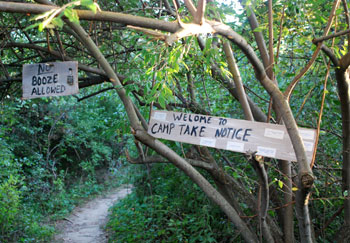
welcome-to-camp-take-notice

Signs on the trail to Camp Take Notice. (Photos by the writer)

Last year, The Chronicle reported the commentary on those events from Ellen Schulmeister, executive director of the Shelter Association of Washtenaw County: “It’s simple physics,” she said. “People have to be some place, and if people don’t have a place to be, they will find a place to be.”

The state police paid a visit, taking names but making no arrests. Later one of the campers, Caleb Poirier, would be arrested on charges of trespassing on the Michigan Dept. of Transportation property. Poirier was represented by David Blanchard of the law firm Nacht & Associates, P.C. The ACLU filed an amicus brief in support of Poirier, and the charges against the camper were eventually dropped. The camp’s current location is off Wagner Road near I-94.

In the course of the past year, members of the community – some homeless campers, some not – who organized in support of the tent encampment under the name Michigan Itinerant Shelter System Interdependent Out of Necessity (MISSION) have achieved more than simply a successful legal defense of one of their members. They were a key force in prompting the city of Ann Arbor and Washtenaw County to consider allocating emergency shelter funds for the winter of 2009-10.

And their recent achievement of official nonprofit status as a 501(c)(3) organization means that the goal of finding land sponsors to host the camp legally appears a bit more realistic. A student with the University of Michigan Law School who’s working with MISSION has sketched out a model for how liabilities could be handled by defining appropriate relationships among the land sponsor, MISSION and the homeless camp. The group heard a presentation on legal issues last Friday morning at the Washtenaw County Annex on Fourth Avenue.

But it’s all still a matter of physical laws. UM physics doctoral student Brian Nord, who’s president of MISSION’s board, compares Camp Take Notice to a gas and MISSION to a relief valve: “As long as the environment within camp is positive and community-driven, the methods of CTN can be fluid and operate as a gas. However, the established societal regulations and more so the prejudices act as a maximal container of this fluid. MISSION, the valve, has to evolve itself to consistently advocate for the rights of the individual, while appearing as part of the establishment to the camp.”

As The Chronicle noted a year ago, “This is a story that does not yet have an end, nor will it likely ever have one.” But it is now time for an update. [Full Story]

In The Archives: Bonnet-Starching Tips

Editor’s note: Laura Bien writes a bi-weekly history column for The Chronicle. This week she describes her experience reenacting the role of an anonymous turn-of-the-century scrubwoman at Ypsilanti’s Heritage Festival, which took place Aug. 20-22.

My rained-on bonnet flopped over my face like a dish towel. I could see only a sliver of sidewalk. What had been a neatly starched head-shield this morning had been ruined by the Saturday rain.

Ypsilanti Heritage Festival Laura Bien

The author made a rag rug in between visitors to Grandma's Trunk.

My long skirt hem was wet, too, and catching on my ankles as I stomped back to the historical museum on Ypsilanti’s Huron Street where our props had been staged overnight. My sleeves were soaked and I was on the verge of tears.

I looked ridiculous. Why, why, had I been so driven to be a historical reenactor at the Ypsilanti Hertitage Festival? Did I even know what I was doing?

Back in the park, the antique trunk I’d borrowed the week before sat under a historically inaccurate blue tarp, waiting for the drizzle to end. I returned from the museum to our staging spot with a basket containing a thermos of water and some bread and cheese concealed under a pillowcase.

My husband had scooped out a rectangle of sod, stored the sod-plank by a nearby tree, and was preparing his firemaking-with-flint-and-steel-and-char-cloth demo. Grey clouds covered the sky. [Full Story]

In the Archives: Two Worlds

Editor’s note: The new University of Michigan North Quad residential hall, which is opening this fall at the corner of State and Huron, will house the Global Scholars Program among various other initiatives. The goal of the program is reflected in a quote from a participant: “I learned to understand differences as diversity, not strangeness.” Historically, that attitude did not always serve as this country’s educational approach to other cultures – as this edition of Laura Bien’s bi-weekly history column shows.

navaho-tom-torlino-3-yrs

Navajo student Tom Torlino at his arrival to Carlisle Indian School and three years later.

Eighteen-year-old George Moore boarded the eastbound train on a chill November day in 1898. Several of his schoolmates climbed on. The boys sat near Mrs. Lizzie McDonald, their guardian.

It would be a long journey.

Four days and three nights over the clacketing steel rails lay between his Idaho birthplace and a Pennsylvania boarding school.

Built in 1879, the Carlisle school was led by its founder Richard Henry Pratt, a former Civil War volunteer who after the war served as an officer in the 10th Cavalry. Its members included Buffalo Soldiers and Native American scouts. In western Indian Territory, Pratt’s group was in charge of enforcing reservation borders to protect settlers’ lands; Indians left the reservation to seek food.

Pratt was also put in charge of a group of Native American prisoners whom he treated humanely, comparatively speaking, even giving them sketch pads in which to draw their experiences. Years later in his book “Battlefield and Classroom,” Pratt wrote, “Talking with the Indians, I learned that most had received English education in home schools conducted by their tribal government. Their intelligence, civilization, and common sense was a revelation because I had concluded that as an Army officer I was there to deal with atrocious aborigines.”

However, in his later role as schoolmaster, he also said, “In Indian civilization I am a Baptist, because I believe in immersing the Indians in our civilization and when we get them under holding them there until they are thoroughly soaked.” Pratt had firm beliefs about how and why to educate his Carlisle students. In his era, Pratt’s assimilationist ideas were progressive.

George Moore, who had taken the train and attended the Carlisle School, eventually returned part-way back west – to Ypsilanti. [Full Story]

Column: Losing a Friend, and Community

John U. Bacon

John U. Bacon

It was a beautiful summer morning. I walked from my home in Ann Arbor, down State Street, to St. Thomas the Apostle Church. A crowd had already gathered outside, waiting to pay respects to our old friend, Mr. Brown.

No one told us to call him that. We just did.

In 1937, Mr. Brown’s father and grandfather opened a store called College Shoe Repair. Mr. Brown took over the business in 1951, the same year he married Dorothy – or Mrs. Brown, to us. They worked together every day. They had seven kids, and all of them worked at the store at some point.

When the shoe repair business slowed down in the ’70s, Mr. Brown started selling hockey equipment and sharpening skates. That’s how most of us got to know him. [Full Story]

In the Archives: Victorian Era Death Photos

Editor’s note: Death as a part of life is a theme previously covered by the Chronicle in the form of a column by Jo Mathis: “Letting Go: Many ways to say good-bye to a loved one after death.” And the topic surfaced tangentially at a recent forum for candidates in the Democratic primary for the state House, when they were asked to comment on a state law requiring death certificates to be signed by a funeral director. In her regular local history column for The Ann Arbor Chronicle, Laura Bien takes a look at the role photography played over 100 years ago in documenting the deaths of children.

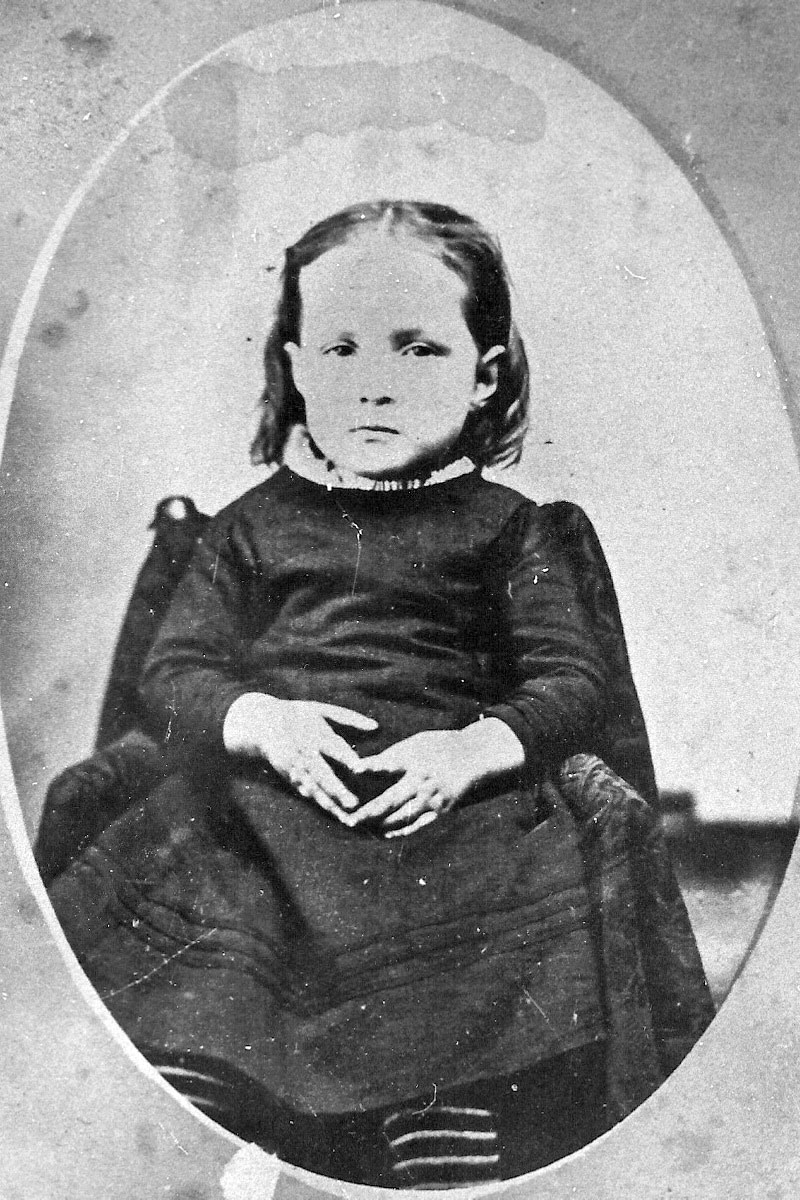
It was an era without personal cameras, much less digital memory cards storing thousands of shots. The 19th- and early 20th-century family photo albums in the Ypsilanti Archives often contain only one expensive formal studio portrait of each individual family member, or a single economical group portrait.

Obituary in the Ypsilanti Commercial: “DIED: On the 13th inst., Theodore W., only son of J. Willard and Florence Babbitt, aged 10 months.”

Child mortality was high. When a child or other family member died, families would on occasion arrange to have a photograph taken before burial. Sometimes it was the first and last photograph they would ever possess of their loved one.

The fifty-odd family photo albums in the Ypsilanti Archives contain about a dozen examples of these poignant memento mori. [Full Story]

In the Archives: Golden Age of Oysters

Editor’s note: For this installment of Laura Bien’s bi-weekly local history column she takes the Gulf oil spill as an opportunity to drill down into the local area history of oysters.

Detroit oyster packers and restaurants advertised in Ypsilanti papers.

The nation-wide restaurant chain Red Lobster is pulling oysters from its menu. So are other seafood restaurants around the country.

The nation’s oldest continually-operating oyster-shucking company, New Orleans’s P&J’s, has shut down. Nearby is French Quarter neighbor Antoine’s, New Orleans’ oldest restaurant that allegedly invented the sumptuous dish Oysters Rockefeller. The restaurant has kept the recipe secret to this day.

Less occult is that restaurants around the country who rely on Gulf oysters are in trouble. According to NOAA, the Gulf supplied around 67% percent of the nation’s oysters.

Closer to home and over 150 years ago, oysters came from a different coast. Packed in barrels and whisked from New York and Chesapeake Bay to Washtenaw on trains, oysters were a popular area food. [Full Story]

In the Archives: 10 Least Persuasive Ads

Editor’s note: For this installment of Laura Bien’s bi-weekly local history column she counts down a top 10 list of least persuasive advertisements in old time Ypsilanti newspapers.

10. One early cereal offered a transformative experience.

Jim Dumps was a most unfriendly man,
who lived his life on the hermit plan;
In his gloomy way he’d gone through life,
And made the most of woe and strife;
Till Force one day was served to him-
Since then they’ve called him “Sunny Jim.”

Force breakfast wheat flakes were advertised in a 1902 Ypsilanti newspaper with one of the first brand mascots, Sunny Jim. It was only seven years earlier that John Harvey Kellogg had patented his “Flaked Cereals and Process for Preparing Same.” The popular Force ad campaign used six-line verses written by Minnie Maud Hanff and illustrated by Dorothy Ficken.

Jim Dumps asserted, “Too much meat
In summer causes too much heat.
What shall we eat all summer long,
That, without meat, shall keep us strong,
And in the best of summer trim?”
“Why, ‘Force,’ of course,” laughed ‘Sunny Jim.’

Though the poems now seem quaint, in his time Sunny Jim was a popular cultural icon for the cereal that promised “the strength of meat, without the heat.”

(Image links to higher resolution file.)

[Full Story]

In the Archives: The Girl Who Burned

Editor’s note: At its May 20, 2010 meeting, the University of Michigan board of regents approved a $17.7 million expansion of the University Hospital’s emergency department, aimed at reducing overcrowding and patient wait times. In 2009, the hospital’s ER had over 77,000 patient visits. A potential visitor to a UM ER back in the early 1900s would have been Bertha Thorn, the subject of this installment of Laura Bien’s local history column.

The house at 160 North Washington stood dark on the night of December 7, 1908.

The 19-year-old servant girl woke up in her attic room around midnight. She sighed, realizing that she would have to get out of bed and get the chamber pot. It would be cold from the chilly room. Bertha wore a union suit under her nightgown.

girl that burned

Bertha's room was likely in the attic.

She got up and sleepily felt for the kerosene lamp on her bedside table. She lifted the glass chimney and lit the lamp.

The chimney slipped. Bertha grabbed for it. Her nightgown sleeve caught fire.

Bertha jerked back. Her sleeve snagged the lamp. It tumbled and broke on the floor, sending splattered fuel and a column of fire up Bertha’s back. As flames roared up her nightgown, Bertha screamed and ran for the stairs.

“The girl ran shrieking, a pillar of fire, to the hall below,” reported the Dec. 8, 1908 Ypsilanti Daily Press, “where Miss Scovill aroused by her screams overtook her and succeeded with rare presence of mind in wrapping her in a couch throw and extinguished the flames. A physician was summoned and it was found that she was burned from her neck to her feet, the flesh being literally baked on her back, arms, and limbs, although not so severely burned across her chest. The fact that she wore a union suit of heavy underwear made the case more serious as it was almost impossible to remove the garments.” [Full Story]

S. Fifth Ave: Historic District, Development

On May 17, 2010 the Ann Arbor city council gave final approval to the city’s FY 2011 budget.

Also that same evening, at a different public meeting away from the glitz and glamour of budget deliberations, an historic district study committee – appointed by the council in August 2009 – adopted its final report. The report recommends creation of an historic district along South Fifth and Fourth avenues, from William Street down to Packard Avenue, including the south side of Packard.

ann-arbor-historic-districts-small

The colored overlays indicate existing Ann Arbor historic districts. The question mark indicates the general vicinity of the proposed new historic district. (Image links to .kmz file from the city's data catalog, which will open in GoogleEarth, displaying all the current historic districts in the city.)

The council would still need to approve the creation of the district. The issue is currently scheduled to come before the council for a first reading on June 21, followed by a second reading on July 5. A moratorium on all construction work in the area of the study will expire on Aug. 6.

If the historic district is approved, then the Heritage Row project – a planned unit development (PUD) proposed along the east side of Fifth Avenue south of William Street – would need to win approval not just from the city council, but also from the city’s historic district commission (HDC).

Heritage Row is due to come before the city council for its second reading on June 7. It received its first reading approval from the city council on May 3 – with no discussion, but with one dissenting vote from Mike Anglin (Ward 5).

This article takes a look at the recommendation of the historic district study committee, primarily through the lens of the public hearing held on May 5 in city council chambers. The conclusion of the hearing found Scott Munzel and Alex de Parry kidding back and forth with Beverly Strassmann – over their respective remarks at the public hearing. Munzel and de Parry are legal counsel and developer for the Heritage Row project, respectively, while Strassmann is president of the Germantown Neighborhood Association.

In his public hearing remarks, Munzel had – somewhat unexpectedly – presented a case that the area recommended as an historic district should, if anything, be larger than the study committee is recommending. The issue of the possible district’s size was already controversial at the point when the committee was appointed, and continues to be a bit of a chaffing point among residents. [Full Story]

Column: What, If Anything, Is a Bicyclist?

Temperatures hit the high 70s at Sunday’s Artisan Market near Kerrytown, where volunteers for Common Cycle were helping people learn about bicycle repair.

pic-collage-bicycles

Top to bottom: Tom Wright, Frank Schwende, Thomas Kula. (Photos by the writer.)

And as the weather gets warmer, the primary election season will also start to heat up – just as surely as journalists will appeal to hackneyed clichés to describe it. For local office candidates, as well as commentators on local races, part of the sport is to categorize the community into convenient groupings – like parents, homeowners, renters, students, landlords, environmentalists, developers, new urbanists, preservationists, park-lovers, young professionals, old hippies, the handicapped, business people, transit riders, etc.

I’m not certain that bicyclists would make the list as a voter group. But they’ll serve to make the point I want to make.

Yes, that non-exhaustive list of groupings is a sometimes useful and convenient set of labels. But just as the word “zebra” is a convenient label for those horse-shaped animals with a black and white pattern of stripes, that doesn’t mean that all of those “zebras” are necessarily biologically related.

The title of this column, in fact, is a play on the title of a fairly famous essay by Stephen Jay Gould: “What, If Anything, Is a Zebra?” That essay was written back in the early ’80s and I’m not sure if the evolutionary biologists ever settled the question. I don’t really care – zebras don’t live around these parts, and even if they did, they’re notorious non-voters.

But bicyclists do live around here. And they’ll serve as well as any grouping to illustrate the fact that among any “community” we include in a list of labels, there’ll be smaller sub-communities that have more specialized interests. So we’d do well to avoid thinking of these convenient labels as reflective of any one coherent community.

This column takes a look at three groups of people that could fairly be labeled “bicyclists,” with the idea that they’re separate groups, with maybe some overlap in people, but which are fundamentally different: Washtenaw Bicycling and Walking Coalition, Bicycles Are Traffic, and Common Cycle. I look at each group through the lens of one of their events I’ve attended over the last week and a half. [Full Story]

In the Archives: Ypsi’s Submarine Diver

Editor’s Note: On April 20, 2010, an explosion on an oil rig 50 miles off the Louisiana coast left 11 workers missing and presumed dead. Efforts are now focused on the underwater challenge of trying to cap off the oil well on the sea bed. Local history columnist Laura Bien takes a look back 150 years into the past to recall a Lake Erie underwater challenge resulting from a different tragedy.

In the summer of 1852, $36,000 in cash and gold bars lay in a locked safe 165 feet deep on the floor of Lake Erie.

steam-ship

Many of the overloaded ship's immigrant passengers slept on the deck, as there was no room below.

Worth $920,000 today, the riches lay within the wreck of the steamship Atlantic. So did more grisly testimony of the shipwreck’s victims, estimated as ranging from 130 to over 250. The deaths represented about a third of the 576 travelers packed onto a steamship meant to accommodate far fewer.

The era’s stream of immigrants pouring west made a profitable trade for passenger steamers traveling the Great Lakes. The Atlantic was the fastest one of all, speeding to Detroit from Buffalo in just 16-and-a-half hours. A towering steam engine churned huge paddlewheels on either side of the vessel. Despite her power and 267-foot-long brawn, the Atlantic succumbed when she was struck on the night of Aug. 20, 1852, by the Ogdensburg, a ship from a rival ferry line.

In the chaos and panic that ensued as the Atlantic began sinking, several of the lifeboats swamped when they hit the water. Some passengers grabbed cushions or anything buoyant and jumped in the water. The Ogdensburg circled back and picked up about 250 survivors from the water. [Full Story]

Column: Who Knows What’s Ahead?

Jo Mathis

Jo Mathis

Since my father’s death in February, my siblings and I have been working on Project Keep Mother Busy.

This isn’t difficult, as our upbeat little mama is still interested in what’s next; still in some ways that fun-loving brunette from Staten Island. She’s good company.

The other day, while leaving a bakery, I picked up and handed her a brochure about The Housing Bureau for Seniors’ Senior Living & Housing Awareness Week May 7-16. The week is billed as a one-stop chance to gain information, resources and approaches to help make decisions for better living.

Well, you’d think I had just given her a check for a million dollars. Who knew housing was such a big deal to her? After all, she’s in good health. She lives in a condo, where she doesn’t have to worry about yardwork.

But she wants a place that offers a continuum of care, beginning with independent living and ending with nursing care, or hospice. She wonders how her health will be in a year or so, if she’d become a burden to her kids, and what she’d do if there were a medical emergency and nobody around to help.

And no offense to us, but she’d like to be around a few more people her own age.

This is why on Friday I’ll be taking my mother to the Living & Housing Expo at Washtenaw Community College, and to some open houses at senior housing communities the rest of the week. [Full Story]