The Ann Arbor Chronicle masthead
it's like being there

Stories indexed with the term ‘1960s’

Column: Singin’ the Ann Arbor Blues

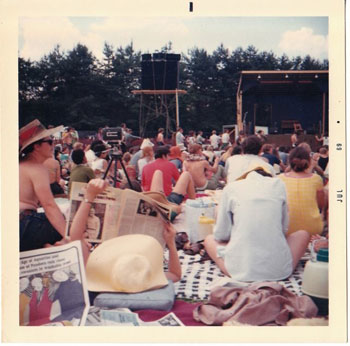
he crowd at Fuller Flatlands, courtesy Bob Frank

The crowd at Fuller Flatlands, site of the first Ann Arbor Blues Festival 40 years ago. (Photo courtesy of Bob Frank, www.bluelunch.com.)

Forty years ago this month, a great crowd of young people converged on a small, unsuspecting middle-American town for an incredible three-day celebration of peace and music. They sat on the cool grass of an open field, grooved to the tunes of a dizzying array of legendary performers, smoked pot, drank wine, and generally had a blast. It was a landmark event that is still spoken of in hushed tones of awe and reverence among music historians.

No, it wasn’t Woodstock. It was something similar, yet very different, something smaller yet in some ways bigger.

It was something called the Ann Arbor Blues Festival.

In early August 1969, two weeks before the mammoth fete in Bethel, N.Y., approximately 20,000 eager spectators came to the Fuller Flatlands on the banks of the lazy Huron River to hear an absolutely astounding lineup of living legends of the blues – B. B. King, Muddy Waters, Howlin’ Wolf, Otis Rush, Magic Sam, Big Mama Thornton, Son House, T-Bone Walker, Lightnin’ Hopkins, and on and on – at the first major blues festival in the United States.

Although the Ann Arbor event has been almost completely overshadowed by its big brother in New York, to many serious music fans – especially blues enthusiasts – it is by far the more important of the two. Writing in the October 1969 issue of Downbeat, critic Dan Morgenstern made his preference plain, dismissing Woodstock in favor of the Ann Arbor Blues Festival, which he declared was “without doubt the festival of the year, if not the decade.” [Full Story]

The Battle of Ann Arbor: June 16-20, 1969

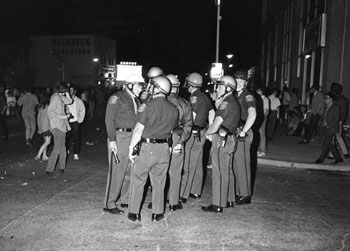
June 17, 1969: Officers confer as the crowd swarms on to South University. (Photo courtesy of Jay Cassidy.)

June 17, 1969: Officers confer as the crowd swarms on to South University. (Photo courtesy of Jay Cassidy.)

Ann Arbor, like many college towns, is usually a quiet place during the summer months. Most of the students are away on break, the university goes into hibernation, and a calm descends upon the city as residents sit back to enjoy a few months of peace and quiet.

During the turbulent 1960s the summer break was even more eagerly anticipated, offering as it did a brief respite from the regular succession of student-led sit-ins, protests, demonstrations, and strikes that occupied the fall and winter months. But the influx of large numbers of non-student “street people” (i.e., hippie youths) in the closing years of the decade made those last few summers of the ’60s decidedly less peaceful.

Forty years ago this week, the normally sleepy summertime streets of Ann Arbor were violently awoken by a series of violent and occasionally bloody clashes between police and a motley crowd of hippies, radicals, teenagers, university students, and town rowdies. Ostensibly at issue was the creation of a pedestrian mall, or “people’s park,” on South University Avenue – a four-block shopping district adjacent to the University of Michigan campus that caters primarily to a student clientele.

Even in those “interesting” times, the violence in Ann Arbor attracted national attention – including that of J. Edgar Hoover, head of the FBI. After the fighting was over, the national press lost interest and moved on to other, juicier topics. But on the local scene the repercussions of that summer would reverberate for years after.

The Detroit Free Press would refer to the four nights of conflict as “The Battle of Ann Arbor.” [Full Story]

» Text size:

larger text default text smaller text

Skyclock