Stories indexed with the term ‘Ann Arbor Parks & Recreation’

Commission OKs FY 2013 Parks Budget

Ann Arbor park advisory commission meeting (April 17, 2012): The action items at this month’s PAC meeting focused on the upcoming fiscal year, with parks-related budget recommendations for July 1, 2012 through June 30, 2013. Sam Offen, who chairs PAC’s budget and finance committee, observed that the FY 2013 budget is in better shape than in recent years.

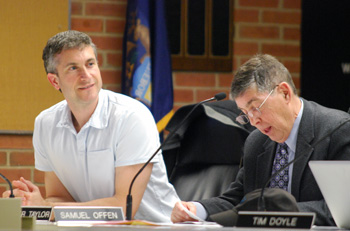
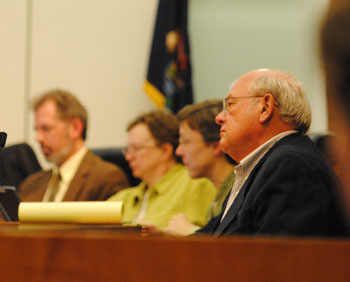
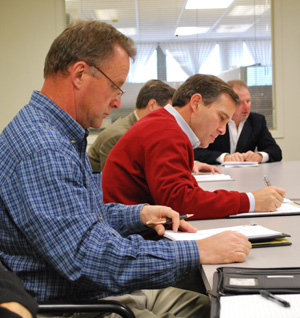
Christopher Taylor, Sam Offen

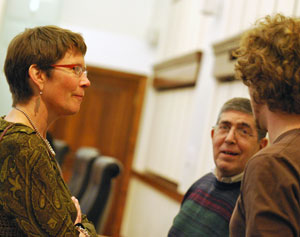
At left is city councilmember Christopher Taylor (Ward 3), who also serves as an ex officio member of the Ann Arbor park advisory commission. To the right is Sam Offen, chair of PAC's budget and finance committee. (Photos by the writer.)

This is the second year of a two-year budget cycle, and commissioners had recommended approval of budgets for both years at their April 2011 meeting. The recent recommendations for FY 2013 include: (1) increasing the frequency of the mowing cycle from every 19 days to every 14 days; (2) increasing seasonal staffing between April 15–October 15 to maintain active recreation areas better; (3) establishing three seasonal park steward/supervisor positions to improve park maintenance and enforcement; and (4) increasing seasonal staffing at the ice arenas to improve facility cleanliness.

Fee increases at several parks and rec facilities are also part of the budget recommendations, but most have already been implemented in the current fiscal year.

The April 17 meeting included a public hearing on the renewal of the city’s park maintenance and capital improvements millage, which will likely be on the November 2012 ballot. No one spoke at the hearing. In general, “there seems to be a great deal of relative silence” about the millage, parks and rec manager Colin Smith told commissioners. Few people have attended the recent public forums held by parks staff. The final forum is set for Thursday, April 26 from 6:30-7:30 p.m. at the Ann Arbor District Library’s Traverwood branch, 3333 Traverwood Drive.

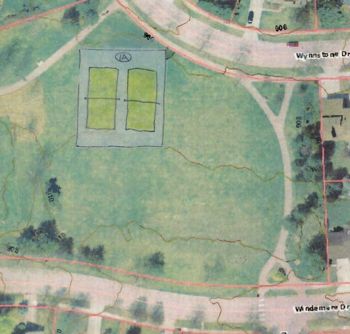
Parks staff gave an update on deteriorating conditions at Windemere Park’s two tennis courts, and provided an initial estimate on costs to replace one or both courts at that location. No formal recommendation has been made, but options include moving the courts to another park. Commissioners discussed the need to assess the distribution and conditions of all of the city’s public courts – including ones in the public school system – as well as their overall usage, to get a better idea of where the greatest needs are.

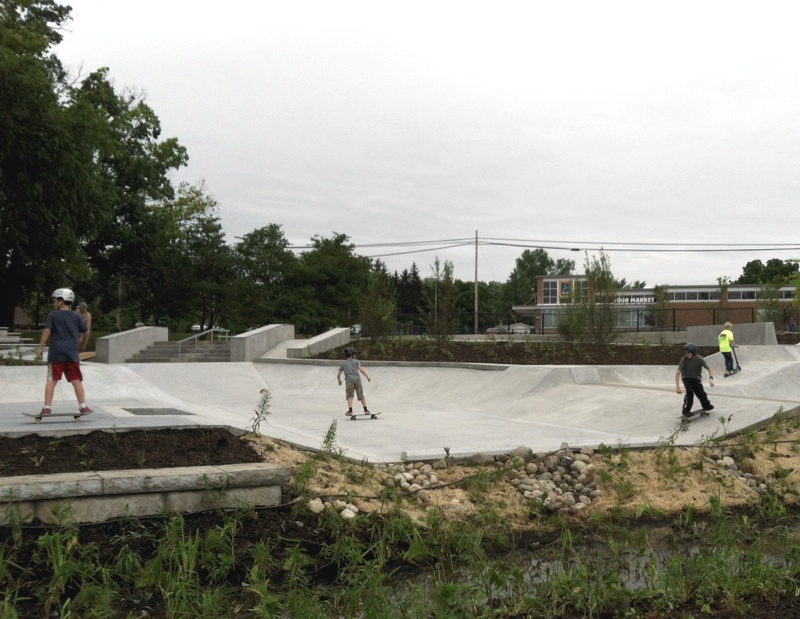
Another update came from an engineer at the Washtenaw County water resources commissioner’s office, who described a drain replacement project that will affect Veterans Memorial Park later this year. Also related to Veterans Memorial, the request for proposals (RFP) for a skatepark there has been issued. [.pdf of skatepark RFP] The goal is to solicit proposals for a consultant to handle design and oversee construction of the skatepark, which will be located on city-owned property.

During public commentary, commissioners were given an update on the nonprofit Project Grow, which has several gardens located in city parks and is celebrating its 40th anniversary this year. Another speaker urged commissioners to take control of the parking lots in city parks, and possibly increase revenues by installing metered parking. [Full Story]

Final Forum: What Sustains Community?

The fourth and final forum in a series on sustainability in Ann Arbor focused on community, touching on topics that contribute to a stronger social fabric – quality of life, public safety, housing, and parks.

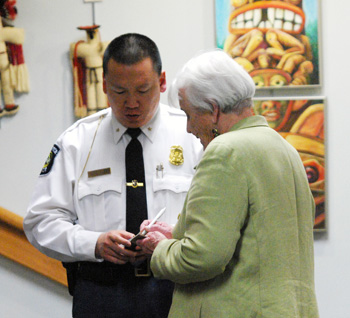
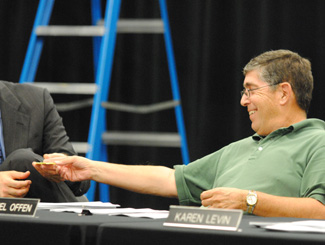
John Seto, Eunice Burns

Interim Ann Arbor police chief John Seto talks with Eunice Burns, a longtime activist who attended an April 12 sustainability forum at the Ann Arbor District Library. Seto was a panelist at the forum, which focused on building a sustainable community. (Photos by the writer.)

Community is one of four categories in a framework that’s been developed over the past year, with the intent of setting sustainability goals for the city. Other categories – which have been the focus of three previous forums this year – are resource management; land use and access; climate and energy; and community.

At the April 12 forum on community, Wendy Rampson – the city’s planning manager, who moderated the discussion – told the audience that 15 draft goals have been selected from more than 200 already found in existing city planning documents. The hope is to reach consensus on these sustainability goals, then present them to the city council as possible amendments to the city’s master plan. The goals are fairly general – if approved, they would be fleshed out with more detailed objectives and action items. [.pdf of draft sustainability goals]

Rampson said that although this would be the final forum in this year’s series, there seems to be interest in having an annual sustainability event – so this would likely not be the last gathering.

The forum was held at the Ann Arbor District Library’s downtown building, and attended by about 50 people. Panelists were Dick Norton, chair of the University of Michigan urban and regional planning program; Cheryl Elliott, president of the Ann Arbor Area Community Foundation; John Seto, Ann Arbor’s interim chief of police; Jennifer L. Hall, executive director of the Ann Arbor Housing Commission; Julie Grand, chair of the city’s park advisory commission; and Cheryl Saam, facility supervisor for the Ann Arbor canoe liveries.

Several comments during the Q & A session centered on the issue of housing density within the city. Eunice Burns, a long-time local activist and former Ann Arbor city councilmember, advocated for more flexibility in accessory apartments.

Doug Kelbaugh, a UM professor of architecture and urban planning, supported her view and wondered whether the city put too high a priority on parks, when what Ann Arbor really needs is more people living downtown. He said a previous attempt to revise zoning and allow for more flexibility in accessory units was shot down by a “relatively small, relatively wealthy, relatively politically-connected group. I don’t think it was a fair measure of community sentiment.”

Also during the Q & A period, Pete Wangwongwiroj – a board member of UM’s student sustainability initiative – advocated for the concept of gross national happiness to be a main consideration in public policy decisions.

The April forum was videotaped by AADL staff and will be posted on the library’s website – videos of the three previous sessions are already posted: on resource management (Jan. 12); land use and access (Feb. 9); and climate and energy (March 8). Additional background on the Ann Arbor sustainability initiative is on the city’s website. See also Chronicle coverage: “Building a Sustainable Ann Arbor,” “Sustaining Ann Arbor’s Environmental Quality” and “Land Use, Transit Factor Into Sustainability.[Full Story]

City Issues Skatepark Request for Proposals

The city of Ann Arbor has issued a request for proposals (RFP) for the design of a skatepark to be built at Veterans Memorial Park. [.pdf of skatepark RFP] The goal is to solicit proposals for a consultant to handle design and oversee construction of the skatepark, which will be located on city-owned property. The roughly $1 million cost of the project will be paid for through a combination of private donations – primarily solicited through the Friends of the Ann Arbor Skatepark – a $300,000 state grant, and up to $400,000 in matching funds from the Washtenaw County parks and recreation commission. The Ann Arbor Area Community Foundation is acting as fiduciary for the project.

The deadline … [Full Story]

Major Renovation of City Ballfields Planned

Ann Arbor park advisory commission meeting (Jan. 24, 2012): Baseball fields in three city parks will be getting a major overhaul, if the Ann Arbor city council approves a recent recommendation by park commissioners.

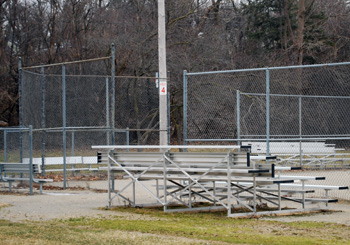
Baseball field #4 at Veterans Memorial Park

Baseball field #4 at Veterans Memorial Park will be among fields at three parks that will be renovated, if the Ann Arbor city council approves a recommendation of the park advisory commission. (Photos by the writer.)

PAC unanimously recommended awarding a nearly $1 million contract to RMD Holdings of Chesterfield, Michigan, for renovation of ballfields at Veterans Memorial Park, West Park and Southeast Area Park. If approved by the city council, work would begin after the 2012 summer season. Ann Arbor Rec & Ed – a unit of the Ann Arbor Public Schools – plans to cancel its fall season in light of the project. Teams playing in Rec & Ed programs are the primary users of these fields.

Commissioners also got an update on the status of West Park renovations – specifically, how problems with an underground stormwater system are being addressed. City engineer Nick Hutchinson described plans for repairing the system, saying that legal issues are still being worked out, but the project will likely be completed by July of 2012. A public forum will be held on Feb. 13 at Slauson Middle School to update residents. At a similar meeting held in mid-January, residents raised concerns over whether the situation in West Park has caused flooding in nearby basements.

Also at PAC’s Jan. 24 meeting, commissioner Gwen Nystuen urged the group to consider taking action on the Allen Creek greenway, in light of remarks made by mayor John Hieftje at the city council’s Jan. 23 meeting regarding the city-owned 415 W. Washington property. Colin Smith, the city’s manager of parks and recreation, reported that there’s been discussion about possibly applying for a state grant to help fund the greenway, but the timeline for applying this year is tight. He also suggested that an initial step would be to develop a master plan for the greenway, as recommended in the city’s parks, recreation and open space plan.

Near the beginning of the meeting, commissioner Sam Offen introduced the new executive director for the Leslie Science & Nature Center, Susan Westhoff, who spoke briefly to commissioners. Offen is a board member of the center, a nonprofit that’s located on city property. [Full Story]

State Grants Awarded to Skatepark, Gallup

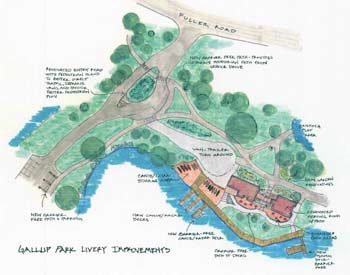
State grants have been approved for two projects in Ann Arbor: $300,000 for a proposed Ann Arbor skatepark at Veterans Memorial Park, and $300,000 for improvements at the Gallup Park canoe livery. A staff member for the lobbyist Kirk Profit alerted Ann Arbor city council members and staff about the news on Wednesday morning, Dec. 7. Profit was in Lansing attending the meeting of the Michigan Natural Resources Trust Fund board, where the grant awards were announced.

The city had been notified last month that these projects ranked in the top 12 out of 100 applications statewide for funding from the Michigan Natural Resources Trust Fund. The skatepark application ranked 12th out of the 100 applications, based on a scoring system used to evaluate the grants. The … [Full Story]

PAC Supports Grants for Skatepark, Gallup

Ann Arbor park advisory commission meeting (March 15, 2011): A meeting packed with presentations also included a last-minute addition to the agenda: Resolutions recommending support of the city’s application for grants from the Michigan Dept. of Natural Resources Trust Fund. The grants – for $300,000 each – would help fund the Ann Arbor skatepark and upgrades to the Gallup canoe livery and park.

Julie Grand, Sam Offen

Julie Grand, chair of the Ann Arbor park advisory commission, talks with PAC member Sam Offen before the start of Tuesday's meeting. Offen was the only commissioner to vote against support of a state grant application for the Ann Arbor skatepark. (Photos by the writer.)

The resolution for Gallup passed unanimously, but commissioner Sam Offen – without comment – cast a vote against the resolution for the skatepark grant.

Also at Tuesday’s meeting, commissioner Gwen Nystuen suggested forming a committee to look more closely at the Fuller Road Station project – she felt that as stewards of the city’s parkland, PAC should take a more active role in examining the proposed parking structure, bus depot and possible train station. The project, a joint effort between the city and the University of Michigan, would be located on land that’s previously been designated as parkland, though it’s been leased to the university as a surface parking lot since the early 1990s. Nystuen did not put forward a formal resolution, and commissioners took no action on the idea.

The meeting included five presentations from various groups, including updates on the city’s two golf courses, the new Give 365 volunteer program, and a restoration project for a stretch of Malletts Creek near Huron Parkway. Commissioners also heard a proposal for a new Wednesday night farmers market, and got a mid-year financial report on the open space and parkland preservation millage. [Full Story]

Beyond Pot: Development, Liquor, Parks

Ann Arbor city council meeting (March 7, 2011) Part 1: The city council’s Monday meeting lasted nearly until midnight, with most of the five hours devoted to discussion of a proposed medical marijuana ordinance, which the council ultimately elected to postpone. The meeting included other significant business as well, and Part 1 of this meeting report is devoted to just those non-marijuana-related business items.

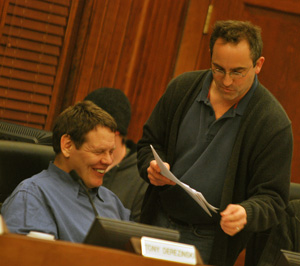
Tony Derezinski Ann Arbor city council

At the March 7, 2011 city council meeting, Tony Derezinski (Ward 2) was appointed as a hearing officer to consider appeals of recommendations to revoke liquor licenses. To Derezinski's right are Margie Teall (Ward 4), Sandi Smith (Ward 1) and Stephen Kunselman (Ward 3). (Photos by the writer.)

Also postponed – until the council’s first meeting in April – was a resolution that would outline a way for the Ann Arbor Downtown Development Authority to lead the process of transforming surface parking lots currently owned by the city of Ann Arbor to alternate uses.

The resolution, which articulates the so-called “parcel-by-parcel plan,” had already been postponed once before. In explaining the rationale for the postponement, Christopher Taylor (Ward 3) cited the desire of the DDA to ensconce the parcel-by-parcel plan in a contractually binding agreement, which he said had not been previously indicated.

Not postponed was a vote on appointing a hearing officer for appeals of recommendations that liquor licenses not be renewed. The original resolution was to appoint the members of the council’s liquor license review committee to a hearing board, but it was amended at the table – to the surprise of some councilmembers – to allow for appointment of just one hearing officer: Tony Derezinski (Ward 2). Derezinski also serves on the liquor license review committee. Voting against the amendment, as well as the final appointment, were three councilmembers, including Stephen Rapundalo (Ward 2). Rapundalo chairs the council’s liquor license committee and has served on it since it became a permanent council committee in 2008, as well as before that, when it was an ad-hoc committee.

The council also approved the city’s Parks and Recreation Open Space (PROS) plan – an inventory, needs assessment and action plan for the city’s parks system, which is required by the state for certain grant applications. The deadline faced by the council to renew the five-year plan was April 1, 2011.

In other non-marijuana business, the council approved a “complete streets” policy, authorized a stormwater study in the Swift Run drain system, established a loan loss fund for the Property Assessed Clean Energy (PACE) program, and authorized the purchase of LED streetlight fixtures.

The council also heard its usual range of public commentary and communications from its own members. A public hearing was held on the establishment of a Washtenaw Avenue corridor improvement authority (CIA), during which Ypsilanti mayor Paul Schreiber spoke. The Chronicle will cover the mayor’s comments as part of a future report on a CIA public meeting conducted by city planning staff. [Full Story]

Ann Arbor Parks Plan Moves to City Council

Ann Arbor planning commission meeting (Feb. 15, 2011): Planning commissioners unanimously recommended approval of the city’s Parks and Recreation Open Space (PROS) plan on Tuesday, and gave parks planner Amy Kuras a round of applause for her work updating the document over the past year.

Evan Pratt, Jeff Kahan

Ann Arbor planning commissioner Evan Pratt, left, gets a handout from Jeff Kahan of the city's planning staff prior to the commission's Feb. 15 meeting. (Photos by the writer.)

Earlier in the evening, the plan was also approved by the city’s park advisory commission. Both groups suggested minor revisions, and the document will next be forwarded to the city council for final approval in early March.

Updated every five years, the PROS plan is a comprehensive look at current assets and future needs. The current update spans 2011 through 2015. It’s a document required by the state to qualify for grant funding.

Discussion of the PROS plan was the main agenda item at Tuesday’s meeting, which lasted less than an hour. The commission also set a public hearing for its March 1 meeting, regarding a request by Sigma Phi Epsilon fraternity to convert the church at 730 Tappan Ave. into a fraternity house.

During his communications, commission chair Eric Mahler reported that the city’s Library Lot review committee – the group that’s evaluating potential development atop the city-owned underground parking structure being built on South Fifth Avenue – will meet next on March 3. Tony Derezinski, who serves as the city council’s representative to the planning commission, highlighted two upcoming public forums regarding a Washtenaw Avenue corridor improvement authority, set for Feb. 23 and March 2.

No one spoke during public commentary on Tuesday, but nine students from Skyline High School attended the meeting as part of a class assignment.  [Full Story]

Planning Commission Postpones Parks Plan

Ann Arbor planning commission meeting (Feb. 8, 2011): After 90 minutes that included public commentary from three board members of the Allen Creek Greenway Conservancy, planning commissioners voted to postpone action on the city’s Parks and Recreation Open Space (PROS) plan until their Feb. 15 meeting.

Ray Fullerton

Ray Fullerton, a board member of the Allen Creek Greenway Conservancy, passes out a letter to planning commissioners that makes suggestions for revising the city's Parks and Recreation Open Space (PROS) plan. In the background is planning commissioner Kirk Westphal. (Photos by the writer.)

The postponement coordinated with a similar move made last month by the Ann Arbor park advisory commission, which rescheduled its vote to its Feb. 15 meeting in order to allow for additional public input.

The PROS plan provides an inventory, needs assessment and action plan for the city’s parks system, and is updated every five years. The updated document is required by the state in order for the city to be eligible to apply for certain grants.

A public hearing on the PROS plan drew three board members of the Allen Creek Greenway Conservancy, a nonprofit dedicated to developing a park running through Ann Arbor from Stadium Boulevard to the Huron River, roughly following the course of the original Allen Creek. They advocated for stronger support of the greenway within the PROS plan. [Full Story]

Planning Commission Weighs In on Parks

Amy Kuras, Ann Arbor’s park planner, last talked with the city’s planning commission in June of 2010, soliciting their feedback for an update on the Parks and Recreation Open Space (PROS) plan. She’s in charge of revising the plan, and met with planning commissioners again last week, this time with a draft that’s in the final stages of revisions.

1936 Ann Arbor News article

An article from the May 19, 1936 Ann Arbor News about the city's parks system. Copies of some pages from this 1936 issue were hanging on the walls of the city hall conference room where the planning commission held its Jan. 11 working session, which focused on parks.

The commission will formally consider adopting the PROS plan at its Feb. 1 meeting, when there will also be a public hearing on the plan. It will then be forwarded to city council for final approval.

The plan – a document that in its current iteration is roughly 140 pages long – is required to be updated every five years in order for the city to be eligible for certain state grants. The proposed plan covers 2011 through 2015.

In addition to an inventory of the city’s parks system and assessment of current conditions, the PROS plan includes a listing of goals and objectives for the system, a needs assessment and an action plan. [The draft plan, a 5.1 MB .pdf file, can be downloaded from the city's website. It's also being sold at Dollar Bill Copying – $12.94 for a black-and-white copy, or $43.48 for color. In the following article, The Chronicle has included .pdf files of each of the nine sections separately.]

Commissioners spent about two hours giving Kuras feedback on the draft. Though they offered some revisions, the group praised Kuras for the breadth and depth of the effort – a process which has spanned more than a year. [Full Story]

Next Step Taken on Huron Hills Proposal

About 50 people showed up Friday morning in the city council chambers to hear a presentation by Miles of Golf partners about their proposal to assume operations of the city-owned Huron Hills golf course, and move their business there.
Doug Kelly, Andrew Walton, Chris Mile

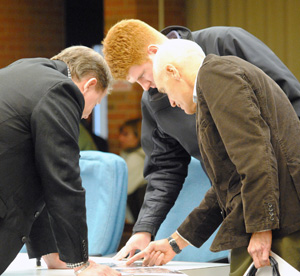
Chris Mile, right, co-founder and president of Miles of Golf, discusses the firm's proposal for Huron Hills golf course with Doug Kelly, left, the city of Ann Arbor's director of golf, and Andrew Walton, the Huron Hills golf supervisor. (Photos by the writer.)

During the 90-minute meeting, president Chris Mile and other partners with the Pittsfield Township business gave a presentation and answered questions from a seven-member selection committee. Members of the public were allowed to submit questions, which city staff said will be answered and posted online within the next couple of weeks.

Much of the presentation covered the same material found in the Miles of Golf initial response to the city’s request for proposals (RFP), as well a separate financial report. [.pdf file of Miles of Golf RFP response] [.pdf file of Miles of Golf financial proposal] The business has proposed operating the 18-hole, 116-acre course essentially unchanged for three to five years. Then, it plans to build a new facility on what is now the front seven holes – land east of Huron Parkway – with a driving range, teaching center and golf shop. It would relocate its current operations, which are located off of Carpenter Road, south of Packard, and convert the remainder of Huron Hills into a 9-hole course. They’re also hoping to partner with Project Grow or Food Gatherers, to put in a community garden on land they don’t plan to use for golf.

To fund construction, the proposal calls for the city to issue a $3 million bond, which Miles of Golf would pay off over 20 years. The business proposes to pay additional funds to the city during that time, totaling about $1 million. Miles of Golf also estimates that the city would save about $5 million over the 20 years, since it would no longer be paying to operate the course – an estimated $250,000 per year.

During their presentation, Miles of Golf partners addressed concerns that have been raised in the community. They stressed that the project would not put up perimeter fencing or pole lights, and that the land would remain accessible for winter activities, like sledding. Nor do they plan to build a banquet center – though they do hope to eventually sell food and beverages on the site, including alcohol. Currently, Huron Hills does not have a liquor license, though the other city course, Leslie Park, does.

Miles of Golf submitted one of only two proposals that were made in response to the city’s RFP, which was issued in September. The selection committee rejected the second proposal, which had been submitted by a group called Ann Arbor Golf. It called for operating Huron Hills as a public, 18-hole golf course via a new nonprofit entity, the Herb Fowler Foundation of Huron Hills. [.pdf of nonprofit proposal]

In an email to The Chronicle, Paul Bancel – one of the leaders of Ann Arbor Golf – said they’d been told by city staff that their proposal was rejected because they hadn’t provided an adequate plan for staffing the golf course, hadn’t identified the roles of the key individuals in their organization and didn’t include any bank references. The group was disappointed the committee did not choose to interview their group, Bancel wrote – they were not asked any questions, nor were they asked to provide any clarifications about their proposal. [Full Story]

Potential Bidders Eye Huron Hills Golf

About a dozen people attended Monday afternoon’s pre-bid meeting for those interested in responding to the city of Ann Arbor’s request for proposals (RFP) seeking a public/private partnership for the Huron Hills Golf Course.

Doug Davis, Doug Hellman

Doug Davis of Miles of Golf, left, and Doug Hellman of KemperSports were two of about a dozen people who attended Monday's pre-bid meeting for the Huron Hills Golf Course RFP. (Photo by the writer.)

Anyone who plans to submit a response to the RFP was required to attend the meeting, which lasted 30 minutes and was followed by a field trip to tour the course. Among those attending were Doug Davis and Chris Mile of Miles of Golf, Doug Hellman of KemperSports, Joe Spatafore of Royal Oak Golf Management, and William Arlinghaus of Greenscape.

Also attending were several citizens who have publicly opposed the RFP process, including Ted Annis, Nancy Kaplan, Myra Larson and Paul Bancel. Some are involved in the citizens group Ann Arbor for Parkland Preservation (A2P2).

The meeting, led by city parks manager Colin Smith, was a chance for potential bidders to ask questions or request additional information. The deadline to submit proposals is Oct. 29. [.pdf file of Huron Hills RFP] [Full Story]

Park Commission: Budgets, Ballots, Ballparks

Ann Arbor Park Advisory Commission meeting (Sept. 21, 2010): Held this month in the studios of Community Television Network, the park advisory commission received updates on Tuesday about finances for the parks system as well as RFPs (requests for proposals) that are in various stages for Argo Dam, Huron Hills Golf Course and the Ann Arbor Senior Center.

Sam Offen

Sam Offen of the Ann Arbor park advisory commission hands off his ballot to Christopher Taylor, the Ward 3 councilmember who's an ex-officio representative on PAC. Per its bylaws, the commission elected officers by secret ballot, though only one person was nominated for each position. (They seemed to appreciate the irony.) Offen was re-elected chair of PAC's budget committee. (Photos by the writer.)

A financial report for the most recent fiscal year, which ended June 30, included news that Ann Arbor’s two golf courses performed better than expected – though one commissioner calculated that the city still paid a $10 subsidy for each round of golf played during the year.

Later in the meeting, Colin Smith – the city’s park and recreation manager – reported that an RFP for the Huron Hills Golf Course has been issued, with a pre-bid meeting to be held on Monday, Sept. 27. Several members of the public turned up at last month’s PAC meeting to argue against the RFP, which is soliciting ideas for a possible private/public partnership at the course. No one spoke during public commentary on Tuesday.

Another RFP – this one for reconstruction of the Argo Dam headrace – has yielded two responses that are being reviewed. A recommendation will likely be brought to PAC next month, Smith reported. If approved, it would change the shape of the embankment.

And an RFP for the Ann Arbor Senior Center has nearly reached the end of the selection process. On Tuesday, commissioners unanimously voted to recommend hiring Hooker/De Jong, a Muskegon consulting firm, to develop a strategic plan for the center, at a cost of $34,570. It now goes to the city council for approval.

A council directive issued last year – asking PAC to prioritize 30 recommendations made in the Huron River and Impoundment Management Plan (HRIMP) – was raised during Tuesday’s meeting by Julie Grand, the commission’s chair. She noted that the year-end deadline for completing this task was fast approaching, and they needed to carve out some time to address it. Commissioner Tim Berla said he’d like to see the council form a river stewardship committee – that’s one of the HRIMP recommendations.

The commission also heard a report from David Barrett, a PAC member who’s been assessing the conditions of the city’s ball fields. “With a few exceptions, most are in need of help,” he told his PAC colleagues. [Full Story]

Column: Seeds & Stems

Marianne Rzepka

Marianne Rzepka

Take a walk through Sunset Brooks Nature Area in Ann Arbor, and you’ll see the next generation of trees that in the past decade disappeared from the streets of the city.

Ash trees are sprouting up in nature areas and woods in and around the city, the successors of the green, white and black ashes we watched die in droves from an invasion of the emerald ash borer. Some of the new trees sprouted from ash trees, but larger saplings were probably just too small for the borers to bother with when the first invasive wave came through and destroyed the larger trees.

“For sure we’ve seen them in a lot of the natural areas,” says Kerry Gray, the city’s urban forestry and natural resources planning coordinator.

The Ann Arbor forestry crew spent at least three years doing nothing but removing ash trees, says Gray. Crews cut down an estimated 7,000 dead ashes along city streets and another 3,000 or so in parks and some nature areas, she says, at a cost of at least $2 million.

Many homeowners tried to save the trees in their own yards, to no avail. An estimated 30 million ash trees in southeast Michigan alone were wiped out. [Full Story]

Ann Arbor Planning with the PROS

Ann Arbor’s master plan for parks gets updated every five years, a massive undertaking that takes about a year to complete. City parks planner Amy Kuras outlined the process at an October 2009 meeting of the park advisory commission, noting that she’d be seeking input from a variety of groups and the general public on the Park and Recreation Open Space (PROS) plan.

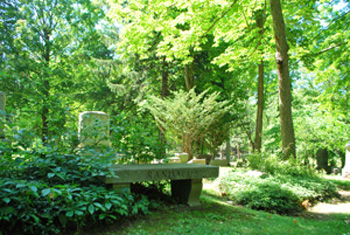
Forest Hill Cemetery

Forest Hill Cemetery in Ann Arbor. Planning commissioners pointed to cemeteries and the University of Michigan campus as adding to the downtown greenspace, in addition to city-owned parks. The discussion prompted one commissioner to quip: "Bring a basket to the casket!"

One of those focus groups took place at a working session for planning commissioners earlier this month, where Kuras asked for feedback on a range of topics, including the possibility of changing zoning to better protect parkland – an issue raised during debate about the proposed Fuller Road Station.

Also discussed were the role of parks and open space in the downtown area, and whether the city should acquire land for an Allen Creek greenway. And commissioners weighed in on the city’s practice of asking developers to contribute land or cash in lieu of land for parks – developers of Zaragon Place 2 will likely be paying the city $48,000 for that purpose, for example.

The nearly two-hour discussion touched on a whole host of other topics as well: How far should the city go in crafting public/private partnerships, like putting cell phone towers in parks? Beyond a traditional playground, how can the city become more kid-friendly – with amenities like fountains, or objects to climb on? Are pedestrian malls really an awful idea?

The city is soliciting more general public input on the PROS plan in several ways: via an online survey, email that can be sent to prosplan@a2gov.org, and a series of public meetings. The next meeting is set for Tuesday, June 29 at 7 p.m. at Cobblestone Farm Barn, 2781 Packard Road. The current 232-page PROS plan (a 10MB .pdf file) can be downloaded from the city’s website. [Full Story]

“It Looks Like a Great Burn Day”

Like many articles in The Chronicle, this one begins at a public meeting. But unlike any others, it ends in a partially burned woods at Argo Nature Area, where a crew clad in yellow fire-retardant suits kicked up puffs of smoke as they strode through the ashes of their work.

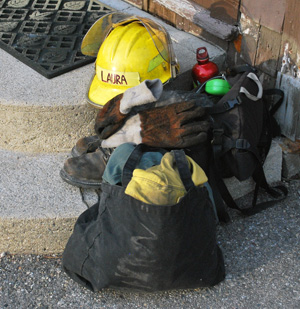
Burn crew gear

Gear for a member of the city's Natural Area Preservation burn crew, on the stoop of the Leslie Science & Nature Center. (Photos by the writer.)

On the path from one to the other, we learned about sling psychrometers, drip torches, council rakes and what kind of leaves burn best. Our guides were the staff and volunteers of Ann Arbor’s Natural Area Preservation program, who will be wrapping up the spring burn season later this month.

We first got an overview of the city’s controlled burn program from NAP’s manager, Dave Borneman, who made a presentation about it at the February meeting of the Ann Arbor park advisory commission. He described the ecological rationale behind a burn, citing the benefits it brings by controlling invasive species and rejuvenating the land.

As it turns out, Borneman was also the “burn boss” when we tagged along on a burn last Friday – the first one done by NAP in Argo’s lowland area.

But the day for the crew began at their offices in the Leslie Science & Nature Center building, on Traver Road – so that’s where we’ll start, too. [Full Story]

Column: Seeds & Stems

Marianne Rzepka

Marianne Rzepka

Gardeners spend a lot of time working in their own world – moving the perennials, planning their walkways or weeding their vegetables.

But for some gardeners, the Michigan Conservation Stewards program has ushered in a larger world outside their backyard landscapes.

“My garden is something I do for me, but the stewardship program is what I do for others and for the larger environment,” says Mary Duff-Silverman, who went through the course last year.

The stewardship program introduces participants to the plants, animals and forces of nature that defy outsiders’ attempts to impose order. Instead, the steward-in-training has to understand the rules of that larger environment, with its invasive plants, water aeration, ground water and other natural processes.

This spring is only the second year the course has been offered in Washtenaw County. It’s a series of 11 classes that range over a number of ecological topics, including the ecosystems of wetlands, forests, lakes and streams.

This year’s program begins Saturday, April 10. If you’re interested, get more information online – you can also download the three-page application form from that website. [Full Story]

Concerns Voiced Over Fuller Road Station

Ann Arbor Park Advisory Commission meeting (March 16, 2010): Fuller Road Station was the focus of this month’s PAC meeting, including a presentation by Eli Cooper and others on the project’s team. Five people spoke on the topic during public commentary as well – all of them concerned about the proposed parking structure and transit center.

Greta Brunschwyler, Sam Offen, Jason Frenzel

From left: Greta Brunschwyler, the new executive director at the Leslie Science & Nature Center, talks with park advisory commissioner Sam Offen and Jason Frenzel, volunteer and outreach coordinator for the city's Natural Area Preservation program, prior to the March 16 PAC meeting. (Photo by the writer.)

Several commissioners had pointed questions for Cooper. Sam Offen pressed him on the issue of revenues, noting that when the parking structure is built, the university might have no need for the spaces it leases from the city on the opposite side of Fuller Road – resulting in a loss of about $38,000 per year to the city.

Also attending the meeting was Greta Brunschwyler, the new executive director at the Leslie Science and Nature Center, who started the job on March 4 and came to introduce herself to park commissioners and staff.

Leslie Science and Nature Center is where Jason Frenzel’s office is located. Frenzel, volunteer and outreach coordinator for the city’s Natural Area Preservation program, gave a brief presentation about volunteer opportunities.

Scott Rosencrans, PAC’s chair, wasn’t able to attend the meeting, which was led in his absence by vice chair John Lawter. Lawter announced that Rosencrans has decided not to seek reappointment to PAC when his term ends in mid-April. So not only will PAC need to elect a new chair, Lawter said, there will also be an opening on the commission. [Full Story]

Artists Sought for West Park Project

At a special meeting of the Ann Arbor Public Art Commission on Thursday, commissioners moved ahead on a project to incorporate art into upcoming renovation work at West Park.

AAPAC is issuing a request for qualifications (RFQ) to solicit artists to work on three curving, concrete seat walls that will be built into the hill opposite West Park’s band shell. With a budget for the artist in the range of $8,000 to $10,000, the project is the first work solicited under the city’s Percent for Art program since the water sculpture for the new municipal center, which has a budget of $737,820.

The water sculpture’s design was done by a German artist, Herbert Dreiseitl. The West Park RFQ specifies a Michigan artist. [Full Story]

Fee Increase Suggested for Athletic Fields

Ann Arbor Park Advisory Commission (Jan. 19, 2010): As part of a project to upgrade the athletic fields at Fuller and Olson parks, members of the city’s Park Advisory Commission approved an increase in fees to use those fields. One commissioner described the fields, which had previously been in serious disrepair, as “a thing of beauty.”

Sign at the entrance to the Fuller Park soccer fields, next to Fuller Pool.

Sign at the entrance to the Fuller Park soccer fields, next to Fuller Pool. (Photos by the writer.)

Three speakers during public commentary, all representing groups that use the fields heavily, said they didn’t have a problem with the fee hike, but hoped that the change could be phased in over three years, rather than implemented this season. The recommendation for an increase, along with changes in how the fields are used, will be forwarded to city council.

Commissioners also approved recommendations from the task forces that are working to raise revenues and cut costs for Mack Pool and the Ann Arbor Senior Center. Commissioner Tim Berla clarified that the PAC resolution was primarily an “atta boy!” for the work of the staff and task forces, and support of the direction they’re headed. The recommendations – which aim to keep those operations open – will be presented to city council at their Feb. 8 meeting.

And finally, as a bonus for readers who stick with this report until the end: One commissioner is championing an urban dog park, and has identified a potential location within the city. [Full Story]

More Options for Ann Arbor’s Mack Pool

Though the closing of Mack Pool was on a list of budget-cutting ideas during Ann Arbor city council’s Dec. 5 retreat, a task force continues to work on ways to save the pool, and held a public meeting on Thursday to give an update on its progress.

Tuesday's public meeting of the Mack Pool Task Force drew about 25 people.

Thursday's public meeting of the Mack Pool Task Force drew about 25 people. (Photos by the writer.)

Colin Smith, the city’s parks and recreation manager, told a group of about 25 people that the task force is focused on bridging the roughly $100,000 gap between expenses and revenues for the pool – even though the group is well aware of the city’s larger budget crisis. That broader budget crisis includes the possibility of up to 30% cuts in the city’s general fund budget through fiscal 2012.

Smith noted that the task force had come up with nearly $36,000 in net savings and revenue – about a third of the way toward its goal so far. With just over two months before recommendations will be delivered to city council, “we’re not done,” he said. [Full Story]

Parks Update: Golf, Birds, River Art

Ann Arbor Park Advisory Commission (Nov. 17, 2009): With the golf season coming to an end, the city’s Park Advisory Commission got a status report from Ann Arbor’s director of golf, Doug Kelly. He did not, however, provide a recipe for his chicken salad, which he added to the menu this summer at the two city-owned courses. Then again, no one asked – but someone did ask when the golf courses were expected to break even.

The sign for the city's Huron Hills Golf Course at the corner of Huron River Parkway and Huron River Drive. (Photo by the writer.)

The sign for the city's Huron Hills Golf Course at the corner of Huron River Parkway and Huron River Drive. Though the city's Leslie Park Golf Course closed for the season on Sunday, Huron Hills will be open "until the snow flies," according to its website. (Photo by the writer.)

Also at the meeting, PAC honored Roger Wykes, the 2009 Natural Area Preservation volunteer of the year. Wykes helps out with the city’s breeding bird survey – commissioners heard details about that project from ornithologist Dee Dea Armstrong.

And an artist who’s spending this year as a visiting lecturer at the University of Michigan made a pitch for an art installation along the Huron River – a project that he envisions will help build a bridge between the university and the community of Ann Arbor. [Full Story]

Task Force Floats Ways to Save Mack Pool

Keeping Mack Pool open is even a campaign issue for student council, based on this sign in the hallway.

Keeping Mack Pool open is even a campaign issue for student council, based on this sign in the hallway. The election is scheduled for Friday, Nov. 13.

There aren’t many meetings you can attend where some of the pre-meeting conversation goes like this: “I didn’t recognize you with your clothes on!”

Swimmers can get away with that kind of banter, and swimmers of all sorts showed up Thursday night to talk about what the city should do to keep Mack Pool open. The public meeting was held at the media center of the Open School @ Mack, just down the hall from the pool – but far enough away to smell only the faintest whiff of chlorine.

Closing Mack Pool, or turning it over to the Ann Arbor school system, was one of the options proposed by city administrator Roger Fraser at an April 13, 2009 council working session, as a way to help balance the city’s budget in the face of declining revenues projected for 2010 and 2011. There’s about a $100,000 shortfall between what it costs to run the pool each year and the revenues it takes in. Figuring out how to make up that difference is the goal of the Mack Pool Task Force, which hosted Thursday’s meeting. [Full Story]