The Ann Arbor Chronicle masthead
it's like being there

Stories indexed with the term ‘local history’

In the Archives: The Toad Survey of 1910

Editor’s note: Leslie Science and Nature Center is soon launching its frog and toad survey after holding a kick-off orientation meeting on Feb. 24. Other Leslie frog-related events include Frog Fest on May 15, 2010. Partly in that context, local history columnist Laura Bien takes a froggy look back.

Michigan’s inaugural 1996 Frog and Toad Survey started strong. “I have talked with coordinators in other states,” wrote state frog and toad survey coordinator Lori Sargent in the survey report, “and most are finding it difficult to find enough people to volunteer. Perhaps that says a lot about Michiganians – we care about our natural resources.”

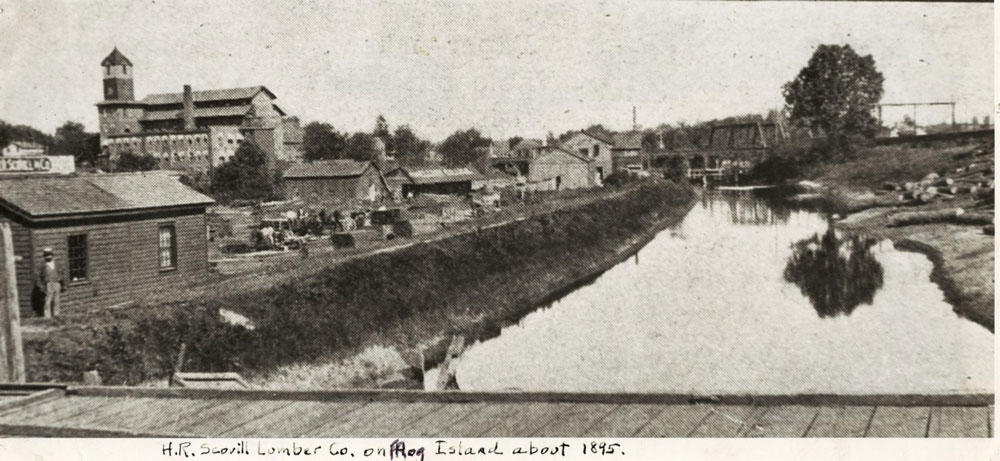
Frog Island Ypsilanti

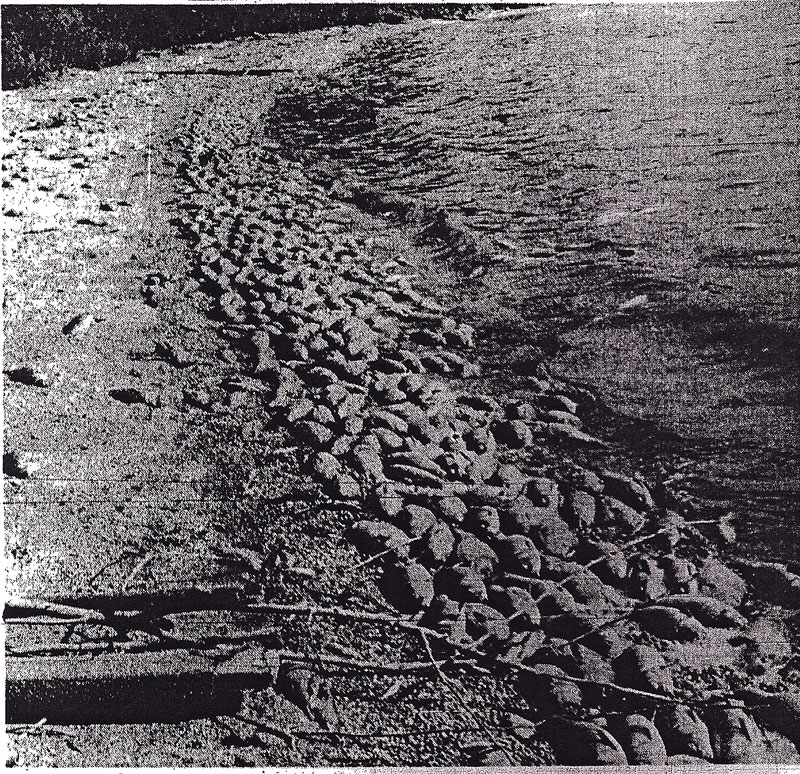
Ypsilanti's Frog Island, seen here looking north along the present-day eastern side of the running track, was the site in 1895 of Henry Scovill's lumber yard.

So much so that Ypsilantians have been surveying frogs and toads for over a century … off and on.

“Five years ago as we sat on our porch one summer evening a toad hopped out from around the corner to the concrete walk,” was the way one resident was quoted in the July 9, 1907 Ypsilanti Daily Press. “We watched it ‘walk’ down to the street sidewalk and within half an hour or so back it came.”

The Normal Park resident continued, “The next night as we were again sitting on the porch, one said, ‘I wonder whether our toad will be out tonight?’ It was but a few minutes when out it hopped and started down the walk. Within the hour it came back.” [Full Story]

In the Archives: Runway to the Future

Editor’s note: At a recent meeting of the Ann Arbor city council, an item in the city’s capital improvements plan to shift and extend the runway at Ann Arbor’s municipal airport generated much discussion.  This installment of “In the Archives” takes a look at Ypsilanti’s airport, which has faded from the landscape.

The delicate blue Waco 10 biplane roared 10 feet over the grass, past the crowd in the stands. Approaching trees at the airfield’s far end, its nose rose and it climbed, becoming smaller and smaller in view.

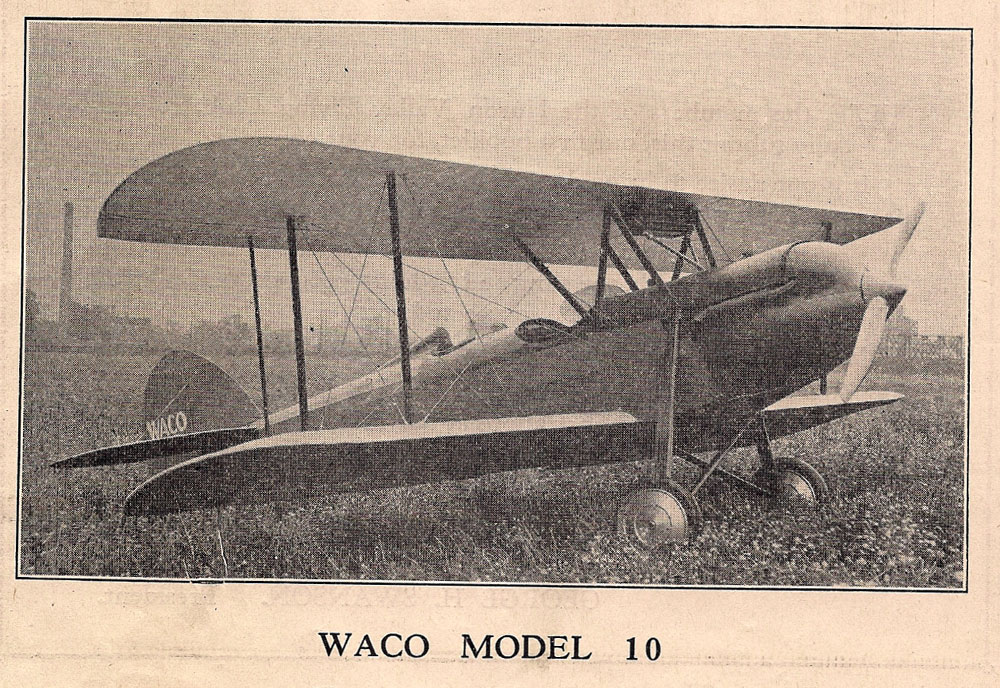
Waco 10 biplane

An photograph of a Waco 10 from the airshow program. Five aviators at the 1927 Ypsilanti air show competed in the cutting-edge biplane. (Photos courtesy of the Ypsi Archives.)

The gargling buzz of its 90-horsepower engine grew fainter, until the craft sounded like a distant housefly. Watchers from Detroit, Ypsilanti, and Ann Arbor under the 4 o’clock June sun shaded their eyes with their hands.

The buzz stopped: 1,500 feet in the air, the plane was without power.

The biplane arced to the left, trying to loop back towards the field. The crowd watched intently. The biplane curved again, losing altitude. A box of popcorn fell from the hand of a little boy watching, his mouth open. The plane’s wings wobbled. Airplane and crowd were quiet. On a nearby farm, a dog barked.

The plane dropped. Nearing the field, it slowed, its toylike wheels just a yard over the ground. The plane nearly stalled – and then landed as gently as a butterfly. It rolled to a stop. Its nose nearly touched a black and white checkered pylon. The crowd began clapping and cheering as two men ran to the plane and stretched a yellow measuring tape between the plane’s silver nose and the pylon. One yelled a number. The crowd grew louder, some people standing to cheer and whistle.

The pilot grinned and thrust both fists up. He’d won the “dead-stick” engine-off gliding and landing contest at the 1927 Ypsilanti Airport air show. [Full Story]

Ex-Radicals Remember Robben Fleming

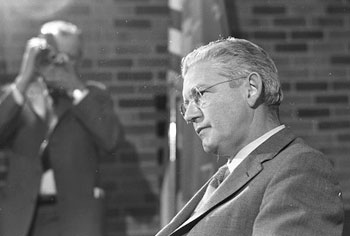
President Fleming at a press conference during the Black Action Movement strike in March of 1970.

UM President Robben Fleming at a press conference during the Black Action Movement strike in March 1970. (Photo courtesy of Jay Cassidy.)

On March 12, 1968, Robben Wright Fleming was inaugurated as the ninth president of the University of Michigan in Ann Arbor. It was a time of great turmoil on college campuses across the country, especially at Michigan, which was in the vanguard of the radical student movement. Fleming had been hired to replace the retiring Harlan Hatcher largely because of the reputation he had built for controlling student unrest while chancellor at the University of Wisconsin.

Fleming’s background was as a labor negotiator, and he preferred to engage students in reasoned discussion and debate rather than send in the riot squad. As he related in his autobiography, “Tempests into Rainbows,” after learning of his interest in taking the top post at Michigan, the regents of the university invited him to the Pontchartrain Hotel in Detroit, where for two hours they talked mainly about how he would deal with student disruptions.

Fleming explained to the regents that he “thought force must be avoided insofar as humanly possible, that indignities and insults could be endured if they averted violence, and that … these problems would last for some unspecified time, but that they would eventually end.” The next day he was offered the presidency. [Full Story]
In the Archives: Ypsilanti’s Waldorf-Astoria

Editor’s note: “In the Archives” is a biweekly series on local area history. In the coming week, on Jan. 19-20, the city of Ann Arbor will interview proposers of different projects for the top of a new underground parking garage at the Library Lot – including some developers who would like to build a hotel there. In this installment of her historical look back, Laura Bien offers a vignette of life just east of Ann Arbor, in Ypsilanti’s Huron Hotel, just after it had opened.

Eula Beardsley and Gladys Huston exited the front door of their Ypsilanti rooming house at Adams and Pearl one late December day in 1924.

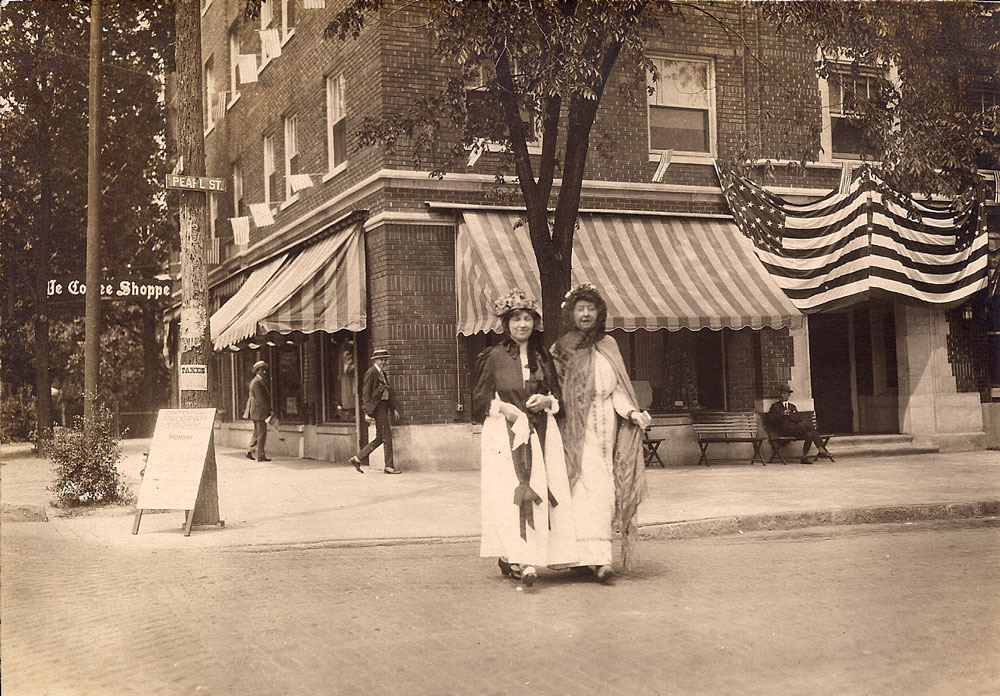
Huron Hotel

The hotel opened in 1923, the year that residents celebrated the city's centennial. At left is the Washington Street entrance to the coffee shop and at right is the main Pearl Street entrance. (Image links to higher resolution file.)

“Colder than I thought,” said Gladys. Eula pulled shut the front door. “You’ll warm up at that big lunch today.” The pair walked one block east on Pearl Street, passing shiny rows of black cars in the Wiedman auto dealership to their left.

They crossed Washington, headed towards the door of the elegant new Huron Hotel on the northeast corner of Pearl and Washington.

Two years earlier, the only accommodations the city could offer guests were at the old-fashioned Hawkins House on Michigan Avenue between Washington and Adams. Built in the 19th century, the place had a worn-out and rustic atmosphere. The Ypsilanti Board of Commerce decided the city needed a modern, attractive hotel. It sold shares of stock to city residents, raised $200,000, and built the hotel in eight months, adding two additional floors two years later. [Full Story]
Preserving Market Memories

Oral history table at the Ann Arbor Farmers Market

Jonathan Goetz, a market vendor, shares some stories with volunteers Joan Kauffman and Stephanie Kadel Taras at the oral history table at the Ann Arbor Farmers Market earlier this month. (Photo by Mary Morgan)

When Ralph Snow of Snow’s Sugarbush, a long-time vendor at the Ann Arbor Farmers Market, died last year, his passing was a loss of both the individual and of the memories he carried.

“His death reminded us of the impermanence of the market,” says Molly Notarianni, market manager.

So she decided to look for a way to preserve the market’s history, which would otherwise be lost. As she worked with a volunteer who specialized in oral history, the idea of a regular oral history booth emerged, a way to let vendors and shoppers share stories of their relationships and memories in the market.

Launched this summer in conjunction with the market’s 90th anniversary, the project aims to give people a chance to feel engaged in documenting the history of the market and of the entire agricultural region. Volunteers staff a table every other Wednesday at the market from 11 a.m. to 1 p.m. They’ll be at the market today. [Full Story]
Column: Singin’ the Ann Arbor Blues

he crowd at Fuller Flatlands, courtesy Bob Frank

The crowd at Fuller Flatlands, site of the first Ann Arbor Blues Festival 40 years ago. (Photo courtesy of Bob Frank, www.bluelunch.com.)

Forty years ago this month, a great crowd of young people converged on a small, unsuspecting middle-American town for an incredible three-day celebration of peace and music. They sat on the cool grass of an open field, grooved to the tunes of a dizzying array of legendary performers, smoked pot, drank wine, and generally had a blast. It was a landmark event that is still spoken of in hushed tones of awe and reverence among music historians.

No, it wasn’t Woodstock. It was something similar, yet very different, something smaller yet in some ways bigger.

It was something called the Ann Arbor Blues Festival.

In early August 1969, two weeks before the mammoth fete in Bethel, N.Y., approximately 20,000 eager spectators came to the Fuller Flatlands on the banks of the lazy Huron River to hear an absolutely astounding lineup of living legends of the blues – B. B. King, Muddy Waters, Howlin’ Wolf, Otis Rush, Magic Sam, Big Mama Thornton, Son House, T-Bone Walker, Lightnin’ Hopkins, and on and on – at the first major blues festival in the United States.

Although the Ann Arbor event has been almost completely overshadowed by its big brother in New York, to many serious music fans – especially blues enthusiasts – it is by far the more important of the two. Writing in the October 1969 issue of Downbeat, critic Dan Morgenstern made his preference plain, dismissing Woodstock in favor of the Ann Arbor Blues Festival, which he declared was “without doubt the festival of the year, if not the decade.” [Full Story]
The Battle of Ann Arbor: June 16-20, 1969

June 17, 1969: Officers confer as the crowd swarms on to South University. (Photo courtesy of Jay Cassidy.)

June 17, 1969: Officers confer as the crowd swarms on to South University. (Photo courtesy of Jay Cassidy.)

Ann Arbor, like many college towns, is usually a quiet place during the summer months. Most of the students are away on break, the university goes into hibernation, and a calm descends upon the city as residents sit back to enjoy a few months of peace and quiet.

During the turbulent 1960s the summer break was even more eagerly anticipated, offering as it did a brief respite from the regular succession of student-led sit-ins, protests, demonstrations, and strikes that occupied the fall and winter months. But the influx of large numbers of non-student “street people” (i.e., hippie youths) in the closing years of the decade made those last few summers of the ’60s decidedly less peaceful.

Forty years ago this week, the normally sleepy summertime streets of Ann Arbor were violently awoken by a series of violent and occasionally bloody clashes between police and a motley crowd of hippies, radicals, teenagers, university students, and town rowdies. Ostensibly at issue was the creation of a pedestrian mall, or “people’s park,” on South University Avenue – a four-block shopping district adjacent to the University of Michigan campus that caters primarily to a student clientele.

Even in those “interesting” times, the violence in Ann Arbor attracted national attention – including that of J. Edgar Hoover, head of the FBI. After the fighting was over, the national press lost interest and moved on to other, juicier topics. But on the local scene the repercussions of that summer would reverberate for years after.

The Detroit Free Press would refer to the four nights of conflict as “The Battle of Ann Arbor.” [Full Story]
The Turbulent Origins of Ann Arbor’s First Earth Day

Photo courtesy of

A popular button made by U-M student activists to promote their March 1970 teach-in and its tie-in to Earth Day. (Courtesy of John Russell)

The sixties are known for being one of most turbulent decades in American history. Ironically, however, perhaps the most turbulent year of the sixties was actually the first year of the seventies. Before it was even half over, the Weathermen had blown up a townhouse in Greenwich Village, killing three of their own number (including former Ann Arborite Diana Oughton), the unlucky Apollo 13 moon shot had ended in failure, Nixon had invaded Cambodia, four students had been killed at Kent State while protesting the invasion, and a week later, two more students had been killed at Jackson State in Mississippi. Even the Beatles broke up that fateful spring.

The sudden swelling of tension and conflict seen across the nation in early 1970 was also occurring in Ann Arbor. In February, the University of Michigan chapter of Students for a Democratic Society (SDS) organized a series of spirited protests against campus recruiters representing corporations such as General Electric that were supplying material for the war in Vietnam. At one of these “recruiter actions,” thirteen protesters were arrested following a street battle with police.

At the same time, a coalition of African-American student groups calling itself the Black Action Movement (BAM) were demanding that the university take immediate steps to increase black enrollment, and threatening a campus-wide strike if their demands were not met. (Eventually, BAM would call the strike, shut down the university for ten days, and win accession to all their demands.) On top of this were almost daily smaller protests and demonstrations on the war, women’s lib, gay rights, tenant’s rights, and nearly all the other sociopolitical issues of the day.

It was into this maelstrom that a group of U-M natural science students dove when they decided to set about organizing a teach-in on the environment, the latest movement to emerge in a nation awash in movements. The students initially desired to keep the teach-in apolitical, sober, and focused on science. In the highly charged atmosphere of the time, such a goal would prove impossible. Ironically, though, the eventual politicization of the teach-in would prove to be a significant factor in making it the watershed event it would ultimately become. [Full Story]
» Text size:

larger text default text smaller text

Skyclock