Stories indexed with the term ‘Ann Arbor Public Art Commission’

Brown Recommended for N. Main Group

At its May 23, 2012 meeting, the Ann Arbor public art commission (AAPAC) unanimously recommended that Connie Rizzolo Brown be nominated for a position on a task force to study the corridor along North Main Street and the Huron River. That recommendation will be forwarded to mayor John Hieftje.

The task force was established by the city council at its May 7, 2012 meeting, with membership to include the following: one member of the park advisory commission, one member of the planning commission, one resident representing the Water Hill neighborhood, one resident representing the North Central neighborhood, one resident from the Old Fourth Ward, one resident representing the Broadway/Pontiac neighborhood, two business and property owners from the affected area, and one member of … [Full Story]

Art Group Updates Ann Arbor Council

At its May 7, 2012 meeting, the Ann Arbor city council received a presentation on the public art commission’s annual plan.

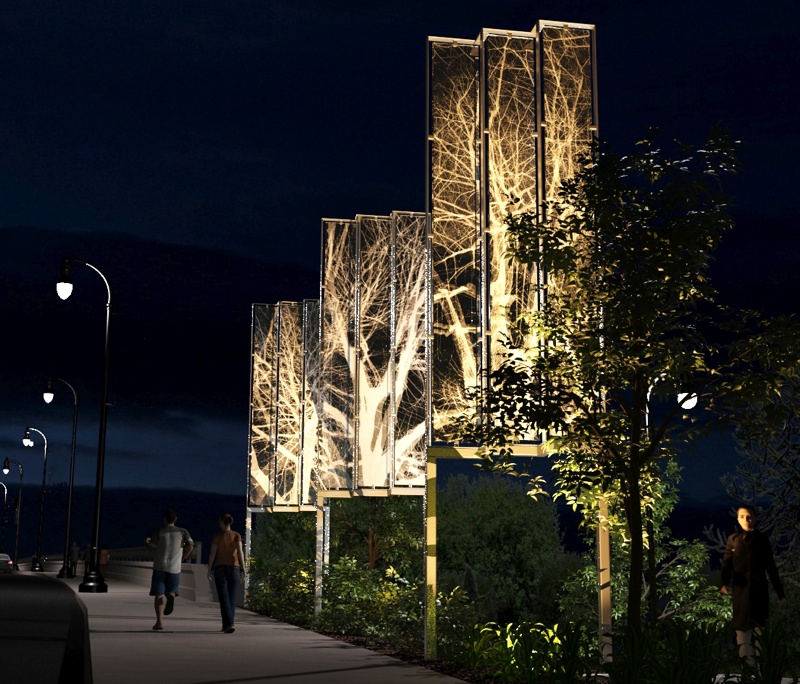
The plan includes five objectives: (1) Develop a master plan for 2013-2016 that will create community engagement and expedite work of the commission. (2) Advance the following projects that are underway, meeting all deadlines. All the projects have task force oversight, approved budgets, and are in various stages of completion. The projects are: (a) installation of Ed Carpenter’s “Radius” sculpture in the lobby of the Justice Center by November 2012 ($150,000); (b) a mural in Allmendinger Park by Mary Thiefels, to be completed by September 2012 ($12,000); (c) two additional murals by August 2013 ($40,000); (d) artwork for a rain … [Full Story]

Art for E. Stadium, Argo Cascades Moves Ahead

Ann Arbor public art commission meeting (April 25, 2012): Two action items on this month’s AAPAC agenda advanced art projects to be located at the East Stadium bridges and Argo Cascades.

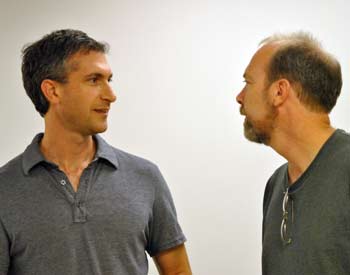
Dave Kunkle, Tim Jones

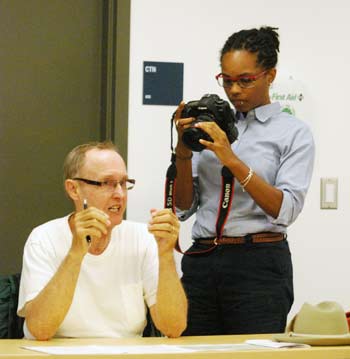
From left: Dave Konkle and Tim Jones spoke to the Ann Arbor public art commission about their Whirlydoodle project. Jones invented the device, which is on the table between them and is designed to highlight wind energy. Many others are already installed on light poles and elsewhere throughout downtown Ann Arbor. (Photos by the writer.)

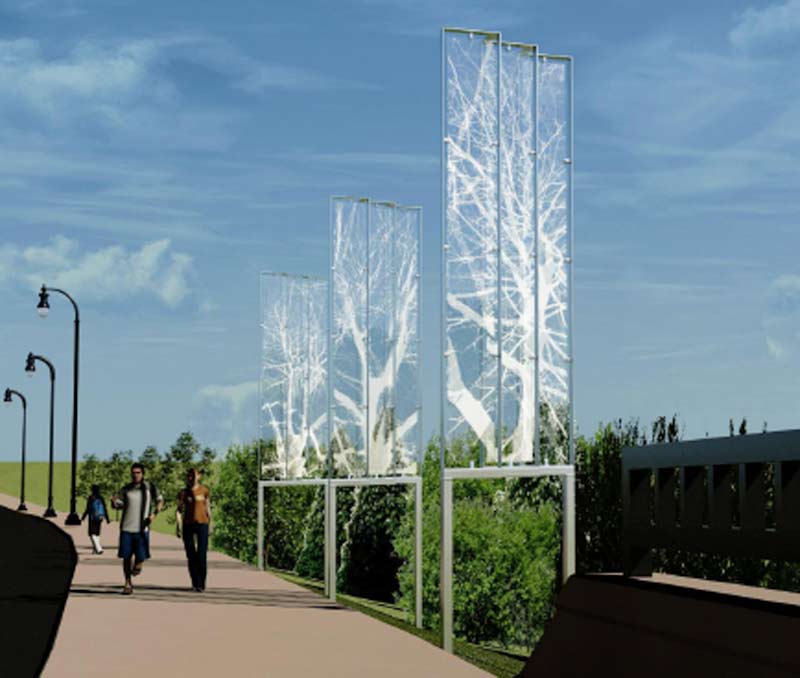
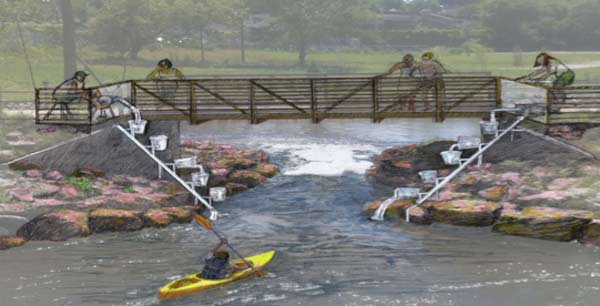
Commissioners approved a $150,000 budget for artwork at the new Huron River bypass near the Argo Pond canoe livery – called Argo Cascades. A task force recommended that the artwork have a “water” theme, and use the bulk of $155,561 that has accumulated from the city’s Percent for Art funds from water-related capital projects. The city will issue a request for artists to submit a statement of qualification (SOQ), and from those submittals a smaller number of artists will be paid $1,000 each to submit formal proposals.

In a separate vote, commissioners approved issuing a request for proposals (RFP) for artwork at the East Stadium bridges. They had previously set a budget of $400,000 for that project, which potentially will incorporate multiple locations on and near the reconstructed bridges.

Several other projects were discussed at the April 25 meeting, but no formal action was taken. During public commentary, commissioners heard from Dave Konkle and Tim Jones regarding a large Whirlydoodle installation they hope to build. The devices were invented by Jones as miniature wind generators, with LED lights that vary in color depending on wind speed – about two dozen are currently placed around the downtown area. A large-scale installation would help people to visualize wind currents and prompt a discussion about alternative energy, he said.

Konkle is the city’s former energy coordinator who now does consulting work for the Ann Arbor Downtown Development Authority as energy programs director. He told commissioners that a display of 1,000 Whirlydoodles – possible at the former landfill at Platt and Carpenter – would result in Ann Arbor having more wind generators than any other city in the world, and would bring the city national attention. The two men asked AAPAC to endorse the proposal, but commissioners did not act on it or discuss it in depth at the meeting.

They did discuss the status of a glass sculpture that AAPAC recommended for the lobby of the Justice Center, which awaits city council approval. At their April 2, 2012 meeting, councilmembers postponed a vote on the $150,000 project until their May 7 meeting, hoping to address concerns about access to the lobby. Visitors must pass through a security checkpoint to enter, and some councilmembers hope that the checkpoint can be relocated. AAPAC commissioners talked about the need to decouple the artwork approval from the broader concerns about access to the lobby, so that the art project can move forward.

During the meeting, two other potential projects were introduced: (1) an art loan program, to select work from individual artists or galleries that would be installed on city-owned property for a temporary period; and (2) a proposal to fund poles in the downtown area that would be used to hang banners over the street. Tony Derezinski, an AAPAC member who also serves on the city council, brought forward the idea for banner poles, to provide an alternative to the current anchors that are affixed to building facades. He described the poles as easels for the banners, which he characterized as artwork. The banners typically are purchased by organizations to promote upcoming events.

Commissioners also received updates on several ongoing projects at their April meeting: (1) the Golden Paintbrush awards, which will be presented in June; (2) a mural at Allmendinger Park; (3) artwork in the proposed city rain garden at Kingsley and First; and (4) signs for the city hall plaza and Herbert Dreiseitl water sculpture.

Commissioners also reached a consensus to hold another retreat in May, following up on a four-hour retreat on Feb. 26, 2012, to address the creation of a master plan for public art, among other issues. [Full Story]

Art Commission OK’s Argo Cascades Project

A $150,000 budget for artwork at Argo Cascades was approved unanimously by the Ann Arbor public art commission at its April 25, 2012 meeting. The budget includes an artist contract of up to $115,000, as well as $35,000 to cover (1) a 10% contingency, (2) 10% for administration, and (3) honorariums for up to five artists at $1,000 each, to cover the cost of submitting proposals.

Argo Cascades is the new Huron River bypass near the Argo Pond canoe livery. A task force for the project recommended first issuing a statement of qualifications (SOQ), then narrowing down the candidates to a maximum of five artists who would submit more formal proposals. The task force identified four potential locations for art, including the bridges … [Full Story]

RFP for E. Stadium Bridges Art Approved

A request for proposals (RFP) for artwork at the East Stadium bridges was unanimously approved by the Ann Arbor public art commission at its April 25, 2012 meeting. [.pdf of draft East Stadium bridges artwork RFP] AAPAC had set a $400,000 budget for the project at its March 2012 meeting.

Of that $400,000, a maximum of $360,000 will be available for the artist. The remainder is set aside for contingency costs, honorariums for finalists, and administrative expenses. Aaron Seagraves, the city’s public art administrator, noted that the draft RFP is still being reviewed by the city attorney’s office, but he hoped that they would make minimal changes and that the RFP could be issued soon.

Goals for the artwork include: … [Full Story]

Long-Term Planning for Ann Arbor Public Art

Ann Arbor public art commission meeting (March 28, 2012): With four of the nine commissioners absent, AAPAC approved the budget for its next major project, allocating up to $400,000 for art tied to the East Stadium bridges reconstruction.

Rose White Park

Rose White Park, adjacent to East Stadium Boulevard, is one location being considered for public art in a $400,000 budget approved by public art commissioners for the East Stadium bridges project. The blue tarp on the fence in the background serves to separate the park from the bridge construction. (Photos by the writer.)

A task force had recommended that the project be well-funded, because the location would be a highly visible landmark marking an entrance into the city – it’s near Michigan Stadium and the Crisler Center, for example. No artist has been selected yet, nor has a request for proposals been issued – that’s under review by the city attorney’s staff.

The artist would have a large role in selecting locations for the artwork. Places for art might include the underpass and staircases at South State Street; the fence along Rose White Park, which is adjacent to East Stadium Boulevard; or the bridges themselves, spanning over railroad tracks and South State Street. Any final project and budget would require the city council’s approval.

The commission postponed action on a proposal related to artwork at Argo Cascades, the new Huron River bypass near Argo Pond. Neither of the two commissioners who serve on a task force for the project – Malverne Winborne and John Kotarski – attended the AAPAC meeting, and other commissioners felt more information was needed before moving forward.

Final touches were put on an annual public art plan for FY 2013, describing projects that AAPAC intends to work on between July 1, 2012 and June 30, 2013. [.pdf of FY 2013 annual public art plan] In addition to specific art projects like those for the East Stadium bridges and a mural at Allmendinger Park, the two-page document calls for developing a master plan for public art to guide future decision-making through 2016.

During the meeting, Aaron Seagraves – the city’s public art administrator – noted that nominations are being accepted through April 13 for the Golden Paintbrush awards, which recognize local contributions to public art. A nomination form can be downloaded from the commission’s website.

The March 28 meeting was attended by three people who were not affiliated with the commission, including Jack Urban, a Kalamazoo County commissioner and chair of the Kalamazoo public arts commission. He noted that unlike Ann Arbor, the Kalamazoo public art commission does not have a funding source. So the group is looking to establish itself and seek financial support, he said. [Full Story]
Art Commission OKs Annual Public Art Plan

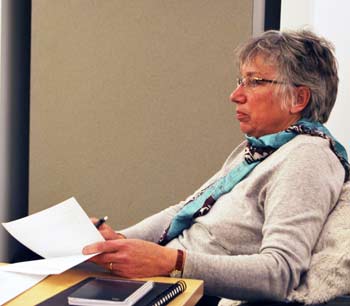
At its March 28, 2012 meeting, the Ann Arbor public art commission unanimously approved a public art plan for the coming fiscal year, from July 1, 2012 through June 30, 2013. The plan had been the topic of a four-hour retreat in late February. The city’s public art ordinance requires that AAPAC submit an annual plan to the city council by April 1.

About $1.13 million in unencumbered funds remains in the current public art budget. [The city’s public art ordinance requires that 1% of all capital project budgets (up to a limit of $250,000 per project) be set aside for public art.] The plan includes a list of ongoing projects, including: (1) installation of Ed Carpenter’s “Radius” sculpture in the lobby … [Full Story]

Art Project at Argo Cascades Tabled

At its March 28, 2012 meeting, the Ann Arbor public art commission tabled action on a public art project at Argo Cascades, the new Huron River bypass near the Argo Pond canoe livery. Neither of the two commissioners who are on a task force for the project – Malverne Winborne and John Kotarski – attended the meeting, and other commissioners felt they needed more information before voting on a budget.

No specific location has been identified for the work. The task force recommended instead to issue a request for proposals (RFP) and get input on the location from the artist who’s eventually selected for this project. About $175,000 is available for the project from money that has accumulated in the city’s … [Full Story]

$400,000 Earmarked for E. Stadium Bridges Art

At its March 28, 2012 meeting, the Ann Arbor public art commission recommended allocating $400,000 for artwork at the East Stadium bridges – currently being rebuilt by the city of Ann Arbor. AAPAC had voted to form a task force for the project at its September 2011 meeting, citing its importance as a gateway to the city. The budget would require approval by the city council.

Because the location could be a landmark marking an entrance into the city, the task force had advocated using a relatively large amount from the city’s Percent for Art funds, to be taken from the balance of $529,251 that’s accumulated for public art from streets-related capital projects. The city’s public art ordinance requires that … [Full Story]

Shaping Ann Arbor’s Public Art Landscape

Ann Arbor public art commission retreat (Feb. 26, 2012): At a four-hour retreat on Sunday, the nine-member public art commission began developing a master plan to guide the allocation of Ann Arbor’s Percent for Art funds and the selection of future public art projects.

Wiltrud Simbuerger, Aaron Seagraves, Bob Miller

Ann Arbor's public art administrator, Aaron Seagraves (center) talks with public art commissioners Wiltrud Simbuerger and Bob Miller at the commission's Feb. 26, 2012 retreat. The four-hour session was held at the NEW Center on North Main. (Photos by the writer.)

The Percent for Art program, overseen by AAPAC, allocates 1% for public art from all of the city government’s capital projects. The program faced potential cuts by the city council last year, though a majority of councilmembers ultimately voted against decreased funding. There’s also been criticism that the commission, which was formed in 2008, has been too slow in funding works of art. The commission itself has seen recent turnover, with three new commissioners appointed since late 2011.

It’s in this context that AAPAC decided to work on a master plan – the retreat was a step toward that goal, though it’s expected to take several more months to complete. Meanwhile, the commission is also preparing an annual plan to approve at its next meeting, on March 28, with a list of specific projects it intends to pursue in the coming fiscal year. The public art ordinance requires that the annual plan be submitted to the city council by April 1.

Sunday’s retreat covered a broad range of topics. Commissioners discussed the need to address all aspects of their mission, as spelled out in the ordinance – including education, outreach and promotion of public art. John Kotarski, one of the newest commissioners, proposed a motto to reflect that goal: “The educated resident is the best consumer of public art.”

Questions were raised about whether Percent for Art funds could be used for outreach and promotion – in the past, AAPAC has been told by city staff that funding is restricted to permanent capital projects. Kotarski advocated for including temporary projects, such as an artist-in-residence program or events like FestiFools. If the ordinance doesn’t currently allow temporary work, he suggested amending it.

When Kotarski urged the commission to seek clarity from the city attorney’s office, Tony Derezinski – a commissioner who also serves on the city council – said the city attorney’s staff is already working on legal opinions related to questions from councilmembers. He indicated that the legal staff would be willing to attend a future AAPAC meeting to answer these questions.

Also during the meeting, Aaron Seagraves, the city’s public art administrator, presented preliminary results of an online survey of residents, which yielded 437 responses. [.pdf of preliminary survey report] In response to one of the questions – “Where are the public places in the city that would benefit from a public art project?” – the top three responses were parks (27 responses), “none” (25 responses) and Main Street (23 responses.)

Other items emerged at the retreat. Theresa Reid, the newest commissioner who was appointed earlier this year, reported that she and others are working to apply for a National Endowment for the Arts “Our Town” grant, to help pay for a countywide public arts planning process. Derezinski indicated that the Detroit Institute of Art’s Inside|Out project, which involves installing framed reproductions from the DIA’s collection at outdoor locations on building facades or in parks, likely won’t come to Ann Arbor until 2013. When originally proposed in October 2011, it was expected to take place this year.

Another possible project on the horizon is tied to the resurfacing of Main Street in 2013. AAPAC chair Marsha Chamberlin said the Main Street Area Association and Downtown Development Authority are interested in some kind of “street stamping” project. It’s a project that’s in the very early stages, she said, but might include ideas like creating patterns on the street at crosswalks, for example.

Though discrete projects were mentioned, the focus of the retreat remained on big-picture goals. Common themes included the importance of public art in creating a sense of identity for the community, and of its role in supporting the local economy. [Full Story]
Art Commission Retreat Set for Feb. 26

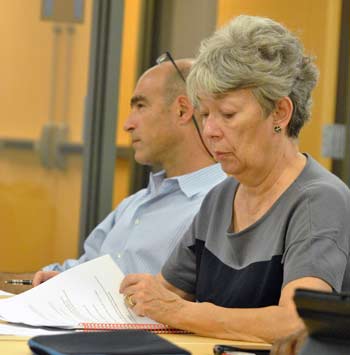
The Ann Arbor public art commission has cancelled its Wednesday, Feb. 22 meeting in lieu of a retreat scheduled for Sunday, Feb. 26 from 1-5:30 p.m. The retreat will be held at the NEW Center, 1100 N. Main St. in Ann Arbor.

No agenda has yet been posted for the retreat, but it was discussed at AAPAC’s Jan. 25, 2012 meeting in the context of developing an annual art plan for fiscal 2013, which by ordinance must be delivered to the city council by April 1. In addition to shaping the annual plan, the aim of the retreat is to develop a master plan that would provide a broader conceptual framework to guide AAPAC’s decisions.

The retreat will be open … [Full Story]
Transitions for Ann Arbor Art Commission

Ann Arbor public art commission meeting (Jan. 25, 2012): Two new commissioners – Bob Miller and John Kotarski – attended the art commission’s first meeting of 2012, and joined other AAPAC members in approving two public art projects.

Wiltrud Simbuerger

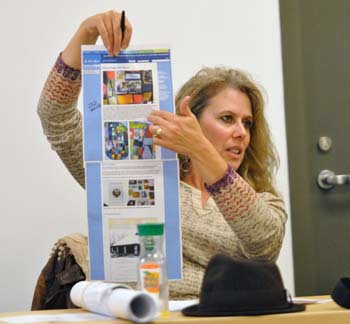
Ann Arbor public art commissioner Wiltrud Simbuerger, showing other commission members some proposals from artists for a mural at Allmendinger Park. A local artist, Mary Thiefels, has been selected for that project. (Photos by the writer.)

The group unanimously recommended selecting Ed Carpenter of Portland, Oregon for a $150,000 art project in the lobby of the city’s Justice Center, located at the corner of East Huron and Fifth Avenue. A task force had recommended the selection of Carpenter’s proposal from three finalists. It’s a sculpture called “Radius”.

Carpenter plans to create a hanging sculpture of dichroic glass, aluminum, stainless steel and lighting, including LED spot and flood lighting. Among the reasons for recommending Radius, the task force cited the sculpture’s metaphor: That the activities in the Justice Center have a “rippling” effect throughout the community, which echos the water sculpture by Herbert Dreiseitl that’s located in the plaza outside the building.

The Justice Center, a new building next to city hall, houses the 15th District Court and the Ann Arbor police department. The commission’s recommendation will be forwarded to the city council for approval.

In other action, the art commission voted to select Ann Arbor muralist Mary Thiefels for a mural project to be located on pillars at a building in Allmendinger Park. A task force had recommended her selection from among four finalists. Her proposal entails asking neighborhood residents for artifacts to create mosaics at the top and bottom of the pillars. The task force recommended that they continue to work with Thiefels on designing the remainder of the mural in the middle sections of the pillars.

Commissioners liked the concept of “found object” mosaics, but questioned whether the $10,000 budget was sufficient. They ultimately voted to approve selecting Thiefels for the project, contingent on her submission of a revised proposal and budget, with additional input from the task force. This project is the first one in a pilot mural program started last year by former commissioner Jeff Meyers.

AAPAC also discussed possible artwork for four sites connected to the East Stadium bridges, which are being reconstructed. The two commissioners who serve on a task force for that project – Wiltrud Simbuerger and Bob Miller – indicated that the budget recommendation will likely be at least $250,000 for artwork there. The task force is currently developing a request for proposals to be issued in the coming weeks.

In the context of developing their annual art plan for fiscal 2013, which by ordinance must be delivered to the city council by April 1, commissioners decided to hold a retreat next month. In addition to shaping the annual plan, the aim of the retreat is to develop a master plan that would provide a broader conceptual framework to guide AAPAC’s decisions. Input from an online survey of the public will also be used – the survey remains open until Feb. 20, and has garnered more than 400 responses so far. [Full Story]
Art Commission Moves Ahead on Projects

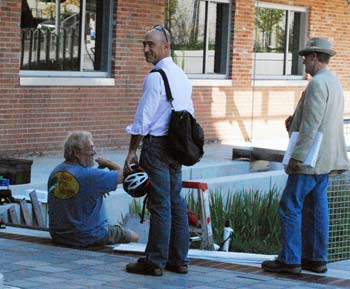
At its Jan. 25, 2012 meeting, the Ann Arbor public art commission recommended approving the artist Ed Carpenter of Portland, Oregon for a $150,000 art project in the lobby of the city’s Justice Center, located at the corner of East Huron and Fifth Avenue. A task force had recommended the selection of Carpenter’s proposal – a sculpture called “Radius” – from three finalists. Members of the task force who recommended Carpenter are Elaine Sims, Margaret Parker, Spring Tremaine, Karl Daubmann, Maureen Devine, Laura Rubin, Ray Detter, Margie Teal, Homayoon Pirooz, and Aaron Seagraves.

Carpenter’s proposal calls for creating a hanging sculpture of dichroic glass, aluminum, stainless steel and lighting, including LED spot and flood lighting. The intent of the artwork is to reflect how … [Full Story]

Art Commission Plans for the Future

Ann Arbor public art commission meeting (Dec. 13, 2011): Marsha Chamberlin, who chairs the city’s public art commission, began the meeting by congratulating her colleagues on the recent defeat of a city council proposal to reduce funding for the Percent for Art program, which AAPAC oversees. “What that means is a lot of work in the next year,” she added.

Aaron Seagraves

Aaron Seagraves, Ann Arbor's public art administrator, goes over some ideas for possible programs to be funded through the city's Percent for Art program. (Photos by the writer.)

Most of AAPAC’s December meeting was spent looking forward to the coming year – discussing how to develop the next annual art plan, which is due to be delivered to the city council in April. Commissioners talked about how to increase the amount of public art funded through the city’s Percent for Art, including putting in place new programs that would expedite the process. Some city councilmembers have raised concerns that few public art projects have been completed since the Percent for Art was created in 2007. The program, overseen by AAPAC, allocates 1% for public art from all of the city government’s capital projects.

So far, only two projects have been installed: (1) a tree sculpture at West Park, and (2) a large water fountain in front of city hall. Updates on several other projects were reviewed at AAPAC’s December meeting, and several days after the meeting, action was taken toward the selection of artists for two projects. A task force for a mural in Allmendinger Park is recommending Ann Arbor muralist Mary Thiefels for that work, with a $10,000 budget. And a task force that’s selecting artwork for the lobby of the Justice Center is recommending Ed Carpenter of Portland, Oregon for that $150,000 project. AAPAC is expected to get more details and vote on both recommendations at its Jan. 25 meeting.

During Dec. 13 discussion of the annual plan, it emerged that there’s been a revision to a key constraint on Percent for Art spending: The aspect of permanence. Previously, city staff had told AAPAC that because all artwork needed to be capitalized, it had to last a minimum of five years. Now, Chamberlin reported, the city’s finance department has revised its definition of “permanent” to a minimum of two years, not five. “That does change things a lot,” she observed.

One item that fits the “permanent” requirement, but posed other concerns, was a proposed donation to the city via local attorney Kurt Berggren. The work is an eight-panel set of gates called the Global Peace Gateway, originally located at a cathedral in Los Angeles. Commissioners discussed several issues related to that donation, including the cost of transporting the work to Ann Arbor and the fact that the gates contain religious iconography. Ultimately, they voted to reject the donation.

One thing that wasn’t mentioned during the meeting: Margaret Parker’s decision to leave the commission one year before her term expired. The news was revealed later in the month at a city council meeting, when mayor John Hieftje put forward a nomination for her replacement – John Kotarski. Parker, a local artist, has served on AAPAC since its inception, including three years as its chair, and was instrumental in creating the Percent for Art program. [Full Story]

Art Commission Debates Advocacy Role

Ann Arbor public art commission meeting (Nov. 30, 2011): At their final meeting before the city council convenes on Monday night (Dec. 5) to consider changes to Ann Arbor’s Percent for Art program, public art commissioners debated how to respond – particularly to a temporary funding cut – and expressed different views on what their role should be.

Margaret Parker, Malverne Winborne

Ann Arbor public art commissioners Margaret Parker and Malverne Winborne at the commission's Nov. 30 meeting. (Photo by the writer.)

Former board chair Margaret Parker, who was instrumental in creating the Percent for Art program in 2007, argued passionately that commissioners should be strong advocates for it. Saying she didn’t believe councilmembers really understood the issues that AAPAC is facing and that the currently proposed changes represented an “incredible kink in the road,” she urged commissioners to attend Monday’s city council meeting and speak against the proposed changes during the public hearing.

Parker also argued that the council should double the budget for administrative support to public art projects – from 8% to 16%.

As she’s done in the past when the proposals to cut Percent for Art funding have been floated, Parker is trying to mobilize people in the local arts community. She has sent emails urging people to lobby councilmembers, including a bullet-point “fact sheet” related to the program. [.pdf of Parker email] [.pdf of "fact sheet"]

Marsha Chamberlin, AAPAC’s current chair, questioned whether commissioners should “pick a fight” with city council, and said she felt that councilmembers did understand the issues clearly. Noting that she had attended previous council meetings and also communicated with councilmembers privately, Chamberlin wasn’t convinced that turning out yet again would be effective.

The councilmember who has in the past advised AAPAC about the sentiment on council – Tony Derezinski, who also serves on AAPAC – did not attend the Nov. 30 meeting.

Malverne Winborne pointed to political realities at play, and said that AAPAC needs to be realistic about the situation – other programs are being cut, too. If the council decides to get rid of AAPAC, he said he wouldn’t fight that. “Decommission me – what the hell,” he quipped.

In addition to an extended discussion on city council’s proposed changes to the Percent for Art ordinance, commissioners voted to move forward on two projects: (1) public art in a proposed rain garden at the corner of Kingsley and First, and (2) a partnership with the Detroit Institute of Art’s Inside|Out project, which involves installing framed reproductions from the DIA’s collection at outdoor locations on building facades or in parks.

Commissioners were also briefed on a range of other projects, including the latest on a mural at Allmendinger Park. A task force has selected four finalists for the $10,000 project: (1) Robert Delgado of Los Angeles, Calif.; (2) Bethany Kalk of Moorehead, Kentucky; (3) Jefferson Nelson of Liberty Center, Ohio; and (4) Mary Thiefels of Ann Arbor. The artists will submit preliminary concepts for potential murals on Dec. 8, and from those, the task force will recommend one for AAPAC and the city council to consider.

Commissioners also changed the date for AAPAC’s final meeting in December – to Dec. 13, when they’ll hold a follow-up discussion to their Oct. 26 working session. That October session, intended to prep AAPAC for its presentation at a Nov. 14 council work session – focused on challenges facing the Percent for Art program, and possible solutions. [Full Story]

DIA Outdoor Art Likely for Ann Arbor

Ann Arbor public art commission meeting (Oct. 26, 2011): Commissioners were briefed on two possible public art projects at their monthly meeting: a partnership with the Detroit Institute of Arts, and the potential for incorporating public art into a rain garden on property the city is buying at First & Kingsley.

Connie Pulcipher

Connie Pulcipher of the city's systems planning staff led the public art commissioners in a discussion to prep for a November working session with the city council. (Photos by the writer.)

But most of their 2.5-hour meeting was spent prepping for a Nov. 14 working session with Ann Arbor city council, focusing on the city’s Percent for Art program.

The council working session was prompted in large part by a resolution proposed by councilmember Sabra Briere, which she brought forward at the council’s Sept. 19 meeting. The resolution would revise the city’s public art ordinance explicitly to exclude sidewalk and street repair from projects that could be tapped to fund public art. It would also require that any money allocated for public art under the program be spent within three years, or be returned to its fund of origin. The council ultimately postponed action on the resolution until its Nov. 21 meeting, with a working session scheduled in the interim to focus on the Percent for Art ordinance.

The timing of the proposed ordinance change is related to two proposals on the Nov. 8 ballot: (1) renewal of a 2.0 mill tax to fund street repair; and (2) imposing a 0.125 mill tax to fund the repair of sidewalks – which is currently the responsibility of adjacent property owners.

At AAPAC’s Wednesday meeting, Connie Pulcipher of the city’s systems planning unit led commissioners in a discussion to organize their thoughts before the council work session. She asked them to identify the program’s biggest challenges, from the community’s perspective, as well as the primary causes and possible solutions to those challenges.

Commissioners cited a range of issues, including: (1) a lack of public awareness about the program, its constraints, funding sources, and AAPAC’s role; (2) the perception that not enough art is coming out of the program, and that the process is too slow; (3) the complaint that local artists aren’t given preference; and (4) the sense that in this difficult economy, city funds shouldn’t be spent on public art.

In addition to offering ways to address these challenges, commissioners also discussed their own workload. They noted that AAPAC is still relatively new and is one of the few city commissions that hasn’t enjoyed consistent staff support over the years. Although a new part-time public art administrator was hired this summer, the program had no dedicated staff person for about a year.

Wednesday’s meeting began with two presentations. Larry Baranski of the DIA talked about how Ann Arbor might participate in the museum’s Inside|Out project, which involves installing framed reproductions from the DIA’s collection at outdoor locations on building facades or in parks. Also, Patrick Judd of Conservation Design Forum and Jerry Hancock, Ann Arbor’s stormwater and floodplain programs coordinator, floated ideas for possible public art in a rain garden that’s being designed for property at the corner of Kingsley and First, located in a floodplain. Commissioners were generally receptive to both ideas, but plan to discuss them in more depth at their monthly meeting in November. [Full Story]

Park Group Briefed on River Art Walk Proposal

Margaret Parker of the Ann Arbor public art commission (AAPAC) made a presentation on potential art projects along the Huron River during the Oct. 18, 2011 meeting of the city’s park advisory commission (PAC). [.pdf of River Art Walk proposal] The proposal had been discussed in detail at the art commission’s Aug. 24, 2011 meeting.

Parker told PAC members that two locations have been identified for possible public art along the river: (1) at Gallup Park, in conjunction with planned improvements to the canoe livery; (2) at the Argo Dam canoe bypass, which is currently under construction. A broader project for art along a much longer stretch of the river could also be developed in connection with the RiverUp! … [Full Story]

Art Commission Preps for Dreiseitl Dedication

Ann Arbor public art commission (Sept. 28, 2011): Commissioners spent a portion of their monthly meeting discussing details of the Oct. 4 dedication of Herbert Dreiseitl’s bronze sculpture, the city’s largest public art project to date funded from the Percent for Art program.

Herbert Dreiseitl with design team in front of city hall

On the morning of Sunday, Oct. 2, Herbert Dreiseitl (center, in maroon cap) meets in front of city hall with the design/fabrication team for his sculpture. To the right is Rick Russel of Future Group, the Warren firm that fabricated the bronze sculpture. To the left of Dreiseitl is Patrick Judd of the Ann Arbor-based Conservation Design Forum, which helped with the design. In the background, electrician Jim Fackert hooks up wiring to operate the blue lights embedded in the bronze. (Photos by the writer.)

The installation was still underway – blue glass lights embedded in the elongated metal panel hadn’t been wired, and water wasn’t yet flowing over the sculpture. But those elements are expected to be in place by Tuesday evening, when the German artist will be among those gathering on the plaza in front of city hall for the dedication ceremony. [Dreiseitl and members of the design/fabrication team have been testing the lighting and water flow, but it will be formally "turned on" at the dedication ceremony.]

The Percent for Art program was also a topic of discussion at AAPAC’s Sept. 28 meeting, in light of recent proposed action by the city council. A council resolution sponsored by councilmember Sabra Briere – who attended AAPAC’s meeting but didn’t formally address the group – would explicitly exclude sidewalk and street repair from projects that could be tapped to fund public art. Briere’s proposal would also require that any money allocated for public art under the program be spent within three years, or be returned to its fund of origin. The council ultimately postponed action until their second meeting in November, following a working session on the Percent for Art program that’s scheduled for Nov. 14.

In the context of those possible changes, Margaret Parker made an impassioned plea for her fellow commissioners to increase their efforts at public outreach. Many people didn’t know about all the work that was being done through the Percent for Art program, she said. By not getting their message out, she cautioned, ”that can be the undoing of all the work that we’ve done.”

Updates on several projects were given during the meeting, and commissioners took one formal vote – giving approval to set up a task force that will select public art for the East Stadium bridges project. Other projects in the works include a mural at Allmendinger Park, artwork in the lobby of the new justice center, a possible partnership with the Detroit Institute of Arts’ Inside|Out program, and public art for a rain garden to be created at the corner of Kingsley and First.

Parker also made a pitch for a possible way to fund temporary art – such as performances or short-term exhibitions – that can’t be paid for by the Percent for Art program, as stipulated by city ordinance. Rather than describing it as temporary art, she said, perhaps AAPAC could characterize such temporary work as promotion for public art in general, or tie it to promotion of a permanent piece, like the Dreiseitl sculpture. There was no action taken on this idea, other than an apparent consensus to explore that possibility further. [Full Story]

Public Art Commission Considers Expanding

Ann Arbor public art commission meeting (Aug. 24, 2011): Briefly discussed at AAPAC’s August meeting was the possibility of increasing the number of members on the city’s public art commission – a move that would require amending Ann Arbor’s Percent for Art ordinance. Though commissioners expressed support for the idea, they ultimately tabled it in light of a possible upcoming city council working session on the public art program.

View from the sixth floor of Ann Arbor's city hall

View from the sixth floor of Ann Arbor's city hall, facing south and overlooking East Huron Street. Workers are installing tile in the plaza. The long trough, at a right angle to the street, will be the location for Herbert Dreiseitl's water sculpture. A dedication of the piece is planned for early October, after installation. (Photo by the writer.)

The working session has been discussed as potentially taking place on Sept. 12. But Tony Derezinski – a city councilmember who is AAPAC’s newest commissioner and who attended his first meeting on Wednesday – said he hoped to push back the commission’s presentation to the city council until a later date. [As of late Aug. 29, no city council working session has been scheduled on the city's Legistar system.]

Derezinski characterized it as an extremely important opportunity for AAPAC to convince the council of the value of the Percent for Art program, noting that he has defended it twice when other councilmembers previously proposed cutting it.

Margaret Parker, a local artist who’s served on AAPAC since its inception, suggested making the working session presentation after the formal dedication of Herbert Dreiseitl’s water sculpture in front of city hall – so councilmembers will first have the chance to “bask in some glory” of the program’s efforts, she said. The dedication is being planned for early October, to coincide with Dreiseitl’s next trip to Ann Arbor to oversee the sculpture’s installation.

The Dreiseitl work, costing more than $750,000, will be the second completed piece under the Percent for Art program, which was created in 2007. During Wednesday’s meeting, commissioners also discussed the possibility of using public art funds to buy existing artwork, rather than only commissioning pieces, as they’ve done to date. Although Parker expressed some concerns, they agreed to explore this approach as a way to quicken the pace of public art acquisition.

Commissioners also discussed several projects that are in the formative stages, including artwork for the proposed Fuller Road Station, a mural for Allmendinger Park, and a possible artwalk along the Huron River. A previous recommendation for a mural along the Huron Parkway, near Huron Hills Golf Course, has been postponed, based on negative feedback from residents. [Full Story]

Derezinski Nominated to Art Commission

At the Aug. 4, 2011 meeting of the Ann Arbor city council, mayor John Hieftje nominated Ward 2 council representative Tony Derezinski to replace Jeff Meyers on the Ann Arbor Public Art Commission. The nomination will require confirmation by the city council at its next meeting.

Meyers resigned in June of this year mid-way through his three-year term, partly over frustration that the mural project he’d championed kept hitting bureaucratic roadblocks. In an interview with The Chronicle, Meyers had suggested that one way to improve the situation is for a city council representative to be appointed to AAPAC – it seems especially appropriate since AAPAC makes recommendations for the Percent for Art budget, he said. [Chronicle coverage: "After Resignation, Who Leads Mural Program?"]

The Percent for Art program is enabled by a city ordinance that allocates 1% of the budget for all city capital projects – up to a limit of $250,000 per project – to the city’s public art program. The Percent for Art program was also a part of the council’s discussion on the evening of Aug. 4, because there is some interest on the part of councilmembers in restricting funds generated through the street reconstruction millage from use in the Percent for Art program. The street reconstruction millage will expire this year, unless it is approved by the general electorate on Nov. 8 this year.

This brief was filed from the city council’s chambers on the second floor of city hall located at 301 E. Huron. A more detailed report will follow: [link] [Full Story]

After Resignation, Who Leads Mural Program?

Ann Arbor public art commission meeting (July 27, 2011): For the second month in a row, Ann Arbor’s public art commission had too few members to achieve a quorum and didn’t take any action at Wednesday’s meeting.  But commissioners discussed a range of projects already underway.

Mock-up section of Dreiseitl water sculpture

A mock-up section of the sculpture by Herbert Dreiseitl that's commissioned for the entrance to the Ann Arbor municipal center. The piece is made of bronze, with blue glass lights embedded. In this photo, water is flowing over the section, as it will when installed. (Photo courtesy of Quinn Evans Architects)

One issue: How to proceed with recommending a replacement for Jeff Meyers, who resigned from AAPAC in June, mid-way through his three-year term. The main concern among commissioners is who can take over leadership of a new mural program that Meyers had initiated. Margaret Parker indicated she’ll also be leaving the commission in the coming months, creating another vacancy on the nine-member commission.

The mayor, John Hieftje, is responsible for making nominations to AAPAC. Those nominations also require confirmation by the full city council. On Wednesday, AAPAC commissioners discussed the need for better communication with Hieftje, and said they hoped to find out what criteria he was using to make the selection – the most recent appointment Hieftje made to AAPAC was done without their input, after he rejected someone they’d recruited. Communication has also been lacking regarding Meyers’ resignation – in a phone interview with The Chronicle following AAPAC’s July meeting, Meyers said the mayor hasn’t acknowledged his resignation.

In other topics at Wednesday’s meeting, commissioners briefly discussed a written update they’d received about the Herbert Dreiseitl water sculpture being built for the entrance to the municipal center. Installation is still on track for next month.

Also in August – at city council’s Aug. 4 meeting – winners of the annual Golden Paintbrush awards will be honored. AAPAC selected the winners, who are recognized for their contributions to public art, via an online poll last month. This year, winners are: (1) Krazy Jim’s Blimpie Burger, for the Snow Bears sculptures they build each winter in front of their business at Packard and South Division; (2) Mary Thiefels and Treetown Murals for the mural outside the Alley Bar along West Liberty; and (3) Peter Allen & Associates, for rock sculptures on North Main Street. [Full Story]

Meyers Resigns Ann Arbor Art Commission

Jeff Meyers, who was appointed to the Ann Arbor public art commission in early 2010, sent a formal notice of resignation last month to mayor John Hieftje, stepping down from AAPAC about mid-way through his three-year term. Meyers had been appointed in early 2010, with a term running through Dec. 31, 2013.  The news was discussed at the July 27, 2011 AAPAC meeting, as commissioners considered who might take over leadership of a task force for a new mural program that Meyers had initiated.

His resignation was foreshadowed at AAPAC’s June 2011 meeting, which he did not attend. AAPAC chair Marsha Chamberlin had told other commissioners that Meyers wanted to relinquish his leadership of the mural program – she … [Full Story]

Art Commission Briefed on Murals, Dreiseitl

Ann Arbor public art commission meeting (June 22, 2011): With only four of their nine members present, the commission didn’t have a quorum for its monthly meeting – but no major votes were on the agenda, so the meeting consisted primarily of updates.

Aaron Seagraves, Marsha Chamberlin

Aaron Seagraves, the city's public arts administrator, and Marsha Chamberlin, chair of the Ann Arbor public art commission, in the entryway atrium of city hall, which is still being renovated. Mosaics by the artist Gerry Kamrowski, formerly at the entrance to city hall, will be installed on the wall behind Chamberlin. (Photo by the writer.)

One of those updates included a report that Jeff Meyers, a commissioner who has launched a public mural program, no longer wants to take the lead in that effort. The pilot program has proposed creating murals at Allmendinger Park and on a retaining wall along Huron Parkway. Because of low turnout at two recent neighborhood forums about the murals, city staff now plan to post an online survey to solicit feedback about the locations.

The commission also got updates on several other projects, including a large water sculpture by Herbert Dreiseitl that’s on track for installation in August. Large bronze plates are being cast at a firm in Warren, Michigan, and site work is continuing in front of the municipal center, where the sculpture will be located.

The commission is also seeking members for a selection committee to choose additional artwork for the lobby of the justice center – the new building at Fifth and Huron that’s adjacent to city hall. (Together, the buildings are known in some circles as the “municipal center.”) A statement of qualifications/request for proposals for the lobby art has been issued, with a deadline for responses extended until Sept. 1. The previous May 31 deadline did not yield sufficient responses for the project, which has an artist’s budget of up to $150,000. [Full Story]

Public Art Commission: “Get the Word Out”

Ann Arbor public art commission meeting (May 25, 2011): Wednesday’s AAPAC meeting began with introductions – commissioners were meeting the city’s new public art administrator, Aaron Seagraves, for the first time.

Public art signs

Signs designed by the Ann Arbor public art commission's public relations committee, featuring a QR code for smart phones that directs people to AAPAC's website. (Photos by the writer.)

Seagraves, who started his job earlier this month, had already attended a neighborhood forum for a proposed mural project at Allmendinger Park – five residents showed up, he reported.

That low attendance reflected one theme touching several topics throughout this month’s AAPAC meeting – the need to get the word out about various public art projects. Three nominations had been received so far for the annual Golden Paintbrush awards, with a deadline of May 30. And only two people had responded to a request seeking artists for public art in the lobby of the city’s new municipal center, at the corner of Fifth and Huron. A deadline for submission has been extended through mid-July, in hopes that additional artists will respond.

Commissioners also got updates on the Herbert Dreiseitl sculpture – expected to be installed in front of the renovated city hall in August – and on plans for public art in the proposed Fuller Road Station. Though Fuller Road Station hasn’t been formally approved, a task force is working on placing public art at the structure. The station will be a large parking facility, bus depot and possible train station that would be jointly built by the city of Ann Arbor and the University of Michigan.

Finally, commissioners wrapped up the meeting with their only action item: Electing Malverne Winborne as vice chair. [Full Story]

What’s Next for Public Mural Program?

Ann Arbor public art commission meeting (April 27, 2011): Commissioners were taken aback at their April meeting when told by city staff that a mural program – one that’s been in the works for months – might need to be delayed.

Tree sculpture and band shell in West Park

One of two metal tree sculptures near the band shell in West Park, funded by Ann Arbor's Percent for Art program. The tree sculpture stands about 10 feet tall, and is located on tiered seating that's built into the hill across from the band shell. (Photos by the writer.)

At issue was the fact that the 2011 annual public art plan, which includes the mural pilot program, was never officially approved by Ann Arbor city council. Though the plan was approved last year by AAPAC and forwarded to city staff, it was never placed on council’s agenda.

Some commissioners questioned whether approval of the plan is needed, noting that the West Park public art project – which was also in the 2011 plan – moved ahead and was actually completed last fall. Ultimately, it appears the mural program can move forward with plans to hold public meetings regarding proposed sites in Allmendinger Park and along Huron Parkway, but no contracts can be signed with artists until the council approves the newest annual plan – for fiscal year 2012, which begins July 1. AAPAC approved that plan at the April 27 meeting.

In other business, the West Park art project was brought up again as a separate item of discussion – commissioners learned that the project had incurred $5,438 more in expenses than had been budgeted, because of unanticipated administrative costs.

The commission also got updates on: (1) the Herbert Dreiseitl water sculpture, which is expected to be installed in front of the municipal center in August; and (2) public art being planned for the proposed Fuller Road Station.

Commissioners also discussed promoting the annual Golden Paintbrush awards – nominations are being sought to recognize local contributions to public art. Nomination forms can be downloaded from AAPAC’s website, and are due May 30.

In its final action of the meeting, AAPAC elected Marsha Chamberlin as chair, though she did not attend the meeting. She has served as acting chair for several months, and had agreed to step into the permanent role. [Full Story]

Murals as Public Art Possibly Delayed

At their April 27, 2011 meeting, members of the Ann Arbor public art commission (AAPAC) received news from city staff that a pilot mural program already approved by the commission might need to be delayed. AAPAC was informed that the Ann Arbor city council never voted to approve the current fiscal year’s public art plan, which included the mural program.

The annual plan spanning July 1, 2010 through June 30, 2011 was created, but apparently was never forwarded to by city staff to be placed on the council’s agenda last year. Some commissioners questioned whether approval of the plan by council is needed before projects can move forward.

The city ordinance establishing the Percent for Art program, approved by the city council in 2007, requires: “By April 1 of each year, submit to city council a plan detailing potential projects and desirable goals to be pursued in the next fiscal year.”

At Wednesday’s meeting, AAPAC discussed and approved the public art plan for FY2012, which begins July 1, 2011. Ten projects are in the plan, including artwork in the interior and exterior of the new justice center, the Fuller Road Station, and the mural pilot program. [.pdf of draft FY2012 annual plan at start of AAPAC's April 27 meeting]

Approved in 2007 by the city council, the city’s Percent for Art ordinance creates a mechanism for funding public art by allocating 1% of all capital improvement projects – with a cap of $250,000 – to be spent on public art.

The mural pilot program hit another hitch earlier this year, when a meeting – called to vote on approving two proposed sites for the first murals – wasn’t properly noticed under the Michigan Open Meetings Act, and had to be held again. [Previous Chronicle coverage: "Art Commission Votes Again on Mural Sites," "Public Art Group Picks Two Mural Sites" and "Public Art Mural Program in the Works"]

This brief was filed from the 7th floor conference room of the City Center Building, 220 E. Huron St., where AAPAC meets. A more detailed report will follow: [link] [Full Story]

Art Commission Votes Again on Mural Sites

Ann Arbor public art commission special meeting (April 13, 2011): Because a March 11 special meeting did not conform with noticing requirements under the state’s Open Meetings Act, AAPAC held another special meeting on Wednesday to vote again on the selection of two sites for a new mural program.

Drawing of location for a proposed mural along Huron Parkway

A sketch by Cathy Gendron of the location for a proposed mural along Huron Parkway, on Ann Arbor's east side. The mural site is indicated with a thin rectangle near the letters "G.C.", which mark the Huron Hills Golf Course.

At the March 11 meeting, which was covered by The Chronicle, AAPAC member Jeff Meyers had presented recommendations from a public mural task force he chairs. The two sites – a building at Allmendinger Park, and a retaining wall along Huron Parkway – will be the first for a pilot mural project spearheaded by Meyers.

At the previous special meeting, commissioners had held a lengthy discussion before voting to approve the sites. The meeting on Wednesday was far shorter, with Meyers giving a brief summary of the selection process. Two of the five members who attended Wednesday had not been present at the March 11 session, however, and they had some questions about the sites.

Meyers also reported that since March, city staff have advised him to make a presentation at the next meeting of the Ann Arbor park advisory commission, since the sites are near or within city parks. Two public meetings – one for each site – will also be scheduled, to get input from residents. [Full Story]

Public Art Group Picks Two Mural Sites

Ann Arbor public art commission special meeting (March 11, 2011): A building at Allmendinger Park and a retaining wall along Huron Parkway have been selected as mural sites for a pilot program funded by the city’s Percent for Art program.

Building at Allmendinger Park

The pillars on this building at Allmendinger Park have been identified by a task force as one of two sites for a mural pilot program, to be funded by the Ann Arbor Percent for Art. (Photos by the writer.)

A special meeting on Friday was called specifically to vote on the site recommendations, which were made by a task force chaired by AAPAC member Jeff Meyers. He reported that the locations were chosen because they are highly visible, in different parts of the city, and in different types of environments – a residential neighborhood and a major thoroughfare.

Though some concerns were voiced during the meeting, ultimately the commissioners voted unanimously to approve the sites and the budget of $10,000 per mural. The task force will move ahead with the projects, including holding a neighborhood meeting for residents near Allmendinger Park, and selecting artists for the murals.

If this pilot program is successful, the goal is to create at least two additional murals each year. [Full Story]

Art Commission Drafts Artist Selection Form

Ann Arbor public art commission meeting (March 1, 2011): Marsha Chamberlin chaired AAPAC’s March meeting, and began by welcoming guests: Six students from Skyline High School, who were there for a class assignment, and Susan Froelich, the new president of the Arts Alliance.

Susan Froelich

Susan Froelich, the new president of the Ann Arbor-based Arts Alliance, at the March 1, 2011 meeting of the Ann Arbor public art commission. She was appointed in late February and replaces former president Tamara Real, who resigned last year. (Photo by the writer.)

Froelich – who was a member and former chair of AAPAC’s predecessor group, the commission for art in public places – told commissioners she was just there to say hello, and that the alliance looked forward to working with AAPAC. She passed out bookmarks promoting the A3Arts web portal, which launched last year and features profiles of artists and institutions in the area, along with an events calendar and other information. Finally, Froelich thanked commissioners for their work.

During the meeting, commissioners approved spending up to $2,000 to get an evaluation of the damaged Sun Dragon at Fuller Pool, and to secure a cost estimate for repair or replacement. Margaret Parker, an AAPAC member and the artist who originally designed the colored-plexiglas sculpture, recused herself from that discussion.

Commissioners also discussed a draft of an artist evaluation rubric and interview protocol, and debated whether local artists should be given extra points in the process. Also debated was the definition of local – they plan to continue the discussion at their next meeting.

Nomination forms for the annual Golden Paintbrush awards are now available from AAPAC’s website, with a May 2 deadline for submission. The awards are given to individuals and institutions for their contributions to public art in Ann Arbor.

Scheduling came up in several different ways. A special meeting has been called to vote on site recommendations from AAPAC’s mural task force. That meeting is set for Friday, March 11 at 11 a.m. on the seventh floor of the City Center building at Fifth and Huron. Commissioners also discussed possibly changing their monthly meeting day. It’s now set for the first Tuesday of each month at 4:30 p.m., but two commissioners have scheduling conflicts at that time. AAPAC’s newest member, Malverne Winborne, reported that he’d told mayor John Hieftje prior to his nomination that the meeting day would be difficult for him, but that had not been communicated to the rest of the commission. [Full Story]

Developer Pitches Idea for Argo Art Walk

Ann Arbor public art commission meeting (Jan. 4, 2011): Marsha Chamberlin, as the commission’s acting chair, began Tuesday’s meeting by noting that many of the commissioners planned to attend a memorial gathering for Peter Pollack, a landscape architect and community activist who passed away last month. Because of that, she said, they would make the meeting as expeditious as possible – it lasted less than an hour.

Rock cairn near North Main in Ann Arbor

One of several cairns on the east side of North Main Street in Ann Arbor, near property owned by Peter Allen. The local developer is proposing a sculpture park in the area, funded through the city's Percent for Art program. (Photo by the writer.)

Part of that time was spent hearing a proposal by local developer Peter Allen, who urged commissioners to consider creating some kind of art walk in the Argo Pond area, possibly installing sculptures and using Percent for Art funds from the recently approved millrace reconstruction project. Two city parks hug Argo Pond – Bandemer on the west and Argo on the east.

Allen cited the Michigan Legacy Art Park at the Crystal Mountain resort as an example of something that could be used as a model, and he offered to explore the possibility of seeking matching private funds for the project. [Full Story]