Stories indexed with the term ‘In the Archives’

In the Archives: Fluffy Sparrow Heads

In the late 19th century, an interloper was committing thievery across Michigan.

Glimpsed now here, now there, the miscreant evaded capture, flitting away. Finally in the late 1880s the state responded to residents’ outrage and levied a bounty on the culprit’s head.

Its tiny, fluffy head: the offender was the English or house sparrow.

flobert-small

The feeble Flobert rifle was dissed by the catalog house selling it.

“This detestable bird is an imported resident,” said Charles Chapman in his 1881 “History of Washtenaw County.” The English sparrow had been introduced in Brooklyn in 1852 in the hope that it would eat harmful insects. It quickly spread across the continent. Wikipedia notes that today it is the world’s most widely distributed wild bird.

Chapman continued: “A few pair first made their appearance here in 1873; the streets of Ann Arbor are now overrun with them, and they are gradually making their way to the country. Wherever they locate they drive out the martin, blue-bird, swallows … They are a seed-eating bird, and in portions of Europe do great damage to the crops of the farmer.” [Full Story]

In The Archives: Bonnet-Starching Tips

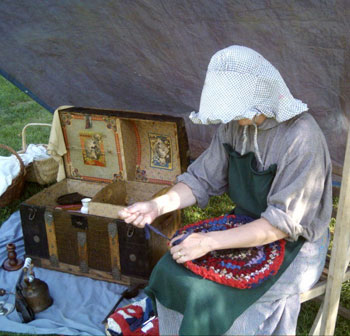
Editor’s note: Laura Bien writes a bi-weekly history column for The Chronicle. This week she describes her experience reenacting the role of an anonymous turn-of-the-century scrubwoman at Ypsilanti’s Heritage Festival, which took place Aug. 20-22.

My rained-on bonnet flopped over my face like a dish towel. I could see only a sliver of sidewalk. What had been a neatly starched head-shield this morning had been ruined by the Saturday rain.

Ypsilanti Heritage Festival Laura Bien

The author made a rag rug in between visitors to Grandma's Trunk.

My long skirt hem was wet, too, and catching on my ankles as I stomped back to the historical museum on Ypsilanti’s Huron Street where our props had been staged overnight. My sleeves were soaked and I was on the verge of tears.

I looked ridiculous. Why, why, had I been so driven to be a historical reenactor at the Ypsilanti Hertitage Festival? Did I even know what I was doing?

Back in the park, the antique trunk I’d borrowed the week before sat under a historically inaccurate blue tarp, waiting for the drizzle to end. I returned from the museum to our staging spot with a basket containing a thermos of water and some bread and cheese concealed under a pillowcase.

My husband had scooped out a rectangle of sod, stored the sod-plank by a nearby tree, and was preparing his firemaking-with-flint-and-steel-and-char-cloth demo. Grey clouds covered the sky. [Full Story]
In the Archives: Two Worlds

Editor’s note: The new University of Michigan North Quad residential hall, which is opening this fall at the corner of State and Huron, will house the Global Scholars Program among various other initiatives. The goal of the program is reflected in a quote from a participant: “I learned to understand differences as diversity, not strangeness.” Historically, that attitude did not always serve as this country’s educational approach to other cultures – as this edition of Laura Bien’s bi-weekly history column shows.

navaho-tom-torlino-3-yrs

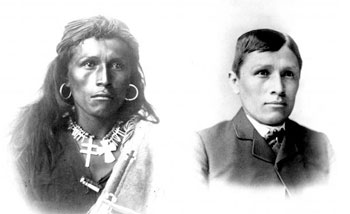
Navajo student Tom Torlino at his arrival to Carlisle Indian School and three years later.

Eighteen-year-old George Moore boarded the eastbound train on a chill November day in 1898. Several of his schoolmates climbed on. The boys sat near Mrs. Lizzie McDonald, their guardian.

It would be a long journey.

Four days and three nights over the clacketing steel rails lay between his Idaho birthplace and a Pennsylvania boarding school.

Built in 1879, the Carlisle school was led by its founder Richard Henry Pratt, a former Civil War volunteer who after the war served as an officer in the 10th Cavalry. Its members included Buffalo Soldiers and Native American scouts. In western Indian Territory, Pratt’s group was in charge of enforcing reservation borders to protect settlers’ lands; Indians left the reservation to seek food.

Pratt was also put in charge of a group of Native American prisoners whom he treated humanely, comparatively speaking, even giving them sketch pads in which to draw their experiences. Years later in his book “Battlefield and Classroom,” Pratt wrote, “Talking with the Indians, I learned that most had received English education in home schools conducted by their tribal government. Their intelligence, civilization, and common sense was a revelation because I had concluded that as an Army officer I was there to deal with atrocious aborigines.”

However, in his later role as schoolmaster, he also said, “In Indian civilization I am a Baptist, because I believe in immersing the Indians in our civilization and when we get them under holding them there until they are thoroughly soaked.” Pratt had firm beliefs about how and why to educate his Carlisle students. In his era, Pratt’s assimilationist ideas were progressive.

George Moore, who had taken the train and attended the Carlisle School, eventually returned part-way back west – to Ypsilanti. [Full Story]
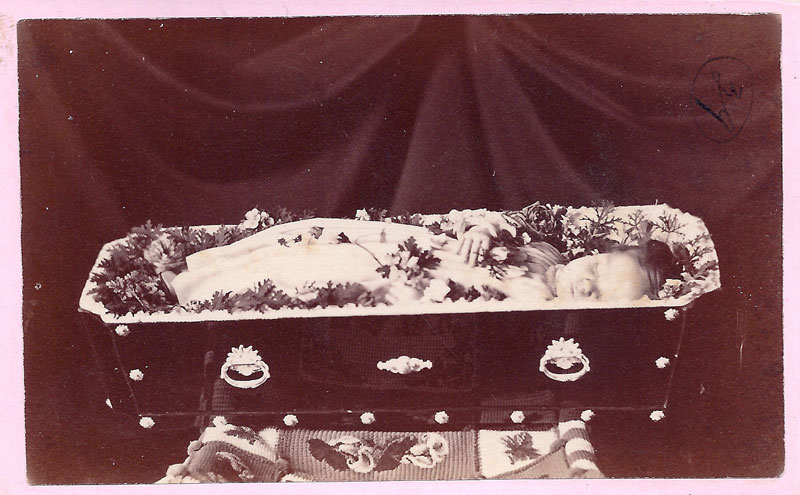
In the Archives: Victorian Era Death Photos

Editor’s note: Death as a part of life is a theme previously covered by the Chronicle in the form of a column by Jo Mathis: “Letting Go: Many ways to say good-bye to a loved one after death.” And the topic surfaced tangentially at a recent forum for candidates in the Democratic primary for the state House, when they were asked to comment on a state law requiring death certificates to be signed by a funeral director. In her regular local history column for The Ann Arbor Chronicle, Laura Bien takes a look at the role photography played over 100 years ago in documenting the deaths of children.

It was an era without personal cameras, much less digital memory cards storing thousands of shots. The 19th- and early 20th-century family photo albums in the Ypsilanti Archives often contain only one expensive formal studio portrait of each individual family member, or a single economical group portrait.

Obituary in the Ypsilanti Commercial: “DIED: On the 13th inst., Theodore W., only son of J. Willard and Florence Babbitt, aged 10 months.”

Child mortality was high. When a child or other family member died, families would on occasion arrange to have a photograph taken before burial. Sometimes it was the first and last photograph they would ever possess of their loved one.

The fifty-odd family photo albums in the Ypsilanti Archives contain about a dozen examples of these poignant memento mori. [Full Story]

In the Archives: Golden Age of Oysters

Editor’s note: For this installment of Laura Bien’s bi-weekly local history column she takes the Gulf oil spill as an opportunity to drill down into the local area history of oysters.

Detroit oyster packers and restaurants advertised in Ypsilanti papers.

The nation-wide restaurant chain Red Lobster is pulling oysters from its menu. So are other seafood restaurants around the country.

The nation’s oldest continually-operating oyster-shucking company, New Orleans’s P&J’s, has shut down. Nearby is French Quarter neighbor Antoine’s, New Orleans’ oldest restaurant that allegedly invented the sumptuous dish Oysters Rockefeller. The restaurant has kept the recipe secret to this day.

Less occult is that restaurants around the country who rely on Gulf oysters are in trouble. According to NOAA, the Gulf supplied around 67% percent of the nation’s oysters.

Closer to home and over 150 years ago, oysters came from a different coast. Packed in barrels and whisked from New York and Chesapeake Bay to Washtenaw on trains, oysters were a popular area food. [Full Story]
In the Archives: 10 Least Persuasive Ads

Editor’s note: For this installment of Laura Bien’s bi-weekly local history column she counts down a top 10 list of least persuasive advertisements in old time Ypsilanti newspapers.

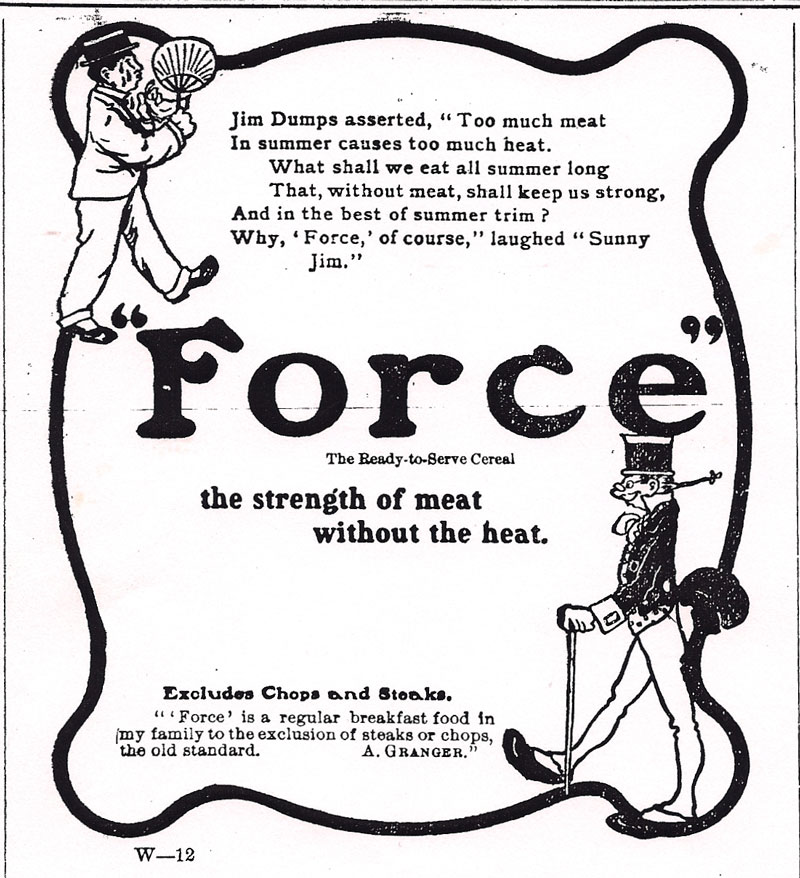
10. One early cereal offered a transformative experience.

Jim Dumps was a most unfriendly man,
who lived his life on the hermit plan;
In his gloomy way he’d gone through life,
And made the most of woe and strife;
Till Force one day was served to him-
Since then they’ve called him “Sunny Jim.”

Force breakfast wheat flakes were advertised in a 1902 Ypsilanti newspaper with one of the first brand mascots, Sunny Jim. It was only seven years earlier that John Harvey Kellogg had patented his “Flaked Cereals and Process for Preparing Same.” The popular Force ad campaign used six-line verses written by Minnie Maud Hanff and illustrated by Dorothy Ficken.

Jim Dumps asserted, “Too much meat
In summer causes too much heat.
What shall we eat all summer long,
That, without meat, shall keep us strong,
And in the best of summer trim?”
“Why, ‘Force,’ of course,” laughed ‘Sunny Jim.’

Though the poems now seem quaint, in his time Sunny Jim was a popular cultural icon for the cereal that promised “the strength of meat, without the heat.”

(Image links to higher resolution file.)

[Full Story]

In the Archives: The Girl Who Burned

Editor’s note: At its May 20, 2010 meeting, the University of Michigan board of regents approved a $17.7 million expansion of the University Hospital’s emergency department, aimed at reducing overcrowding and patient wait times. In 2009, the hospital’s ER had over 77,000 patient visits. A potential visitor to a UM ER back in the early 1900s would have been Bertha Thorn, the subject of this installment of Laura Bien’s local history column.

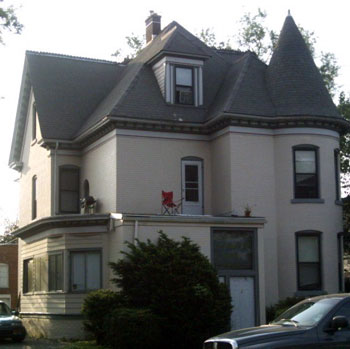
The house at 160 North Washington stood dark on the night of December 7, 1908.

The 19-year-old servant girl woke up in her attic room around midnight. She sighed, realizing that she would have to get out of bed and get the chamber pot. It would be cold from the chilly room. Bertha wore a union suit under her nightgown.

girl that burned

Bertha's room was likely in the attic.

She got up and sleepily felt for the kerosene lamp on her bedside table. She lifted the glass chimney and lit the lamp.

The chimney slipped. Bertha grabbed for it. Her nightgown sleeve caught fire.

Bertha jerked back. Her sleeve snagged the lamp. It tumbled and broke on the floor, sending splattered fuel and a column of fire up Bertha’s back. As flames roared up her nightgown, Bertha screamed and ran for the stairs.

“The girl ran shrieking, a pillar of fire, to the hall below,” reported the Dec. 8, 1908 Ypsilanti Daily Press, “where Miss Scovill aroused by her screams overtook her and succeeded with rare presence of mind in wrapping her in a couch throw and extinguished the flames. A physician was summoned and it was found that she was burned from her neck to her feet, the flesh being literally baked on her back, arms, and limbs, although not so severely burned across her chest. The fact that she wore a union suit of heavy underwear made the case more serious as it was almost impossible to remove the garments.” [Full Story]

In the Archives: Ypsi’s Submarine Diver

Editor’s Note: On April 20, 2010, an explosion on an oil rig 50 miles off the Louisiana coast left 11 workers missing and presumed dead. Efforts are now focused on the underwater challenge of trying to cap off the oil well on the sea bed. Local history columnist Laura Bien takes a look back 150 years into the past to recall a Lake Erie underwater challenge resulting from a different tragedy.

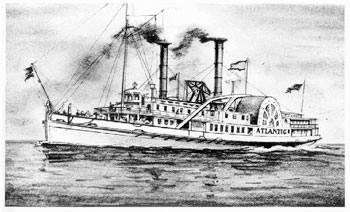
In the summer of 1852, $36,000 in cash and gold bars lay in a locked safe 165 feet deep on the floor of Lake Erie.

steam-ship

Many of the overloaded ship's immigrant passengers slept on the deck, as there was no room below.

Worth $920,000 today, the riches lay within the wreck of the steamship Atlantic. So did more grisly testimony of the shipwreck’s victims, estimated as ranging from 130 to over 250. The deaths represented about a third of the 576 travelers packed onto a steamship meant to accommodate far fewer.

The era’s stream of immigrants pouring west made a profitable trade for passenger steamers traveling the Great Lakes. The Atlantic was the fastest one of all, speeding to Detroit from Buffalo in just 16-and-a-half hours. A towering steam engine churned huge paddlewheels on either side of the vessel. Despite her power and 267-foot-long brawn, the Atlantic succumbed when she was struck on the night of Aug. 20, 1852, by the Ogdensburg, a ship from a rival ferry line.

In the chaos and panic that ensued as the Atlantic began sinking, several of the lifeboats swamped when they hit the water. Some passengers grabbed cushions or anything buoyant and jumped in the water. The Ogdensburg circled back and picked up about 250 survivors from the water. [Full Story]

In the Archives: The Male Suffragette

Editor’s Note: With primary election season starting to warm up, and an exhibit on suffrage planned for this coming winter at Ann Arbor’s Museum on Main Street, local history columnist Laura Bien takes a look back at the history of the local suffrage movement.

“Baby suffrage” is what one Detroit newspaper proposed in 1874. In that year, Michigan voted on whether to remove the word “male” from a part of its Constitution related to voting. The paper sneered that infants voting in polling booths would be the next step if women were given the vote.

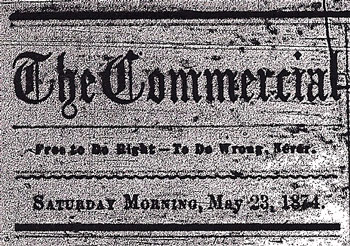
Pattison chose as his bold motto  Free to Do Right: To Do Wrong, Never.

Charles Rich Pattison chose as his bold motto for The Commercial "Free to Do Right: To Do Wrong, Never."

Newspapers of that era often served as explicit vehicles for their editors’ opinions and prejudices. As they did with the Temperance issue, papers across Michigan chose a side in the suffrage question in the key year of 1874.

Their pro- and anti-suffrage positions reflected the divided opinions not just on the national level, but, as in Ypsilanti, on a municipal level.

Edited by Charles Woodruff, the Ypsilanti Sentinel was against suffrage for women. It regularly published editorials that disparaged the idea and disparaged the Sentinel’s competing paper, The Commercial, which was led by arguably the most outspoken editor in Ypsilanti history. [Full Story]

In The Archives: Highland Cemetery Redux

Editor’s note: The previous installment of Laura Bien’s local history column was a walking tour of the southern half of Highland Cemetery. This installment takes readers through the northern half.

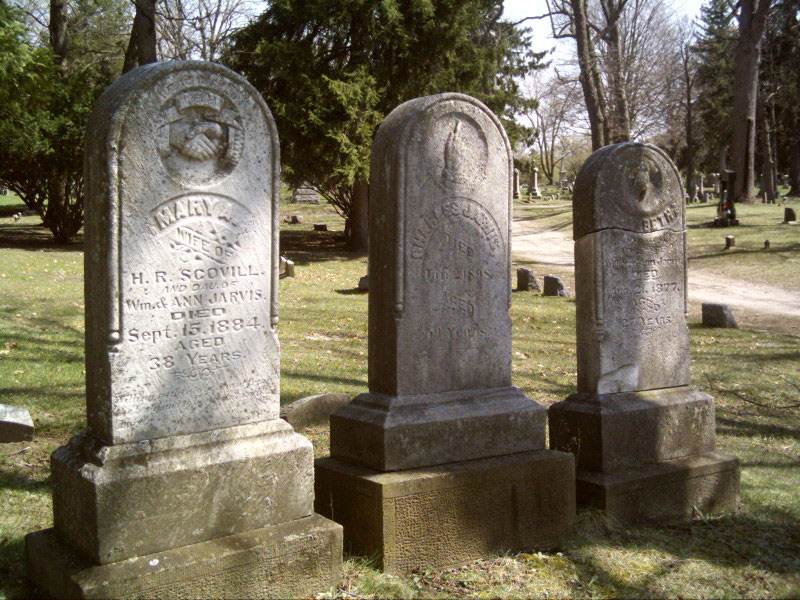
Highland cemetery gravestones

The Scovill-Jarvis graves provide a good example of a trio of hand iconography.

Arguably the most beautiful spot in Washtenaw County, Highland Cemetery offers an outstanding chance to examine 19th-century grave symbols. The following self-guided 2-hour tour, available as a .pdf, highlights a range of some of the northern half of the cemetery’s most interesting symbols. Numbers in the text correspond to the map.

Visitors can reach the cemetery by traveling down Washtenaw to its terminus on Huron. Turn left on Huron and right on Cross Street through Depot Town. At the remains of the Thompson Building at River, turn left. You will pass Forest Avenue and the ornate brick Swain home on the northeast corner of Forest and River. Continue down River; Highland Cemetery is a quarter mile down on the left.

Inside the main gates, open 8 a.m.-5 p.m. until April 30 and 8 a.m.-7 p.m. from May 1 to Sept. 30, a small parking lot appears on the right. Park here and walk west to Starkweather Chapel at the end of the main driveway.

On the north (right) side of the chapel, three paths diverge. Take the middle path. A few steps down on the left is the grave of Maria Towler (1) with this barely legible poem: [Full Story]

In the Archives: Highland Cemetery Tour

Editor’s note: Laura Bien’s local history column this week is a walking tour of the southern part of Highland Cemetery. Although she’s supplied a printable version with a map, as the gentlest of prods for readers to visit the cemetery, those who settle in to read the description onscreen will find that it hews to The Chronicle’s motto: “It’s like being there.” Bien’s columns come in a bi-weekly rhythm, and the next one will cover the northern part of the cemetery.

Arguably the most beautiful spot in Washtenaw County, Highland Cemetery offers an outstanding chance to examine 19th-century grave symbols. The following self-guided 1-hour tour, available in printable .pdf format with a map, highlights a range of the most interesting symbols in the southern half of the cemetery. Numbers in the text correspond to the map.

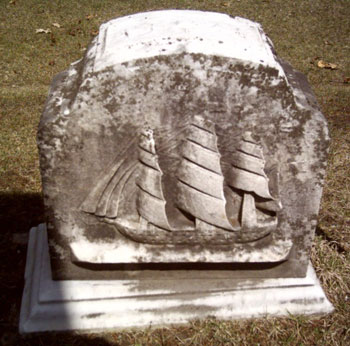
Highland Cemetery

An unusual depiction of a ship on a grave marker, seen at the end of the tour.

Visitors can reach the cemetery by traveling down Washtenaw to its terminus on Huron. Turn left on Huron and right on Cross Street through Depot Town. At the remains of the Thompson Building at River, turn left. You will pass Forest Avenue and the ornate brick Swain home on the northeast corner of Forest and River. Continue down River; Highland Cemetery is a quarter mile down on the left.

Inside the main gates, open 8 a.m.-5 p.m. until April 30 and 8 a.m.-7 p.m. from May 1 to September 30, a small parking lot appears on the right. Park here and walk west to Starkweather Chapel at the end of the main driveway. [Full Story]

In the Archives: The Toad Survey of 1910

Editor’s note: Leslie Science and Nature Center is soon launching its frog and toad survey after holding a kick-off orientation meeting on Feb. 24. Other Leslie frog-related events include Frog Fest on May 15, 2010. Partly in that context, local history columnist Laura Bien takes a froggy look back.

Michigan’s inaugural 1996 Frog and Toad Survey started strong. “I have talked with coordinators in other states,” wrote state frog and toad survey coordinator Lori Sargent in the survey report, “and most are finding it difficult to find enough people to volunteer. Perhaps that says a lot about Michiganians – we care about our natural resources.”

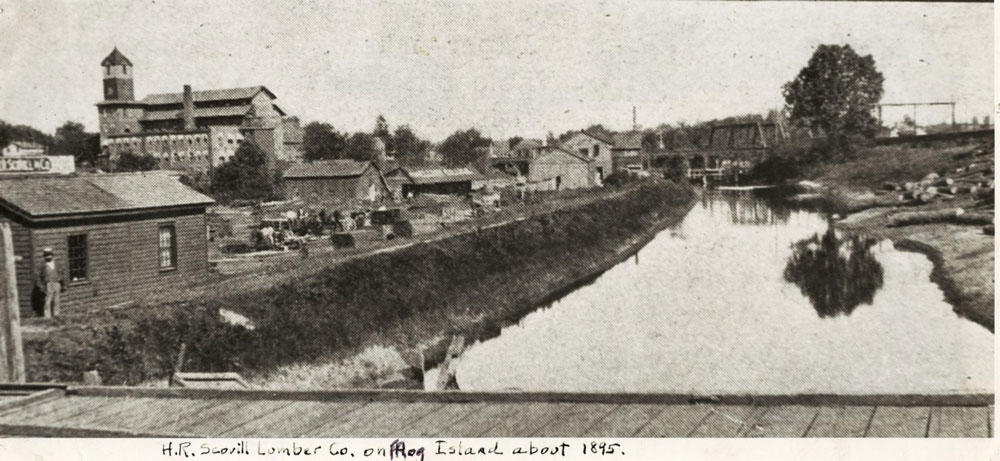
Frog Island Ypsilanti

Ypsilanti's Frog Island, seen here looking north along the present-day eastern side of the running track, was the site in 1895 of Henry Scovill's lumber yard.

So much so that Ypsilantians have been surveying frogs and toads for over a century … off and on.

“Five years ago as we sat on our porch one summer evening a toad hopped out from around the corner to the concrete walk,” was the way one resident was quoted in the July 9, 1907 Ypsilanti Daily Press. “We watched it ‘walk’ down to the street sidewalk and within half an hour or so back it came.”

The Normal Park resident continued, “The next night as we were again sitting on the porch, one said, ‘I wonder whether our toad will be out tonight?’ It was but a few minutes when out it hopped and started down the walk. Within the hour it came back.” [Full Story]

In the Archives: Paper Pennies of Ypsi’s Past

Editor’s note: As a feasibility study on local currency gets underway in Ann Arbor, local history columnist Laura Bien takes a look at how local currencies were used in the past. Bien’s new book on local history, “Tales from the Ypsilanti Archives (MI): Tripe-Mongers, Parker’s Hair Balsam, The Underwear Club & More (American Chronicles)” can be ordered through Amazon.

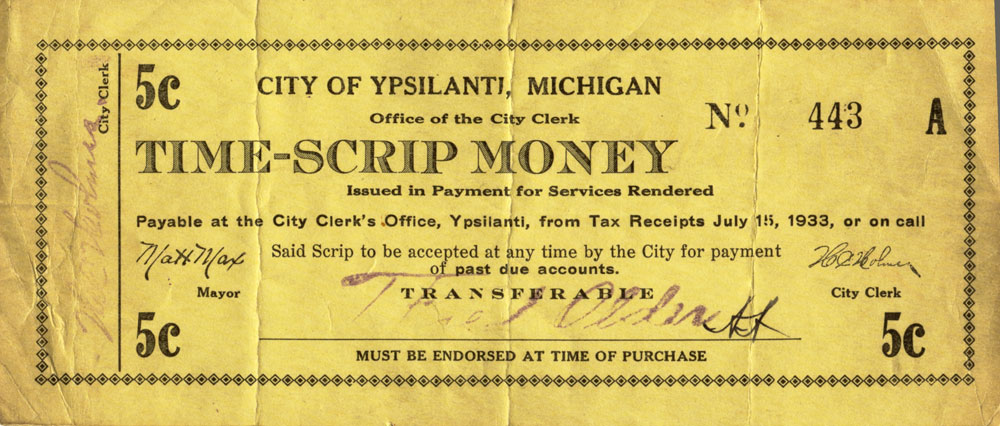
Local currencies are nothing new to either Ypsilanti or Ann Arbor. In addition to 19th-century municipal banks, both cities created local currencies about 80 years ago. They weren’t created to boost local spending or civic pride. Ypsilanti created her local currency, called scrip, in the fall of 1931 because the city had no other money to pay municipal employees.

Ypsilanti Scrip Money

Ypsilanti "Time Scrip Money" was used to pay for municipal work. (Image links to higher resolution file.)

The currency included paper pennies.

“It was really just an IOU,” recalled Paul Ungrodt, in an April 15, 1975 Ypsilanti Press article, one of a Great Depression retrospective series. “[T]here was no money; hardly anyone could afford to pay taxes, so we made do with the scrip.” In the summer of 1929, Ungrodt was proud to have secured the prestigious job of Ypsilanti Chamber of Commerce secretary. A few months later, the stock market crashed. [Full Story]

In the Archives: Runway to the Future

Editor’s note: At a recent meeting of the Ann Arbor city council, an item in the city’s capital improvements plan to shift and extend the runway at Ann Arbor’s municipal airport generated much discussion.  This installment of “In the Archives” takes a look at Ypsilanti’s airport, which has faded from the landscape.

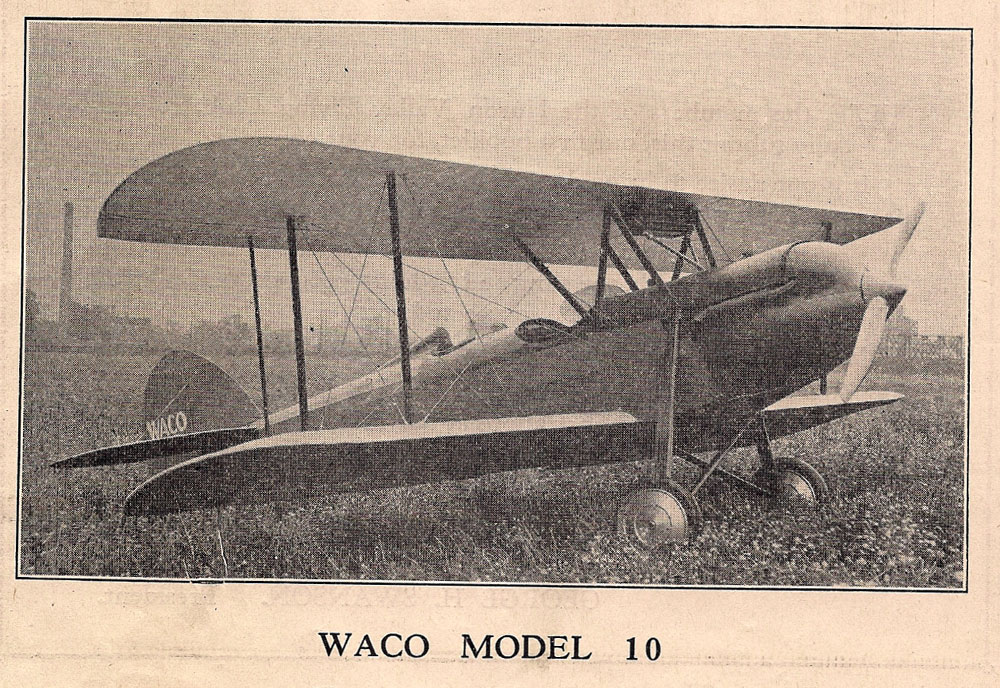
The delicate blue Waco 10 biplane roared 10 feet over the grass, past the crowd in the stands. Approaching trees at the airfield’s far end, its nose rose and it climbed, becoming smaller and smaller in view.

Waco 10 biplane

An photograph of a Waco 10 from the airshow program. Five aviators at the 1927 Ypsilanti air show competed in the cutting-edge biplane. (Photos courtesy of the Ypsi Archives.)

The gargling buzz of its 90-horsepower engine grew fainter, until the craft sounded like a distant housefly. Watchers from Detroit, Ypsilanti, and Ann Arbor under the 4 o’clock June sun shaded their eyes with their hands.

The buzz stopped: 1,500 feet in the air, the plane was without power.

The biplane arced to the left, trying to loop back towards the field. The crowd watched intently. The biplane curved again, losing altitude. A box of popcorn fell from the hand of a little boy watching, his mouth open. The plane’s wings wobbled. Airplane and crowd were quiet. On a nearby farm, a dog barked.

The plane dropped. Nearing the field, it slowed, its toylike wheels just a yard over the ground. The plane nearly stalled – and then landed as gently as a butterfly. It rolled to a stop. Its nose nearly touched a black and white checkered pylon. The crowd began clapping and cheering as two men ran to the plane and stretched a yellow measuring tape between the plane’s silver nose and the pylon. One yelled a number. The crowd grew louder, some people standing to cheer and whistle.

The pilot grinned and thrust both fists up. He’d won the “dead-stick” engine-off gliding and landing contest at the 1927 Ypsilanti Airport air show. [Full Story]

In the Archives: Bloomers and Bicycles

Editor’s note: At January’s meeting of the Ann Arbor Downtown Development Authority board, Ann Arbor’s mayor suggested that the DDA’s transportation committee bring a recommendation to the board to take a position on bicycling on Ann Arbor’s downtown sidewalks.

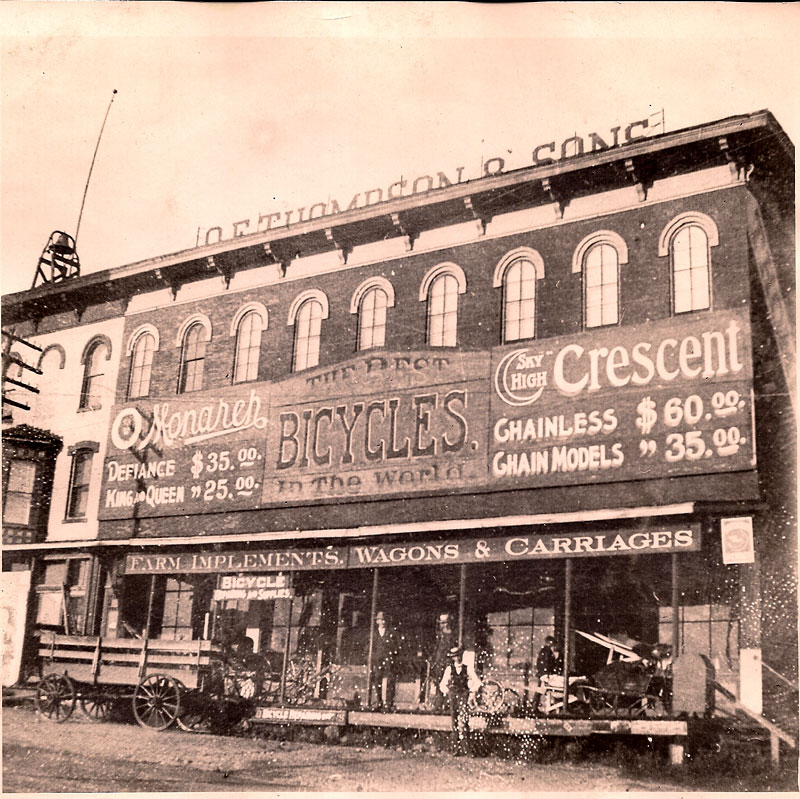
The fight to keep bikes off of Ann Arbor and Ypsilanti sidewalks dates back to the first appearance over a century ago of what many perceived to be “infernal machines.”

Thompson Bike

O.E. Thompson was Ypsilanti's leading seller of bicycles. (Images link to higher resolution files.)

The 1876 Ann Arbor city charter contains no mention of bicycles – it wouldn’t be until two years later that A. A. Pope manufactured the first bicycles in the U.S. The invention spread across the nation, threw city fathers into consternation as they scrambled for their city charters, and incited Ann Arbor’s “Bloomer War.”

It also inspired the creation of a nationwide organization of cyclists, the League of American Wheelmen. Its Michigan chapter’s 1897 edition of their “Road Book” recommended one 271.5-mile jaunt from Detroit to Chicago. Another route circled Lake Erie. The guidebook gave instructions for rides from Ann Arbor to Chelsea, Saline, Whitmore Lake, Pontiac, South Lyon and Dundee.

“Gravel roads will average as shown during entire riding season,” the book stated, “clay ones only in dry seasons.” The L.A.W. received a discount from 66 Michigan hotels ranging from Marquette to Coldwater. In Ann Arbor, the L.A.W.’s hotel was the American House (15% discount), and its Ypsilanti refuge was the Hawkins House (20%). [Full Story]

In the Archives: Ypsilanti’s Waldorf-Astoria

Editor’s note: “In the Archives” is a biweekly series on local area history. In the coming week, on Jan. 19-20, the city of Ann Arbor will interview proposers of different projects for the top of a new underground parking garage at the Library Lot – including some developers who would like to build a hotel there. In this installment of her historical look back, Laura Bien offers a vignette of life just east of Ann Arbor, in Ypsilanti’s Huron Hotel, just after it had opened.

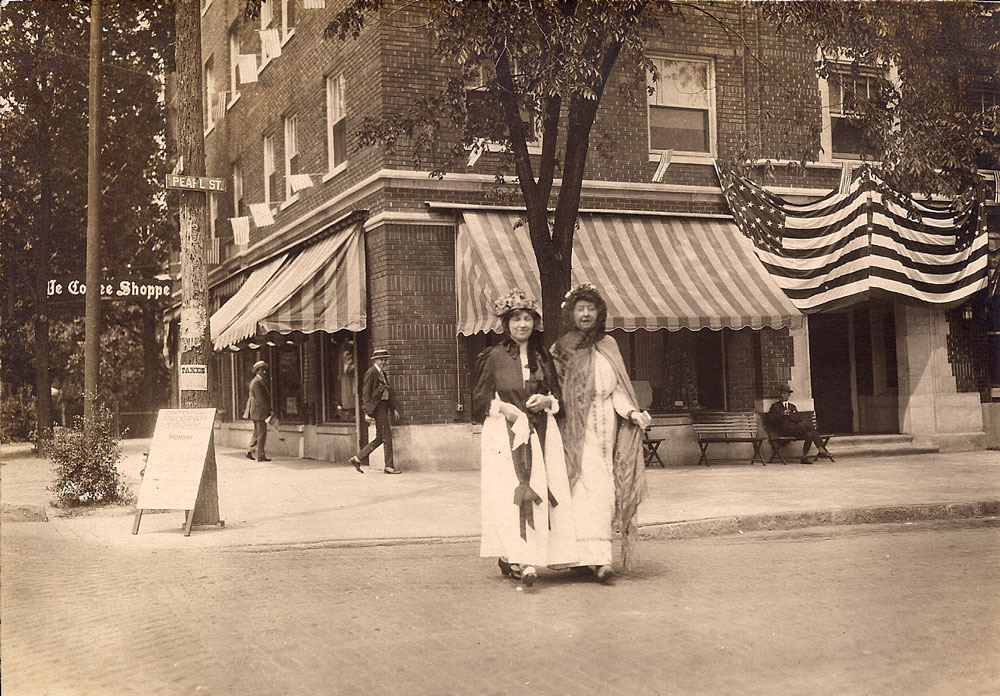
Eula Beardsley and Gladys Huston exited the front door of their Ypsilanti rooming house at Adams and Pearl one late December day in 1924.

Huron Hotel

The hotel opened in 1923, the year that residents celebrated the city's centennial. At left is the Washington Street entrance to the coffee shop and at right is the main Pearl Street entrance. (Image links to higher resolution file.)

“Colder than I thought,” said Gladys. Eula pulled shut the front door. “You’ll warm up at that big lunch today.” The pair walked one block east on Pearl Street, passing shiny rows of black cars in the Wiedman auto dealership to their left.

They crossed Washington, headed towards the door of the elegant new Huron Hotel on the northeast corner of Pearl and Washington.

Two years earlier, the only accommodations the city could offer guests were at the old-fashioned Hawkins House on Michigan Avenue between Washington and Adams. Built in the 19th century, the place had a worn-out and rustic atmosphere. The Ypsilanti Board of Commerce decided the city needed a modern, attractive hotel. It sold shares of stock to city residents, raised $200,000, and built the hotel in eight months, adding two additional floors two years later. [Full Story]

In the Archives: The Cigar Maker’s Son

Editor’s note: “In the Archives” is a biweekly series on local area history.

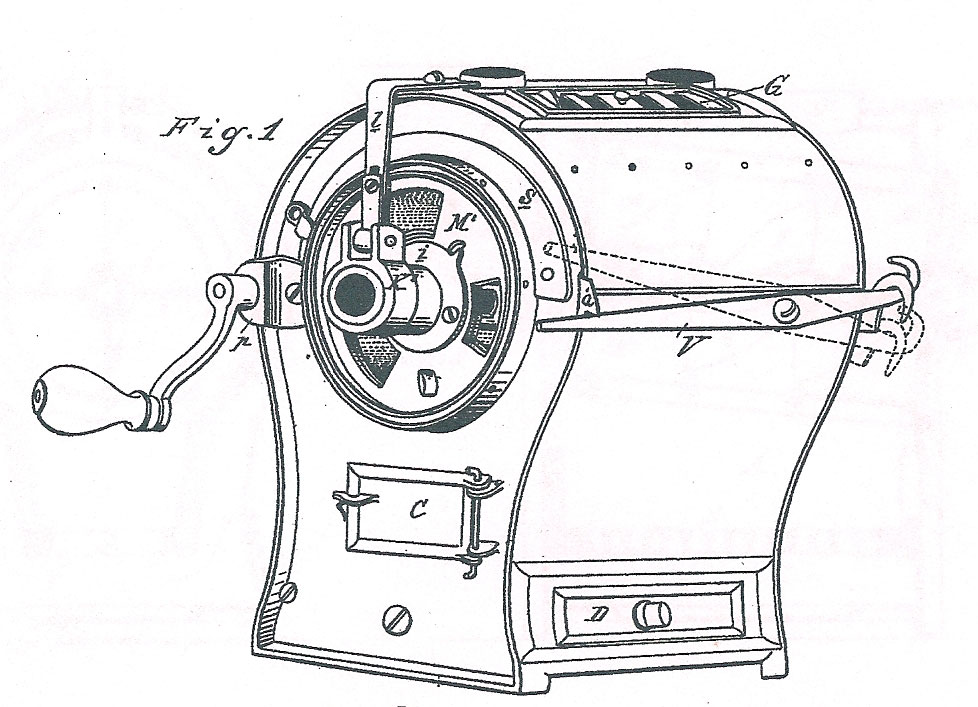
“The nature of my invention,” wrote Ypsilanti tinsmith Mathias Stein in his 1876 patent application, “consists in the construction and arrangement of a machine for heating sad irons and roasting coffee, either simultaneously or at different times, as will be hereinafter more fully set forth.”

schematic of combination coffee roaster iron heater

Figure 1 from the patent application of Mathias Stein for a combination flatiron heater and coffee roaster. (Image links to higher resolution file with of all six figures from the application.)

Mathias’s intricate 6-part invention, about the size of a large desktop printer, was a tabletop stove. Over a well of coals, it simultaneously roasted coffee and heated solid metal flatirons for ironing clothes, called “sad irons” – one old meaning of “sad” is dense or solid.

Mathias probably had high hopes for his two-in-one cast iron gadget. Shortly after his patent was granted, at age 31, he married the 28-year-old Josephine and the couple settled on Ballard Street just south of Washtenaw Avenue. [Full Story]